New policy regarding spam comments

From Vince, Admin

This blog has been receiving a great many spam comments recently.  I deleted a dozen last night alone and there are a dozen new ones now.  I suspect that we are being targeted by a spam company. So, I have to announce strong measures to protect the integrity of our content.  Some of the spam mail is obvious product advertising , often having nothing to do with health or longevity.  There is also a more subtle kind of spam, from “users” which are actually hyperlinks to commercial selling websites.  Recent examples are bed liner, victoria secret bathing suit, russian women for marriage, gold exchange rate today and hormone replacement therapy . The content of the spam in such cases may be neutral or and is often complementary such as saying “Nice blog.  Keep up the good work.”  I cannot tell if some such comments are sincere but I strongly suspect most of them are spam, designed to enhance search engine placements for the selling sites concerned.  Thousands of users visit this blog daily and it is indexed daily by major search engines like Google.  The more times a link appears on an indexed site like this one, the theory goes, the higher the search index placement for the link.  So spam companies are selling services to websites “to improve your search engine placement” which means massive spamming of blogs like ours.

So, here is the new policy:

1.   Comments that are clearly irrelevant to the content of the related post will be deleted.

2.  Comments that are aimed at promoting commercial products or services will be deleted, even if the products might relate to health or longevity.

3.   Comments from users that are commercial sites will be treated with suspicion and unless particularly relevant to the post concerned will be deleted.  I request users to sign up with names that are not commercial sites.

This policy will go into effect immediately and I will be reviewing past comments and applying the policy to them as well.  I continue to welcome serious comments that contribute to the content of this blog. Please, if you want to praise or acknowledge the blog, sign up as an individual user to do so, not as a selling site.  And if you see something advertised in a comment I have not managed to delete, don’t buy it. I hope not to have to take more drastic measures restricting comments but, if necessary, will.

If  you are operating a spam company, please LEAVE US ALONE.  Our purpose here is communication of scientific information.  I could probably make a fair amount of money selling advertising but have decided not to.  So, NO HITCH-HIKE ADVERTISING.

Vince`

Posted in Uncategorized | Leave a comment

New blog software – new look, same material

We have been having trouble with the blog software for the last few months – our blog was too big for it with 365 posts and 969 comments.  Our hosting company has provided us with a new dedicated WordPress software installation which should keep us going for some time more.

Do you like the new presentation format?  It makes better use of screen real estate with a wider reading format.  All the old material is still here, rest assured.

Vince

Posted in Uncategorized | 2 Comments

CETP, a Longevity Buffering Mechanism

By Victor

One of the paradoxes of longevity research has been the observation that persons of exceptional longevity actually have more disease-related genes in their genome than ordinary people.  Intuitively, one would expect just the opposite, that the lack of disease-related genes would explain their increased lifespans.  Although they have a higher than normal incidence of genes known to be associated with disease conditions, they appear to have some kind of innate protection against the effects of those genes.  A hypothesis explaining this apparent paradox was proposed, and experimentally validated in a study of Ashkenazi Jewish centenarians who participated in the Longevity Gene Study at the Albert Einstein College of Medicine.  Apparently, certain longevity genotypes “buffer” or cancel out the effects of harmful genes, allowing them to accumulate.

Buffering Mechanisms in Aging: A Systems Approach Toward
Uncovering the Genetic Component of Aging
:

“We corroborated this hypothesis by studying gene–gene interactions between age-related disease genotypes and longevity genotypes.    Our findings suggest that individuals with the favorable longevity genotype can have just as many deleterious aging genotypes as the rest of the population because their longevity genotype protects them from the harmful effects of the other. We identify genes contributing to extreme lifespan as well as their counterpart, age-related disease genesAs an example of this buffering mechanism, they found, for instance, that a SNP of the CETP gene I405V protected against the effects of disease-causing LpA gene.  SNP, or Single Nucleotide Polymorphism means that an amino acid substitution is found in a single base-pair of a gene.  In this case, isoleucine is substituted for valine in codon 405 of the gene encoding CETP (Cholesterol Ester Transfer Protein).  This genetic variant is referred to as CETPVV when individuals are homozygous, which means that both chromosomes have the same SNP.  LpA is the gene for a lipoprotein that predisposes carriers for heart disease.(ref)  It was previously known that CETPVV was associated with exceptional longevity.(ref)  Individuals with CETPVV have abnormally large lipoprotein particles (both HDL and LDL); and they have lower rates of cardiovascular disease and metabolic disorders.  They also have lower rates of cognitive decline.(ref)  From a more recent study published in the JAMA in 2010:

“We found that people with two copies of the longevity variant of CETP had slower memory decline and a lower risk for developing dementia and Alzheimer’s disease,” says Amy E. Sanders, M.D., assistant professor in the Saul R. Korey Department of Neurology at Einstein and lead author of the paper. “More specifically, those participants who carried two copies of the favorable CETP variant had a 70 percent reduction in their risk for developing Alzheimer’s disease compared with participants who carried no copies of this gene variant.” (ref)

Will the next generation of CETP inhibitors provide protection from cognitive decline and increased lifespan, as well as protection from cardiovascular disease?

Not necessarily.  Remember the longevity gene CETPVV does not prevent expression of CETP; it alters the expression of CETP in ways that are not yet fully understood, and may be difficult to mimic pharmaceutically.  Some type of gene therapy which inserts the CETPVV variant, using an adenovirus or stem cells might be a possible alternative treatment strategy.  This transport protein is known to play a vital role in both the intra- and extra-cellular transport of lipids.  For example, cholesterol and triglycerides are synthesized within the endoplasmic reticulum; however, they are metabolized and stored in other cellular compartments.  Evidence suggests that by interfering with the normal intracellular transport of lipids, inhibiting CETP could cause abnormal intracellular fat distribution accompanied by ysfunctional lipid metabolism and energy storage.  Fat cells are not merely fat storage depots, but actively secrete many signaling hormones, known as “adipocytokines.”  Abnormal adipocytokine secretion is associated with numerous health problems, including heart disease, diabetes, obesity, etc.

Possible Role for Intracellular Cholesteryl Ester Transfer Protein in Adipocyte Lipid Metabolism and Storage:“The newly discovered secretory functions of adipocytes have shifted the view of adipose tissue from being a simple energy storage tissue to one where this tissue functions as a major endocrine organ. In addition to their cholesterol and TG storage function, adipocytes also synthesize and secrete a variety of factors, such as leptin, adiponectin, angiotensinogen, resistin, and lipoprotein lipase, that regulate whole body energy balance and lipid homeostasis (59, 60). The secretion of these factors is closely linked to the lipid status of adipocytes. Both hypertrophy (excess of lipid content) and hypotrophy (low lipid content) of adipocytes have been shown to disrupt the secretion of these factors and cause abnormal whole body metabolism and inadequate insulin responsiveness (59, 60). Our studies demonstrate that CETP deficiency leads to abnormal TG and cholesterol storage and lowers the membrane ratio of free cholesterol/protein, factors reported to be associated with induction of insulin resistance and alteration in the synthesis of adipocytokines (44). Our findings, if they can be extrapolated to adipose tissue, suggest an important role for CETP in regulating the multiple functions of adipocytes.”

For a more in-depth discussion of CETP longevity variants, see Dr. Guiliano’s earlier entry:  CETP Gene Longevity Variants.

Posted in Uncategorized | Leave a comment

Quantum biology

By Vince Giuliano
Minor update 7 July 2016.  The field of quantum biology contines to fascinate me and I will brobably soon produce a second blog related to this area since there have been several relevant publications since I first drafted this item some 5 years ago in 2011.  For the moment I mention only a 2013 survey publicaation Quantum biology. This publication refers mainly to topics covered in this blog.  “Recent evidence suggests that a variety of organisms may harness some of the unique features of quantum mechanics to gain a biological advantage. These features go beyond trivial quantum effects and may include harnessing quantum coherence on physiologically important timescales. In this brief review we summarize the latest results for non-trivial quantum effects in photosynthetic light harvesting, avian magnetoreception and several other candidates for functional quantum biology. We present both the evidence for and arguments against there being a functional role for quantum coherence in these systems.”
————————————————
The purpose of this blog entry is to provide an introduction to Quantum biology, an emerging new frontier in biology. Quantum biology strives to provide understanding of biological phenomena not explicable in any other existing framework. For at least one phenomenon, photosynthesis, it appears to be doing so in a way consistent with experimental results.  There is also strong theoretical and circumstantial evidence that Quantum biology can provide very valuable insights in a number of other areas including the functioning of DNA, neural processing, the migratory patterns of some birds and the sensing of smells. The field is relatively unexplored and future applications may be without limit.
Most of the work in the Quantum biology field seems to have been originated by physicists and mathematicians rather than by biologists.  This is not surprising given the complex mathematical training required to be fluent in matters related to quantum mechanics. Quantum biology suffers from one severe problem: mainly that biology is a massively complex system whereas quantum mechanics is massively deep(ref). But perhaps a combination of that depth and complexities can lead us to a whole world of new insights. This blog entry offers an introduction to quantum biology and links to several other resources useful for learning more about it.
Quantum physics and macroscopic reality
Well over a century old now, quantum physics (known also as quantum theory or quantum mechanics) was developed to explain physical phenomena on the atomic and subatomic level. I studied it many years ago as an area of graduate-studies concentration required for me to get my Ph.D. at Harvard “Quantum mechanics is the body of scientific principles which attempts to explain the behavior of matter and its interactions with energy on the scale of atoms and atomic particles. — Just before 1900, it became clear that classical physics was unable to model certain phenomena. Coming to terms with these limitations led to the development of quantum mechanics, a major revolution in physics — Some aspects of quantum mechanics can seem counter-intuitive, because they describe behavior quite different than that seen at larger length scales, where classical physics is an excellent approximation. In the words of Richard Feynman, quantum mechanics deals with “nature as she is — absurd.”[1] (ref)”
The mathematical apparatus of quantum physics is well experimentally validated and without question works as a pillar of current science and engineering. However, both physicists and philosophers have been flummoxed over a century now by the extremely strange views of reality imposed by quantum physics. Many different schools of interpretation of quantum physics exist, each school with its own proponents. Depending on the school of interpretation, objects do not have definite properties until they are observed and all matter behaves both as waves and particles (Copenhagen interpretation), or reality consists of wave functions spanning an unfolding infinite manifold of parallel universes (many worlds interpretation), or the present communicates instantly with the past and future to create an outcome in the present (Cramer’s transactional interpretation), or the physical universe is not really real; there is only the quantum universe which is like an infinite collection of classical universes (zero universe interpretation).
Regardless of school, in quantum physics there are many new strange concepts to take into account including Superposition, Entanglement, Complementarity, Duality, Uncertainty , Exclusion, Decoherence, Ehrenfest theorem,Tunnelling, and Nonlocality. Nonlocality, for example, implies that action at one point can produce an effect even far across the universe. This is not via a signal traveling at the speed of light. It is an instantaneous effect. It is because far-apart objects like a photon pair flying in opposite directions from a single source may be correlated, that is, just aspects of a single super-object. So that doing something to one part of the super-object like polarizing the photon instantly polarizes its correlated sister well no matter how far away it may be. In a famous thought experiment, Schrodinger’s cat is both dead and alive at the same time. Sounds nuts? It is. As a graduate student I had many weird dreams before I could start to accept the quantum theory’s profound messages about how unreal reality really is.
For most of the last 110 years the conventional wisdom has been that quantum effects only exist on the atomic and subatomic scale and that on a normal scale things function according to the good-old-laws of classical physics which are completely consistent with our experience of how things work. It was thought that biological systems are so complex, warm, and subject to random effects that they can’t be coherent and therefore we don’t have to worry about quantum weirdness when it comes to biology.
This thinking is, simply put, wrong. To start with, although quantum phenomena starts out on the atomic and subatomic scales, the impact of these phenomena on the macroscopic scale can be and obviously has been immense. Think, for example, about nuclear bombs and nuclear energy, transistors and integrated circuits, lasers, superconducting fluids, computers, smartphones and hearing aids just to start the list. All of these depend on underlying quantum phenomena. And strange quantum behavior like entanglement is being observed in more and more big ordinary-scale systems. An interesting article addressing this point just appeared in the May 2011 issue of Scientific American: Living in a Quantum World “Quantum mechanics is not just about teeny particles. It applies to things of all sizes: birds, plants, maybe even people.”
Quantum Biology
Quantum biology refers to applications of quantum mechanics to biological objects and problems. Usually, it is taken to refer to applications of the “non-trivial” quantum features such as superposition, nonlocality, entanglement and tunneling, as opposed to the “trivial” applications such as chemical bonding which apply to biology only indirectly by dictating quantum chemistry. — Erwin Schroedinger is one of the first scientists to suggest a study of quantum biology in his 1946 book “What is Life?” — Some examples of the biological phenomena that have been studied in terms of quantum processes are the absorbance of frequency-specific radiation (i.e., photosynthesis[3] and vision[4]); the conversion of chemical energy into motion;[5] magnetoreception in animals[6] and brownian motors in many cellular processes.[7] (ref)
To repeat a point, there is an obvious sense in which biology depends on quantum physics: biology depends on molecules which are formed from combinations of atoms which combine according to electron energy states in various electron orbits according to rules determined by quantum chemistry which explains how molecules are formed and behave. There are things to be considered like resonant electrons which have quantum properties and exist in more than one place at a time.  But these spooky electrons remain tucked away out of sight. So biological entities would not exist without quantum physics. If fact, nothing would. So please folks, stop saying quantum physics just affects the very tiny and is irrelevant to biology. If you believe that, try sitting next to an exploding atomic bomb.
The central issues of quantum biology are 1. Clarifying where strange quantum effects are key in driving biological development and activities, that is, where quantum explanations can provide explanations for matters otherwise unexplainable, and 2. Using those understandings to further our interests as humans. Possible examples could be in drug development, facilitation of pollution-consuming ocean bacteria, and development of highly efficient solar cells based on quantum effects utilized in plant leaves.
So, what about strange quantum phemenona? Can these or their effects be observed in plants, animals and people? Yes. I will discuss several known examples of this although there are probably many more yet to be discovered.
An introduction to quantum biology is captured in the introductory video from a Google Workshop on Quantum Biology. See also the fun and informative video presentation Seth Lloyd on Quantum Life. And the video The Quantum Conspiracy: What Popularizers of QM Don’t Want You to Know lays out an innovative interpretation of quantum mechanics from the viewpoint of a creative software engineer, called the zero-universe interpretation.
Quantum physics and DNA
The central news appears to be that neighboring molecular sites in DNA exist in a state of quantum entanglement. Further, because entanglement can exist between neighboring sites, it can exist among molecules along a whole chain of DNA. This affects the very nature of their identity as well as their ability to consistently store and process information. Mutations, for example, can result from quantum uncertainty and tunneling. In addition to classical information embedded in DNA, there is quantum information which behaves according to its own characteristics. For example, communication channel capacity between two systems which are entangled can be much higher, about double that between similar systems which are not entangled. Is this property of quantum information used to enhance information communication along strands of DNA? While a definitive answer is not in, there appears to be good circumstantial evidence to support the conjecture.
Here are a few of the central concepts extracted from the video presentation Classical and Quantum Information in DNA (Google Workshop on Quantum Biology): A central role of DNA is the long-term storage of information. Entropy in classical Shannon Weaver information theory describes information as negative entropy, entropy being a measure of ignorance about a system. Zero entropy means you know everything about it.
Quantum information, on the other hand, is defined by a variant of this formula but has strikingly different properties: quantum information cannot be read, copied or cloned copied because, in a coherent state, a system is in a state of superposition of multiple values with unknown outcomes. Reading or copying the information involves entanglement between physical media entailing decoherence. On the other hand, the potentials for processing quantum information are far greater than those for classical information. Thus quantum computing makes “direct use of quantum mechanical phenomena, such as superposition and entanglement, to perform operations on data.”
How do quantum effects impact on DNA? There appears to be a multiplicity of possible ways:
·       Some DNA Mutations may be due to proton quantum tunneling(ref). For example, the quantum tunneling of a proton in cytosine to a different energy state could make that molecule not be available for binding to guanine resulting in it binding to cytosine instead.
·       Local DNA sites have knowledge of their neighbors; they are entangled. This is because neighboring electron crowds repel each other resulting in correlated excitations and lower ground state energy and coherence resulting in classical Van Der Waals forces. The electron cloud in one site carries information about the identity of its neighboring site. This means that the very identity of molecules in DNA is influenced by its neighbors.
·       Entanglement and correlation can exist along a whole chain of DNA. An implication could be significant increase in the capacity to transfer information along a chain of DNA.
·       The information necessary for proper protein folding is not present in the linear sequences of source DNA. A possibility is that it is encoded as quantum information. You can find additional videos on the topic here.
Quantum entanglement exists in DNA
Quantum entanglement of two objects implies that quantum properties of the two objects are bound together even if the objects are far apart.  You can’t change one without changing the other as well. More formally: “Quantum entanglement is a property of the state of a quantum mechanical system containing two or more degrees of freedom, whereby the degrees of freedom that make up the system are linked in such a way that the quantum state of any of them cannot be adequately described independently of the others, even if the individual degrees of freedom belong to different objects and are spatially separated(ref).”
The 2011 publication Quantum entanglement between the electron clouds of nucleic acids in DNA reports “We model the electron clouds of nucleic acids in DNA as a chain of coupled quantum harmonic oscillators with dipole-dipole interaction between nearest neighbours resulting in a van der Waals type bonding. Crucial parameters in our model are the distances between the acids and the coupling between them, which we estimate from numerical simulations [1]. We show that for realistic parameters nearest neighbour entanglement is present even at room temperature. We quantify the amount of entanglement in terms of negativity and single base von Neumann entropy. We find that the strength of the single base von Neumann entropy depends on the neighbouring sites, thus questioning the notion of treating single bases as logically independent units. We derive an analytical expression for the binding energy of the coupled chain in terms of entanglement and show the connection between entanglement and correlation energy, a quantity commonly used in quantum chemistry.” (Italic emphasis is my own).  
The paper concludes: “ In this paper we modeled the electron clouds of nucleic acids in a single strand of DNA as a chain of coupled quantum harmonic oscillators with dipole-dipole interaction between nearest neighbours. Our main result is that the entanglement contained in the chain coincides with the binding energy of the molecule. We derived in the limit of long distances and periodic potentials analytic expressions linking the entanglement witnesses to the energy reduction due to the quantum entanglement in the electron clouds. Motivated by this result we propose to use entanglement measures to quantify correlation energy, a quantity commonly used in quantum chemistry. As the interaction energy given by ~ω is roughly 20 times larger than the thermal energy kB300K the motional electronic degree of freedom is effectively in the ground state. Thus the entanglement persists even at room temperature. Additionally, we investigated the entanglement properties of aperiodic potentials. For randomly chosen sequences of A,C,G, or T we calculated the average von Neumann entropy. There exists no direct correlation between the classical information of the sequence and its average quantum information. The average amount of von Neumann entropy varies strongly, even among sequences having the same Shannon entropy. Finally we showed that a single base contains information about its neighbour, questioning the notion of treating individual DNA bases as independent bits of information.” The implications seem to be:
·       Neighboring base pairs in a DNA sequence are entangled and cannot be considered independently
·       This entanglement takes place at ordinary body temperature
·       Information-theory measures of information in a sequence of DNA are very different when viewed from a quantum or classical viewpoint.
Other theoretical and modeling studies related to quantum properties of DNA are Polaronic transport through DNA molecules (2010) and Conductance of DNA molecules: Effects of decoherence and bonding (2010).
Photosynthesis depends critically on quantum effects
Leaves on trees and plants are highly sophisticated yet extremely cheap device that convert solar radiation into stored forms of energy. Part of the process happens with over 99% efficiency and involves coherence, a quantum effect where particles called excitons behave as waves to get quickly from where they are knocked loose by incoming light photons to a destination molecular energy storage center. The effect was discussed in the 2001 publication Bacterial photosynthesis begins with quantum-mechanical coherence.In the antenna system of photosynthetic bacteria, pigments form circular aggregates whose excitations are excitons with quantum-mechanical coherence extending over many pigments. These excitons play crucial roles in light harvesting, storage, and excitation-energy transfer (EET). EET takes place rapidly to and/or from optically forbidden exciton states, without total transition dipole, within the antenna system and to the reaction center. Such EETs cannot be rationalized by Förster’s formula, the traditional theory on EET, because it allows EET only between optically allowed states. The coherence in the excitons seems to prohibit rapid EET on this formula. The bacteria overcome this difficulty by circumventing the coherence, using the effects of the physical size of an aggregate that is larger than the shortest distance between pigments in the donor and pigments in the acceptor. The shortest-distance pair therein cannot detect whether the aggregate has a nonvanishing total transition dipole or not, since the pair see effectively only the transition dipole on the other pigment in themselves. The transition dipole facilitates rapid EET even to and/or from optically forbidden exciton states.”
An important 2007 publication Evidence for wavelike energy transfer through quantum coherence in photosynthetic systems reports “Photosynthetic complexes are exquisitely tuned to capture solar light efficiently, and then transmit the excitation energy to reaction centres, where long term energy storage is initiated. The energy transfer mechanism is often described by semiclassical models that invoke ‘hopping’ of excited-state populations along discrete energy levels1, 2. Two-dimensional Fourier transform electronic spectroscopy3, 4, 5 has mapped6 these energy levels and their coupling in the Fenna–Matthews–Olson (FMO) bacteriochlorophyll complex, which is found in green sulphur bacteria and acts as an energy ‘wire’ connecting a large peripheral light-harvesting antenna, the chlorosome, to the reaction centre7, 8, 9. The spectroscopic data clearly document the dependence of the dominant energy transport pathways on the spatial properties of the excited-state wavefunctions of the whole bacteriochlorophyll complex6, 10. But the intricate dynamics of quantum coherence, which has no classical analogue, was largely neglected in the analyses—even though electronic energy transfer involving oscillatory populations of donors and acceptors was first discussed more than 70 years ago11, and electronic quantum beats arising from quantum coherence in photosynthetic complexes have been predicted12, 13 and indirectly observed14. Here we extend previous two-dimensional electronic spectroscopy investigations of the FMO bacteriochlorophyll complex, and obtain direct evidence for remarkably long-lived electronic quantum coherence playing an important part in energy transfer processes within this system. The quantum coherence manifests itself in characteristic, directly observable quantum beating signals among the excitons within the Chlorobium tepidum FMO complex at 77 K. This wavelike characteristic of the energy transfer within the photosynthetic complex can explain its extreme efficiency, in that it allows the complexes to sample vast areas of phase space to find the most efficient path.”
Put in simple terms, by behaving as waves rather than particles, excitons can move to where they need to go in the bacteriochlorophyll complex by following all possible paths simultaneously. They don’t have to dodge around a multiplicity of molecules to get there as particles behaving as classical particles would. This time it is quantum coherence doing the job. Quantum coherence refers to a system being in a condition of multiple possible states where the actual state corresponding to an observable reality is unresolved and unknowable. “A quantum state is often a superposition of other quantum states, for instance, the spin states of an electron. Simply put; the electron can assume or occupy numerous states simultaneously. These unique states are then referred to as a spectrum of eigenstates, or allowed conditions. In the Copenhagen interpretation, the superposition of states was described by a wave function, and the wave function collapse was given the name decoherence. Today, the decoherence program studies quantum correlations between the states of a quantum system and its environment. But the original sense remains: decoherence refers to the untangling of quantum states to produce a single macroscopic reality.[1] (ref)
A number of other studies followed this one amplifying on and extending its findings, most highly mathematical. For example, the 2008 paper Environment-Assisted Quantum Walks in Photosynthetic Energy Transfer looks at the quantum-based photosynthesis energy transfer process as it might apply more generally in large molecules and explains further its remarkable efficiency. “Energy transfer within photosynthetic systems can display quantum effects such as delocalized excitonic transport. Recently, direct evidence of long-lived coherence has been experimentally demonstrated for the dynamics of the Fenna-Matthews-Olson (FMO) protein complex [Engel et al., Nature 446, 782 (2007)]. However,
the relevance of quantum dynamical processes to the exciton transfer efficiency is to a large extent unknown. — Here, we develop a theoretical framework for studying the role of quantum interference effects in energy transfer dynamics of molecular arrays interacting with a thermal bath within the Lindblad formalism. To this end, we generalize continuous-time quantum walks to non-unitary and temperature-dependent dynamics in Liouville space derived from a microscopic Hamiltonian. Different physical effects of coherence and decoherence processes are explored via a universal measure for the energy transfer efficiency and its susceptibility. In particular, we demonstrate that for the FMO complex an effective interplay between free Hamiltonian and thermal fluctuations in the environment leads to a substantial increase in energy transfer efficiency from about 70% to 99%.”
The2009 paper Theoretical examination of quantum coherence in a photosynthetic system at physiological temperature further explores and confirms the earlier findings “The observation of long-lived electronic coherence in a photosynthetic pigment–protein complex, the Fenna–Matthews–Olson (FMO) complex, is suggestive that quantum coherence might play a significant role in achieving the remarkable efficiency of photosynthetic electronic energy transfer (EET), although the data were acquired at cryogenic temperature [Engel GS, et al. (2007) Evidence for wavelike energy transfer through quantum coherence in photosynthetic systems. Nature 446:782–786]. In this paper, the spatial and temporal dynamics of EET through the FMO complex at physiological temperature are investigated theoretically. The numerical results reveal that quantum wave-like motion persists for several hundred femtoseconds even at physiological temperature, and suggest that the FMO complex may work as a rectifier for unidirectional energy flow from the peripheral light-harvesting antenna to the reaction center complex by taking advantage of quantum coherence and the energy landscape of pigments tuned by the protein scaffold. A potential role of quantum coherence is to overcome local energetic traps and aid efficient trapping of electronic energy by the pigments facing the reaction center complex.” Among other publications treating this subject are:
A 2010 graphical PDFpresentation with associated mathematical representations is Photosynthetic Light Harvesting and Electronic Quantum Coherence.
A graphical PDF presentation about how the quantum light-harvesting process works in purple bacteria is here. “Purple bacteria or purple photosynthetic bacteria are proteobacteria that are phototrophic, that is capable of producing energy through photosynthesis.[1] They are pigmented with bacteriochlorophyll a or b, together with various carotenoids. These give them colours ranging between purple, red, brown, and orange(ref).”
Finally, if you want to hear even more about quantum effects in photosynthesis, you can view the video lecture Photosynthesis – quantum life.
Note that to function comfortably in the field of quantum biology a scientist must be able to go back and forth between two languages and thinking systems: the highly mathematical systems of both classical and quantum physics and the molecular and conventional biology perspectives and jargon used in the biology research literature and reflected in many entries in this blog.
Quantum Physics and Neuroscience
The relationship between quantum physics and neuroscience has an entangled history deeply connected with whether consciousness is an emergent quantum-based phenomenon. So, first, I need to identify and set aside discussion of the possibility of quantum consciousness a fascinating subject that has drawn the attention of scientists, philosophers and mystics, including much skepticism. There is a substantial literature connected with quantum consciousness, but I can’t really get deeply into that subject here without it being a gigantic detour. Some papers like Quantum squeezed state analysis of spontaneous ultra weak light photon emission of practitioners of meditation and control subjects strive to present serious scientific investigations relating to quantum consciousness. Some other traditional hard scientists see such topics as irrelevant or as mystic nonsense. A 2002 article [Quantum mechanics and brain: a critical review].concluded “As currently exposed, the three QM theories of consciousness suffer from important neuroscientist concerns. It is not necessary the use QM to explain different aspects of brain function such as consciousness, which would be better understood using tools from the neurosciences. However, I do cite a few recent papers related to quantum neural phenomena, again mostly theoretical in nature.
The 2011 paper Emission of mitochondrial biophotons and their effect on electrical activity of membrane via microtubules reports “In this paper we argue that, in addition to electrical and chemical signals propagating in the neurons of the brain, signal propagation takes place in the form of biophoton production. This statement is supported by recent experimental confirmation of photon guiding properties of a single neuron. We have investigated the interaction of mitochondrial biophotons with microtubules from a quantum mechanical point of view. Our theoretical analysis indicates that the interaction of biophotons and microtubules causes transitions/fluctuations of microtubules between coherent and incoherent states. A significant relationship between the fluctuation function of microtubules and alpha-EEG diagrams is elaborated on in this paper. We argue that the role of biophotons in the brain merits special attention.
The 2009 article Possibility of high performance quantum computation by superluminal evanescent photons in living systems reports “Penrose and Hameroff have suggested that microtubules in living systems function as quantum computers by utilizing evanescent photons. On the basis of the theorem that the evanescent photon is a superluminal particle, the possibility of high performance computation in living systems has been studied. From the theoretical analysis, it is shown that the biological brain can achieve large quantum bits computation compared with the conventional processors at room temperature.”
An interesting related topic which I cannot take up here is quantum neural networks, a neural network modeling approach to quantum computing.
Migratory birds most likely use quantum entanglement and superposition for long-distance navigation
Some migratory birds like the European Robin can seasonally fly thousands of miles apparently navigating by sensing changes in inclination the earth’s magnetic field. The angle of such inclination corresponds to latitude. It takes an extremely sensitive detector to do this and quantum entanglement is thought to be a central mechanism for such detection taking place in the eyes of certain birds. In this case the evidence for quantum involvement is a circumstantial one. The 2009 publication Sustained Quantum Coherence and Entanglement in the Avian Compass reports: “In artificial systems, quantum superposition and entanglement typically decay rapidly unless cryogenic temperatures are used. Could life have evolved to exploit such delicate phenomena? Certain migratory birds have the ability to sense very subtle variations in Earth’s magnetic field. Here we apply quantum information theory and the widely accepted “radical pair” model to analyze recent experimental observations of the avian compass. We find that superposition and entanglement are sustained in this living system for at least tens of microseconds, exceeding the durations achieved in the best comparable man-made molecular systems. This conclusion is starkly at variance with the view that life is too “warm and wet” for such quantum phenomena to endure.”
How the radical-pair mechanism works is explained here in a little 2011 article Quantum coherence for birds: “Some migrating birds, such as the European robin, seem to detect the Earth’s magnetic field using light-triggered chemical processes. The idea is that the absorption of a photon excites two electrons on a molecule and that one of these is then passed on to another part of the same molecule, forming a “radical pair”. The pair is produced in a singlet state – but separated in space. The spin of a nucleus in the molecule can couple to one of the electrons and induce singlet-triplet mixing, which is in turn affected by the strength and orientation of an external magnetic field. Subsequent chemical reactions then distinguish between singlet and triplet states, providing information about the magnetic field. — Erik Gauger of the University of Oxford and colleagues studied this phenomenon in light of recent experimental work on the European robin species and found that superposition and entanglement of this spin system are maintained for tens of microseconds or more. — This result is far better than the best similar man-made systems can achieve and it suggests that living things, despite the usual claim that they are too “warm and wet” to maintain coherence for long, could well teach scientists some important tricks for quantum computing.”
The 2010 publication Quantum control and entanglement in a chemical compass reports “The radical-pair mechanism is one of the two main hypotheses to explain the navigability of animals in weak magnetic fields, enabling, e.g., birds to see Earth’s magnetic field. It also plays an essential role in spin chemistry. Here, we show how quantum control can be used to either enhance or reduce the performance of such a chemical compass, providing a new route to further study the radical-pair mechanism and its applications. We study the role of radical-pair entanglement in this mechanism, and demonstrate its intriguing connections with the magnetic-field sensitivity of the compass. Beyond their immediate application to the radical-pair mechanism, these results also demonstrate how state-of-the-art quantum technologies could potentially be used to probe and control biological functions.”

Drug discovery

At least one company, QuantumBio, is predicating that the drug discovery process can be facilitated by application of quantum mechanical algorithms. “QuantumBio offers the DivCon Discovery Suite product line, providing solutions to achieve high accuracy, performance, and versatility for chemical characterization in drug discovery and development. The DivCon Discovery Suite is built on cutting-edge technology that utilizes precise quantum mechanical algorithms in a user-friendly format, providing the opportunity for faster results and reduced costs.”
Quantum physics and smell
There is a quantum vibrational theory of smell that is gaining traction(ref). The traditional model for smells is a “key in lock” model where if a molecule fits into a smell receptor then the odor of that molecule is detected. This approach has two serious flaws: first, like-shaped molecules may produce very different smell sensations, and second, an order of magnitude more smells can be detected than there are smell detectors. The quantum theory of smells is that it works by detecting molecules according to their vibrational frequencies where the frequencies are detected by tunneling electrons. The 2007 publication Could Humans Recognize Odor by Phonon Assisted Tunneling? Reports “Our sense of smell relies on sensitive, selective atomic-scale processes that occur when a scent molecule meets specific receptors in the nose. The physical mechanisms of detection are unclear: odorant shape and size are important, but experiment shows them insufficient. One novel proposal suggests receptors are actuated by inelastic electron tunneling from a donor to an acceptor mediated by the odorant, and provides critical discrimination. We test the physical viability of this mechanism using a simple but general model. With parameter values appropriate for biomolecular systems, we find the proposal consistent both with the underlying physics and with observed features of smell. This mechanism suggests a distinct paradigm for selective molecular interactions at receptors (the swipe card model): recognition and actuation involve size and shape, but also exploit other processes.”
Strong empirical evidence for the quantum vibrational model of smell is provided in the discoveries that fruit flies can sniff the difference between chemically identical molecules, one made with ordinary hydrogen, one in which hydrogen is replaced by heavy hydrogen (deuterium)(ref). Fruitflies will be attracted by certain molecules made with ordinary hydrogen but will avoid their heavy hydrogen counterparts. Molecular shape and chemical properties are the same but what is different is vibrational frequency of the molecule. See Molecular vibration-sensing component in Drosophila melanogaster olfaction.
Wrapping it up
·       This discussion has been an introduction to quantum biology. There are many additional publications in the area, mostly of a theoretical or modeling nature. Yet my perception is that the field is yet in its infancy, barely getting going.
·       We are doubtless quantum beings; our usual chemistry and molecular biology draws on quantum effects.  Strange quantum phenomena like tunneling, coherence and entanglement probably affect us profoundly, but mostly in ways we do not fathom yet. Without doubt, these strange quantum effects operate in us despite our scale, warmth and complexity.
·       The direct evidence for strange quantum effects in biology is variable so far but is definitely there. In the case of photosynthesis the evidence base is very strong. In the cases of DNA properties, bird navigation neural behavior, and smell the evidence tends to be more circumstantial and theoretical, but it is still quite strong.
·       Instead of continuing to ignore the more exotic quantum affects when we study key matters like storage of epigenomic information and gene activation, we are likely in time to find more and more answers to biological puzzles in them.
·       Very few people if any have thorough grasps of both biology and quantum physics. They run in different crowds. My impression is that most of the contributions in quantum biology have been made by physicists and mathematicians, often the same people concerned with quantum computing. They know the mathematical language and conceptual frameworks that must be used. Biologists and others trained in the life sciences don’t know them.
·       It is a good idea to train a new crop of Ph.Ds in both molecular biology and quantum physics. This will probably come to pass in time.
·       Quantum theory as applied to physics raised profound issues with bridge the scientific with the philosophical, issues concerned with the nature of physical reality, issues which persist to today. Likewise quantum biology is raising basic issues. It is sometimes difficult to discern where the boundary is between the scientific and the philosophical. Perhaps there is no such boundary. The question of quantum consciousness has already become such a thought-provoking issue. And who knows, perhaps quantum properties of DNA will confront us with new paradoxes we can’t imagine now.
Electrons can tunnel through layers in a transistor but we can’t throw a cat at a brick wall and expect that cat to emerge whole on the other side leaving no hole in the wall. Probably not. But lots of things like that are probably going on inside the cat. And inside us too. Quantum things critical to life.
Posted in Uncategorized | 12 Comments

Focus on ginger

By Vince Giuliano

In past blog entries I have focused on research related to a few important plant-derive phyto-substances including resveratrol(ref)(ref),curcumin (ref)(ref), folic acid, valproic acid, caffeic acid, rosmarinic acid, and some of the the phyto-ingredients in olive oil, walnuts, chocolate, hot peppers, and blueberries. But what about good-old-fashioned ginger? It turns out a lot can be said about it.

When I was a child I loved the pungent taste of candied ginger and I would think to myself “This stuff is so strong and exotic that it has to be a powerful good-for-me medicine.” Little did I know! Although long-known as a folk remedy, there was no scientific research evidence for that proposition back then. Now the National Library of Medicine database www.pubmed.org lists 1,369 research citations relating to ginger. Further, the research focus on ginger as well as other phyto substances appears if anything to be intensifying in recent years. Ginger as will see is an antioxidant, a COX-2 inhibitor of inflammation, an inhibitor of inflammatory cytokines, an inhibitor of NF-kappaB, an activator of Nrf2, a modulator of macrophage functions, a cancer chemo preventative, a possible treatment for diarrhea, Alzheimer’s disease pathology and anxiety, can reverse forms of asthma and can help overcome bacterial resistance to an antibiotic.

Ginger “has been traditionally used in Ayurvedic, Chinese and Tibb-Unani herbal medicines for the treatment of various illnesses that involve inflammation and which are caused by oxidative stress(ref).” Ginger is the rhizome of the plant Zingiber officinale, consumed as a delicacy, medicine, or spice. It lends its name to its genus and family (Zingiberaceae). Other notable members of this plant family are turmeric, cardamom, and galangal(ref).” It is not surprising, therefore, that ginger exerts many of the same biological effects as does curcumin. Curcumin is one of the many ingredients found in ginger although in relatively small amounts. Commercial curcumin is usually derived from turmeric

Some of the most important of these biological effects are covered in the blog entries Neurogenesis, curcumin and longevity and Curcumin, cancer and longevity. The research cited here shows how both ginger and its curcumin component tend to act through the same molecular pathways in organisms.
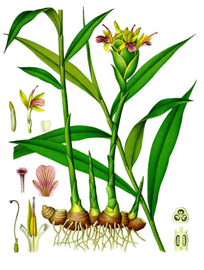
Image from Kohler’s Medicinal Plants.

.

Ginger is a complex substance consisting of more than 60 compounds. “The characteristic odor and flavor of ginger is caused by a mixture of zingerone, shogaols and gingerols, volatile oils that compose one to three percent of the weight of fresh ginger. In laboratory animals, the gingerrols increase the motility of the gastrointestinal tract and have analgesic, sedative, antipyretic and antibacterial properties.[4] Ginger oil has been shown to prevent skin cancer in mice[5] and a study at the University of Michigan demonstrated that gingerols can kill ovarian cancer cells.[6][7][8] [6]-gingerol (1-[4′-hydroxy-3′-methoxyphenyl]-5-hydroxy-3-decanone) is the major pungent principle of ginger. The chemopreventive potentials of [6]-gingerol present a promising future alternative to expensive and toxic therapeutic agents.[9] — Ginger contains up to three percent of a fragrant essential oil whose main constituents are sesquiterpenoids, with (-)-zingiberene as the main component. Smaller amounts of other sesquiterpenoids (β-sesquiphellandrene, bisabolene and farnesene) and a small monoterpenoid fraction (β-phelladrene, cineol, and citral) have also been identified. — The pungent taste of ginger is due to nonvolatile phenylpropanoid-derived compounds, particularly gingerols and shogaols, which form from gingerols when ginger is dried or cooked. Zingerone is also produced from gingerols during this process; this compound is less pungent and has a spicy-sweet aroma.[10] (ref)

Ginger antioxidant properties

That ginger has antioxidant properties has been known for some time The 2004 publication Antioxidant properties of gingerol related compounds from ginger points out that ginger contains over 50 antioxidant compounds. “Ginger (Zingiber officinale Roscoe) shows an antioxidant activity, and we have been engaging to determine the structures of more than 50 antioxidants isolated from the rhizomes of ginger. The isolated antioxidants are divided into two groups; gingerol related compounds and diarylheptanoids. In this study, structure-activity relationship of gingerol related compounds was evaluated.”

Ginger mechanisms for control of inflammation

The 2011 publication Cyclooxygenase-2 inhibitors in ginger (Zingiber officinale) reportsGinger roots have been used to treat inflammation and have been reported to inhibit cyclooxygenase (COX). Ultrafiltration liquid chromatography mass spectrometry was used to screen a chloroform partition of a methanol extract of ginger roots for COX-2 ligands, and 10-gingerol, 12-gingerol, 8-shogaol, 10-shogaol, 6-gingerdione, 8-gingerdione, 10-gingerdione, 6-dehydro-10-gingerol, 6-paradol, and 8-paradol bound to the enzyme active site. Purified 10-gingerol, 8-shogaol and 10-shogaol inhibited COX-2 with IC(50) values of 32 μM, 17.5 μM and 7.5 μM, respectively. No inhibition of COX-1 was detected. Therefore, 10-gingerol, 8-shogaol and 10-shogaol inhibit COX-2 but not COX-1, which can explain, in part, the anti-inflammatory properties of ginger.”

Another mechanism used by ginger compounds to inhibit inflammation is attenuation of NF-kappaB-mediated iNOS gene expression. The 2006 publication Gingerol metabolite and a synthetic analogue Capsarol inhibit macrophage NF-kappaB-mediated iNOS gene expression and enzyme activity relates “–Inducible nitric oxide synthase (iNOS), a proinflammatory enzyme responsible for the generation of nitric oxide (NO), has been implicated in the pathogenesis of inflammatory diseases. Gingerols, the main pungent principles of ginger, have anti-inflammatory properties in vitro. In this study we examine the inhibitory effect of a stable [6]-gingerol metabolite, RAC-[6]-dihydroparadol ([6]-DHP) and a closely related gingerol analogue, RAC-2-hydroxy-1-(4-hydroxy-3-methoxyphenyl)dodecan-3-one [a capsaicin/gingerol (Capsarol) analogue referred to as ZTX42] on NO production, inducible nitric oxide synthase (iNOS) activity and protein expression levels in a murine macrophage cell line –. — Although both compounds partially inhibited the catalytic activity of iNOS, their inhibitory effect was predominantly due to attenuation of iNOS protein production. This occurred at the transcriptional level, since the gingerol compounds decreased LPS-induced IkappaB-alpha degradation, prevented nuclear translocation of NF-kappaB p65 and reduced NF-kappaB activity in a concentration-dependent manner. Taken together, these results show that ZTX42 and [6]-DHP suppress NO production in murine macrophages by partially inhibiting iNOS enzymatic activity and reducing iNOS protein production, via attenuation of NF-kappaB-mediated iNOS gene expression, providing a rationale for the anti-inflammatory activity reported for this class of compounds.”

Ginger endrocrine and anti-inflammatory functions

The 2011 publication Physiological and therapeutical roles of ginger and turmeric on endocrine functions relates “The natural product ginger (Zingiber officinale) has active constituents gingerol, Shogaol and Zerumbone, while turmeric (Curcuma longa) contains three active major curcuminoids, namely, curcumin, demethoxycurcumin, and bisdemethoxycurcumin. They have the same scientific classification and are reported to have anti-inflammatory and many therapeutic effects. This article reviews the physiological and therapeutic effects of ginger and turmeric on some endocrine gland functions, and signal pathways involved to mediate their actions. With some systems and adipose tissue, ginger and turmeric exert their actions through some/all of the following signals or molecular mechanisms: (1) through reduction of high levels of some hormones (as: T4, leptin) or interaction with hormone receptors; (2) by inhibition of cytokines/adipokine expression; (3) acting as a potent inhibitor of reactive oxygen species (ROS)-generating enzymes, which play an essential role between inflammation and progression of diseases; (4) mediation of their effects through the inhibition of signaling transcription factors; and/or (5) decrease the proliferative potent by down-regulation of antiapoptotic genes, which may suppress tumor promotion by blocking signal transduction pathways in the target cells. These multiple mechanisms of protection against inflammation and oxidative damage make ginger and curcumin particularly promising natural agents in fighting the ravages of aging and degenerative diseases, and need to be paid more attention by studies.”

The 2010 publication Comparative antioxidant and anti-inflammatory effects of [6]-gingerol, [8]-gingerol, [10]-gingerol and [6]-shogaol relates “Although gingerols and shogaols are the major bioactive compounds present in Zingiber officinale, their molecular mechanisms of actions and the relationship between their structural features and the activity have not been well studied. — The aim of the present study was to examine and compare the antioxidant and anti-inflammatory activities of gingerols and their natural analogues to determine their structure-activity relationship and molecular mechanisms.” The in-vitro antioxidant assay produced the conclusions “Shogaol has exhibited the most potent antioxidant and anti-inflammatory properties which can be attributed to the presence of alpha,beta-unsaturated ketone moiety. The carbon chain length has also played a significant role in making 10-gingerol as the most potent among all the gingerols. This study justifies the use of dry ginger in traditional systems of medicine.”

Ginger and phagocytosis

Ginger can enhance the functional capability of phagocytes “to protect the body by ingesting (phagocytosing) harmful foreign particles, bacteria, and dead or dying cells.” (ref). The 2009 publication Modulation of macrophage functions by compounds isolated from Zingiber officinale reports on the most bioactive ginger compounds in this regard: “Bioactivity-guided fractionation of Zingiber Officinale (zingiberaceae) led us to isolate 14 compounds, -gingerol ( 1), -gingerol ( 2), -gingerol ( 3), -gingerol ( 4), -paradol ( 5), -shogaol ( 6), -shogaol ( 7), 1-dehydro- -gingerdione ( 8), -gingerdione ( 9), hexahydrocurcumin ( 10), tetrahydrocurcumin ( 11), gingerenone A ( 12), 1,7-bis-(4′ hydroxyl-3′ methoxyphenyl)-5-methoxyhepthan-3-one ( 13), and methoxy- -gingerol ( 14). Using the RAW 264.7 cell line, the inhibitory effects on nitric oxide production induced by lipopolysaccharide and the stimulatory effects on phagocytosis of these compounds were evaluated. Compounds 7, 8, and 9 significantly decreased lipopolysaccharide-induced nitric oxide production, and compounds 7 and 8 significantly reduced inducible nitric oxide synthase expression. Among them, compound 8 also showed significant stimulatory effects on phagocytosis.”

Cancer chemoprevention

In my blog post Cancer, epigenetics and dietary substances I introduced the post by stating “We have long known from large population studies that regular consumption of certain dietary substances and supplements like green tea, olive oil, blueberries, oregano, ginger and hot chili peppers can negatively impact on incidences of cancer. We also know from multiple studies that certain plant-based polyphenol substances like rosmarinic acid, curcumin, lycopene, caffeic acid, resveratrol and gingerol inhibit the development of certain cancers. Indeed this research has been the basis for my suggested lifestyle and dietary supplement anti-aging regimens.” The same seems to be true for ginger as related in the 2007 publication Cancer preventive properties of ginger: a brief review.

Ginger induces apoptosis in various lines of cancer cells. For example, the 2010 document Induction of apoptosis by [8]-shogaol via reactive oxygen species generation, glutathione depletion, and caspase activation in human leukemia cells reports “This study examined the growth inhibitory effects of [8]-shogaol, one of the pungent phenolic compounds in ginger, on human leukemia HL-60 cells. It demonstrated that [8]-shogaol was able to induce apoptosis in a time- and concentration-dependent manner. Treatment with [8]-shogaol caused a rapid loss of mitochondrial transmembrane potential, stimulation of reactive oxygen species (ROS) production, release of mitochondrial cytochrome c into cytosol, and subsequent induction of procaspase-9 and procaspase-3 processing. Taken together, these results suggest for the first time that ROS production and depletion of glutathione that contributed to [8]-shogaol-induced apoptosis in HL-60 cells.”

Ginger compounds can promote P53 apoptosis of cancer cells. The 2010 publication Induction of apoptosis by [6]-gingerol associated with the modulation of p53 and involvement of mitochondrial signaling pathway in B[a]P-induced mouse skin tumorigenesis reports “Topical treatment of [6]-gingerol (2.5 muM/animal) was given to the animals 30 min prior and post to B[a]P (5 mug/animal) for 32 weeks. At the end of the study period, the skin tumors/tissues were dissected out and examined histopathologically. Flow cytometry was employed for cell cycle analysis. Further immunohistochemical localization of p53 and regulation of related apoptogenic proteins were determined by Western blotting. — Chemopreventive properties of [6]-gingerol were reflected by delay in onset of tumorigenesis, reduced cumulative number of tumors, and reduction in tumor volume. Cell cycle analysis revealed that the appearance of sub-G1 peak was significantly elevated in [6]-gingerol treated animals with post treatment showing higher efficacy in preventing tumorigenesis induced by B[a]P. Moreover, elevated apoptotic propensity was observed in tumor tissues than the corresponding non-tumor tissues. Western blot analysis also showed the same pattern of chemoprevention with [6]-gingerol treatment increasing the B[a]P suppressed p53 levels, also evident by immunohistochemistry, and Bax while decreasing the expression of Bcl-2 and Survivin. Further, [6]-gingerol treatment resulted in release of Cytochrome c, Caspases activation, increase in apoptotic protease-activating factor-1 (Apaf-1) as mechanism of apoptosis induction. — On the basis of the results we conclude that [6]-gingerol possesses apoptotic potential in mouse skin tumors as mechanism of chemoprevention hence deserves further investigation.”

Ginger compounds limit cancer-related angiogenesis. The 2005 publication [6]-Gingerol, a pungent ingredient of ginger, inhibits angiogenesis in vitro and in vivo relates “[6]-Gingerol, a pungent ingredient of ginger (Zingiber officinale Roscoe, Zingiberaceae), has anti-bacterial, anti-inflammatory, and anti-tumor-promoting activities. Here, we describe its novel anti-angiogenic activity in vitro and in vivo. In vitro, [6]-gingerol inhibited both the VEGF- and bFGF-induced proliferation of human endothelial cells and caused cell cycle arrest in the G1 phase. It also blocked capillary-like tube formation by endothelial cells in response to VEGF, and strongly inhibited sprouting of endothelial cells in the rat aorta and formation of new blood vessel in the mouse cornea in response to VEGF. Moreover, i.p. administration, without reaching tumor cytotoxic blood levels, to mice receiving i.v. injection of B16F10 melanoma cells, reduced the number of lung metastasis, with preservation of apparently healthy behavior. Taken together, these results demonstrate that [6]-gingerol inhibits angiogenesis and may be useful in the treatment of tumors and other angiogenesis-dependent diseases.”

Another of the impacts of ginger on certain cancer cells appears to be inhibition of proliferation-related genes through inhibiting expression of NF-kappaB and COX-2 induction.  The 2004 publication Inhibitory effects of [6]-gingerol on PMA-induced COX-2 expression and activation of NF-kappaB and p38 MAPK in mouse skin relates “. Previous studies have demonstrated that [6]-gingerol inhibits mouse skin tumor promotion and anchorage-independent growth of cultured mouse epidermal cells stimulated with epidermal growth factor. Cyclooxygenase-2 (COX-2), a key enzyme in the prostaglandin biosynthesis, has been recognized as a molecular target for many anti-inflammatory as well as chemopreventive agents. Topical application of [6]-gingerol inhibited phorbol 12-myristate 13-acetate -induced COX-2 expression. One of the essential transcription factors responsible for COX-2 induction is NF-kappaB. [6]-Gingerol suppressed NF-kappaB DNA binding activity in mouse skin. In addition, [6]-gingerol inhibited the phoshorylation of p38 mitogen-activated protein kinase which may account for its inactivation of NF-kappaB and suppression of COX-2 expression.”

These same factors are also discussed in the 2007 publication Ginger inhibits cell growth and modulates angiogenic factors in ovarian cancer cells. Ginger (Zingiber officinale Rosc) is a natural dietary component with antioxidant and anticarcinogenic properties. The ginger component [6]-gingerol has been shown to exert anti-inflammatory effects through mediation of NF-kappaB. NF-kappaB can be constitutively activated in epithelial ovarian cancer cells and may contribute towards increased transcription and translation of angiogenic factors. In the present study, we investigated the effect of ginger on tumor cell growth and modulation of angiogenic factors in ovarian cancer cells in vitro. The effect of ginger and the major ginger components on cell growth was determined in a panel of epithelial ovarian cancer cell lines. Activation of NF-kappaB and and production of VEGF and IL-8 was determined in the presence or absence of ginger. — Ginger treatment of cultured ovarian cancer cells induced profound growth inhibition in all cell lines tested. We found that in vitro, 6-shogaol is the most active of the individual ginger components tested. Ginger treatment resulted in inhibition of NF-kB activation as well as diminished secretion of VEGF and IL-8. — Ginger inhibits growth and modulates secretion of angiogenic factors in ovarian cancer cells. The use of dietary agents such as ginger may have potential in the treatment and prevention of ovarian cancer.”

Also see the 2009 publication Ginger’s (Zingiber officinale Roscoe) inhibition of rat colonic adenocarcinoma cells proliferation and angiogenesis in vitro and the 2008 publication 6-Shogaol suppressed lipopolysaccharide-induced up-expression of iNOS and COX-2 in murine macrophages.

.Another mechanism of action of ginger on cancer cells onvolves TRAIL. TRAIL stand for tumor necrosis factor–related apoptosis-inducing ligand. TRAIL is also called APO-2L and consists of 281 amino acids. Regarding TRAIL as an approach to cancer therapy see the blog entry On the TRAIL of a selective cancer treatment. The 2007 publication Ginger ingredients reduce viability of gastric cancer cells via distinct mechanisms reports “We found that 6-gingerol, a phenolic alkanone isolated from ginger, enhanced the TRAIL-induced viability reduction of gastric cancer cells while 6-gingerol alone affected viability only slightly. 6-Gingerol facilitated TRAIL-induced apoptosis by increasing TRAIL-induced caspase-3/7 activation. 6-Gingerol was shown to down-regulate the expression of cIAP1, which suppresses caspase-3/7 activity, by inhibiting TRAIL-induced NF-kappaB activation. As 6-shogaol has a chemical structure similar to 6-gingerol, we also assessed the effect of 6-shogaol on the viability of gastric cancer cells. Unlike 6-gingerol, 6-shogaol alone reduced the viability of gastric cancer cells. 6-Shogaol was shown to damage microtubules and induce mitotic arrest. These findings indicate for the first time that in gastric cancer cells, 6-gingerol enhances TRAIL-induced viability reduction by inhibiting TRAIL-induced NF-kappaB activation while 6-shogaol alone reduces viability by damaging microtubules.”

The anti-cancer effects of ginger involving TRAIL seem to be similar to those of many other plant phytochemicals. In an my blog entry on TRAIL I wrote “Certain of the supplements in the Susceptibility to Cancer firewall, particularly curcumin(ref), resveratrol(ref) and green tea, owe at least some of their anti-cancer effects to the operation of TRAIL. In the case of prostate and other cancers, curcumin inhibits the activation of NF-kappaB which makes them more sensitive to apoptosis by TRAIL(ref,ref,ref). Resveratrol appears to have the same effect in certain tumors(ref)(ref). The same appears to be true for EGCG, the major active constituent of green tea(ref). I speculate that other plant-derived polyphenols in the anti-cancer firewall might have similar effects, enhancing TRAIL-mediated death receptor activation in cancer cells. Possibly, most of the 39 inhibitors of NF-kappaB in the firewall might work to empower TRAIL and fight cancers in the same way.”

Ginger has also been shown to inhibit the expression of telomerase in certain cancer cells. The December 2010 publication Ginger extract inhibits human telomerase reverse transcriptase and c-Myc expression in A549 lung cancer cells reports “. Here we show that the ethyl acetate fraction of ginger extract can inhibit the expression of the two prominent molecular targets of cancer, the human telomerase reverse transcriptase (hTERT) and c-Myc, in A549 lung cancer cells in a time- and concentration-dependent manner. The treated cells exhibited diminished telomerase activity because of reduced protein production rather than direct inhibition of telomerase. The reduction of hTERT expression coincided with the reduction of c-Myc expression, which is one of the hTERT transcription factors; thus, the reduction in hTERT expression might be due in part to the decrease of c-Myc. As both telomerase inhibition and Myc inhibition are cancer-specific targets for cancer therapy, ginger extract might prove to be beneficial as a complementary agent in cancer prevention and maintenance therapy.”

A 2008 publication relates to cytotoxicity of ginger compounds to cancer cells: Cytotoxic components from the dried rhizomes of Zingiber officinale Roscoe. “Five compounds were isolated from the chloroform-soluble fraction of the methanolic extract of the dried rhizomes of Zingiber officinale (Zingiberaceae) through repeated column chromatography. Their chemical structures were elucidated as 4-, 6-, 8-, and 10-gingerols, and 6-shogaol using spectroscopic analysis. Among the five isolated compounds, 6-shogaol exhibited the most potent cytotoxicity against human A549, SK-OV-3, SK-MEL-2, and HCT15 tumor cells. 6-shogaol inhibited proliferation of the transgenic mouse ovarian cancer cell lines, C1 (genotype: p53(-/-), c-myc, K-ras) and C2 (genotype: p53(-/-), c-myc, Akt), with ED(50) values of 0.58 microM (C1) and 10.7 microM (C2).”

The relative anti-carcinogenic effectiveness of gingerol and shogaol compounds in ginger is dealt with in the 2009 publication Increased growth inhibitory effects on human cancer cells and anti-inflammatory potency of shogaols from Zingiber officinale relative to gingerols. Ginger, the rhizome of the plant Zingiber officinale , has received extensive attention because of its antioxidant, anti-inflammatory, and antitumor activities. Most researchers have considered gingerols as the active principles and have paid little attention to shogaols, the dehydration products of corresponding gingerols during storage or thermal processing. In this study, we have purified and identified eight major components, including three major gingerols and corresponding shogaols, from ginger extract and compared their anticarcinogenic and anti-inflammatory activities. Our results showed that shogaols ([6], [8], and [10]) had much stronger growth inhibitory effects than gingerols ([6], [8], and [10]) on H-1299 human lung cancer cells and HCT-116 human colon cancer cells, especially when comparing [6]-shogaol with [6]-gingerol (IC50 of approximately 8 versus approximately 150 microM). In addition, we found that [6]-shogaol had much stronger inhibitory effects on arachidonic acid release and nitric oxide (NO) synthesis than [6]-gingerol.”

You can also see Comparative antioxidant and anti-inflammatory effects of [6]-gingerol, [8]-gingerol, [10]-gingerol and [6]-shogaol and Mode of action of gingerols and shogaols on 5-HT3 receptors: binding studies, cation uptake by the receptor channel and contraction of isolated guinea-pig ileum.

In my blog entry Nrf2 and cancer chemoprevention by phytochemicals I indicated “A cluster of research reports has appeared during the last few years looking at mechanisms through which substances rich in phytochemicals (e.g. coffee, chocolate, turmeric, olive oil, broccoli, red hot peppers, green tea, garlic, blueberries, rosemary, oregano, sage) are cancer-preventative. While these foods have been studied for many years a new focal point has been moving to center stage – study of what these substances are doing in terms of gene expression as a key to understanding their therapeutic value. — Recent studies have provided strong evidence that many daily-consumed dietary compounds possess cancer-protective properties that might interrupt the carcinogenesis process. These properties include the induction of cellular defense detoxifying and antioxidant enzymes, which can protect against cellular damage caused by environmental carcinogens or endogenously generated reactive oxygen species. These compounds can also affect cell-death signaling pathways, which could prevent the proliferation of tumor cells.” — One master activator of antioxidant and anticancer genes appears to be Nuclear factor-erythroid-2-related factor 2 (Nrf2). The sequence of events involved in phytochemical chemoprevention mediated by Nrf2 is complex and is summarized in the 2008 publication Nrf2 as a master redox switch in turning on the cellular signaling involved in the induction of cytoprotective genes by some chemopreventive phytochemicals. “A wide array of dietary phytochemicals have been reported to induce the expression of enzymes involved in both cellular antioxidant defenses and elimination/inactivation of electrophilic carcinogens. Induction of such cytoprotective enzymes by edible phytochemicals largely accounts for their cancer chemopreventive and chemoprotective activities.” For those of you who have a taste for molecular biology, that document goes on to explain “Nuclear factor-erythroid-2-related factor 2 (Nrf2) plays a crucial role in the coordinated induction of those genes encoding many stress-responsive and cytoptotective enzymes and related proteins. These include NAD(P)H:quinone oxidoreductase-1, heme oxygenase-1, glutamate cysteine ligase, glutathione S-transferase, glutathione peroxidase, thioredoxin, etc. In resting cells, Nrf2 is sequestered in the cytoplasm as an inactive complex with the repressor Kelch-like ECH-associated protein 1 (Keap1). The release of Nrf2 from its repressor is most likely to be achieved by alterations in the structure of Keap1. Keap1 contains several reactive cysteine residues that function as sensors of cellular redox changes. Oxidation or covalent modification of some of these critical cysteine thiols would stabilize Nrf2, thereby facilitating nuclear accumulation of Nrf2. After translocation into nucleus, Nrf2 forms a heterodimer with other transcription factors, such as small Maf, which in turn binds to the 5′-upstream CIS-acting regulatory sequence, termed antioxidant response elements (ARE) or electrophile response elements (EpRE), located in the promoter region of genes encoding various antioxidant and phase 2 detoxifying enzymes. Certain dietary chemopreventive agents target Keap1 by oxidizing or chemically modifying one or more of its specific cysteine thiols, thereby stabilizing Nrf2. In addition, phosphorylation of specific serine or threonine residues present in Nrf2 by upstream kinases may also facilitate the nuclear localization of Nrf2. Multiple mechanisms of Nrf2 activation by signals mediated by one or more of the upstream kinases, such as mitogen-activated protein kinases, phosphatidylionositol-3-kinase/Akt, protein kinase C, and casein kinase-2 have recently been proposed.”

Neurological actions of ginger

Ginger fractions bind to a serotonin receptor and reduces levels of anxiety in animals. The 2010 publication Identification of serotonin 5-HT1A receptor partial agonists in ginger reports: “Animal studies suggest that ginger (Zingiber officinale Roscoe) reduces anxiety. In this study, bioactivity-guided fractionation of a ginger extract identified nine compounds that interact with the human serotonin 5-HT(1A) receptor with significant to moderate binding affinities (K(i)=3-20 microM). [(35)S]-GTP gamma S assays indicated that 10-shogaol, 1-dehydro-6-gingerdione, and particularly the whole lipophilic ginger extract (K(i)=11.6 microg/ml) partially activate the 5-HT(1A) receptor (20-60% of maximal activation). In addition, the intestinal absorption of gingerols and shogaols was simulated and their interactions with P-glycoprotein were measured, suggesting a favourable pharmacokinetic profile for the 5-HT(1A) active compounds.”

Relevant to Alzheimer’s disease pathology is the 2011 publication [6]-Gingerol attenuates β-amyloid-induced oxidative cell death via fortifying cellular antioxidant defense system. “β-Amyloid (Aβ) is involved in the formation of senile plaques, the typical neuropathological marker for Alzheimer’s disease (AD) and has been reported to cause apoptosis in neurons via oxidative and/or nitrosative stress. In this study, we have investigated the neuroprotective effect and molecular mechanism of [6]-gingerol, a pungent ingredient of ginger against Αβ(25-35)-induced oxidative and/or nitrosative cell death in SH-SY5Y cells. [6]-Gingerol pretreatment protected against Aβ(25-35)-induced cytotoxicity and apoptotic cell death such as DNA fragmentation, disruption of mitochondrial membrane potential, elevated Bax/Bcl-2 ratio, and activation of caspase-3. To elucidate the neuroprotective mechanism of [6]-gingerol, we have examined Aβ(25-35)-induced oxidative and/or nitrosative stress and cellular antioxidant defense system against them. [6]-Gingerol effectively suppressed Aβ(25-35)-induced intracellular accumulation of reactive oxygen and/or nitrogen species and restored Aβ(25-35)-depleted endogenous antioxidant glutathione levels. Furthermore, [6]-gingerol treatment up-regulated the mRNA and protein expression of antioxidant enzymes such as γ-glutamylcysteine ligase (GCL) and heme oxygenase-1 (HO-1), the rate limiting enzymes in the glutathione biosynthesis and the degradation of heme, respectively. The expression of aforementioned antioxidant enzymes seemed to be mediated by activation of NF-E2-related factor 2 (Nrf2). These results suggest that [6]-gingerol exhibits preventive and/or therapeutic potential for the management of AD via augmentation of antioxidant capacity.” I discussed the roles of Nrf2 above.

Ginger and respiratory diseases

Interesting new findings related to asthma are reported in the April 2011 publication Ginger suppresses phthalate ester-induced airway remodeling.This study has two novel findings: it is not only the first to demonstrate inflammatory cytokines, which are produced by the bronchial epithelium after exposure to phthalate esters and contribute to airway remodeling by increasing human bronchial smooth muscle cells (BSMC) migration and proliferation, but it is also the first to reveal that ginger reverses phthalate ester-mediated airway remodeling. –. Moreover, [6]-shogaol, [6]-gingerol, [8]-gingerol, and [10]-gingerol, which are major bioactive compounds present in Zingiber officinale , suppress phthalate ester-mediated airway remodeling. This study suggests that ginger is capable of preventing phthalate ester-associated asthma.”

Ginger and gastrointestinal diseases

Ginger compounds may be useful for controlling some intestinal diseases. The 2011 publication Effects of Ginger Constituents on the Gastrointestinal Tract: Role of Cholinergic M3 and Serotonergic 5-HT3 and 5-HT4 Receptors reports “The herbal drug ginger ( ZINGIBER OFFICINALE Roscoe) may be effective for treating nausea, vomiting, and gastric hypomotility.”

The 2011 publication Intraluminal administration of zingerol, a non-pungent analogue of zingerone, inhibits colonic motility in rats reports “Zingerone, a pungent component of ginger, may exert beneficial therapeutic effects on hypermotilityinduced diarrhea because it has the ability to inhibit contractions of colonic smooth muscles. However, the pungency is undesirable for possible therapeutic use. The purpose of this study was to examine effects of zingerol, a non-pungent analogue of zingerone, in rats. — These findings suggest that zingerol can inhibit colonic motility without adverse effects on small intestinal motility and the cardiovascular system. The non-pungent property of zingerol will be useful as an oral or suppository medicine for treating diarrhea and other gastrointestinal disorders.”

Ginger and the immune system

At least one component of ginger is immunosuppressive as pointed out in the 2011 publication Immunosuppressive activity of 8-gingerol on immune responses in mice. “8-gingerol is one of the principal components of ginger, which is widely used in China and elsewhere as a food, spice and herb. It shows immunosuppressive activity on the immune responses to ovalbumin (OVA) in mice. In the present study, we found that 8-gingerol suppressed lipopolysaccharide (LPS) and concanavalin A (ConA)-stimulated splenocyte proliferation in vitro. In vivo, 8-gingerol not only significantly suppressed Con A-, LPS- and OVA-induced splenocyte proliferation (P < 0.05) but also decreased the percentage of CD19+ B cells and CD3+ T cell (P < 0.05) at high doses (50, 100 mg/kg). Moreover, OVA-specific IgG, IgG1 and IgG2b levels in OVA-immunized mice were reduced by 8-gingerol at doses of 50, 100 mg/kg. These results suggest that 8-gingerol could suppress humoral and cellular immune responses in mice. The mechanism might be related to direct inhibition of sensitized T and B lymphocytes.”

Ginger and bacterial resistance to tetracycline

The 2010 publication Zingiber officinale (ginger) compounds have tetracycline-resistance modifying effects against clinical extensively drug-resistant Acinetobacter baumannii reports “Extensively drug-resistant Acinetobacter baumannii (XDRAB) is a growing and serious nosocomial infection worldwide, such that developing new agents against it is critical. The antimicrobial activities of the rhizomes from Zingiber officinale, known as ginger, have not been proven in clinical bacterial isolates with extensive drug-resistance. This study aimed to investigate the effects of four known components of ginger, [6]-dehydrogingerdione, [10]-gingerol, [6]-shogaol and [6]-gingerol, against clinical XDRAB. All these compounds showed antibacterial effects against XDRAB. Combined with tetracycline, they showed good resistance modifying effects to modulate tetracycline resistance.”

Final observations

Ginger is an impressive and far from boring substance when looked at through the lenses of current medical-related research. I expect we will be hearing more and more about curative and life-extending properties of ginger-derived compounds as time proceeds.

However, I have seen little-to-no research so far regarding the effects of ginger as an epigenetic modifier, whether or how ginger affects gene promotion, or regarding possible impacts of ginger compounds on stem cell quiescence or activation. The same is true for most of the other important dietary phyto-substances, resveratrol and curcumin being partial exemptions. I am looking forward to seeing and reporting on such research as it eventually appears.

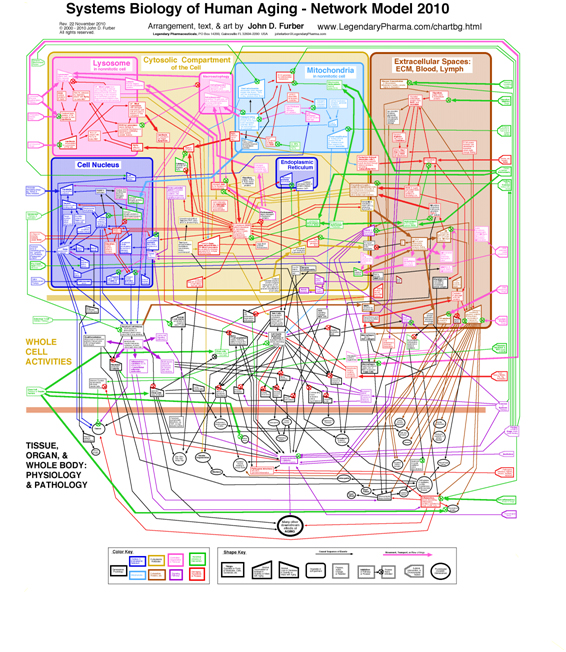
Posted in Uncategorized | 6 Comments

p53 and Longevity

By Victor

Since its discovery in 1979, p53 has never stopped surprising researchers. For a decade, it was thought to be an oncogene (a gene that causes cancer). In 1989, it was found to have the opposite role of suppressing tumors. (ref) It was originally thought to be a transcriptional activator, until it was discovered to also be a repressor. (ref) It was then discovered that not only did p53 function within the cell nucleus, but also in the cytoplasm, regulating mitochondrial activity. (ref) p53 is known to play a very surprising role in the cancer-protective process of UV skin tanning. (ref) A similar response to UV light is known to have protected our invertebrate ancestors from the potentially harmful effects of radiation one billion years ago, indicating that the function of p53 has been preserved for, at least, one million millenia. (ref) A further surprise came when p53 was found to have an important role in aging and longevity, which will be the focus of this discussion.

A more detailed discussion of p53 in cancer prevention can be found in an earlier blog entry by Dr. Guiliano, Turning p53 On in Cancer Cells.

What exactly is p53?

p53 actually refers to a family of closely related transcription factors consisting of p53, p63, and p73, each of which has various isoforms with distinct effects. (ref) (An isoform is different form, or variant of the same protein which may result from alternative splicing of the same gene.) Although they are referred to as “transcription factors”, due to their ability to interact with the process of genetic transcription, their effects are not limited to nuclear transcription, but also include post translational modifications, and many protein-protein interactions involved in a variety of signaling pathways. All three subfamilies target the same genes; and all three play important roles in cell-cycle regulation, including the hallmark ability to suppress tumorigenesis by inducing cell-cycle arrest. Such arrest may be temporary, allowing for DNA repair (quiesence), or permanent (senescence), or result in cellular death (apoptosis). Knockout mice studies have shown that p63 is especially important for regulation of epithelial tissues, including normal development and repair, while p73 is crucial for normal differentiation and development of neurons. (ref)

Interplay between p53 subfamilies and isoforms.

Various members of the p53 family play distinct, but similar, and complementary roles in suppressing tumorigenesis, and in the regulation of other cellular functions. A great deal of interaction between different p53 subfamilies and their various isoforms is known to take place. The importance of p53 subfamily interaction is exemplified by the fact that, without the presence of p63 and p73, p53 alone is unable to induce apoptosis in DNA-damaged cells. (ref) However, this interaction is not always, complementary. Truncated isoforms, lacking the N-terminal or transactivation domain, are constitutively active, meaning they are always active; for this reason, they are also said to be “unregulated”. Regulated, transactivating isoforms are activated in response to cellular stress signals. (Cellular stress can be the result of nutrient scarcity, aberrant metabolic activity, reactive oxygen species, inflammation, etc.) Truncated isoforms of all three subfamilies are known to antagonize the regulated activity of the complete, transactivaing isoforms. (ref, ref) To distinguish them from their truncated variants, transactivating isoforms are often written with a TA prefix, i.e. TAp53, TAp63, etc. Mutant p53 variants are also known to form mutant complexes with normal isoforms, thereby altering their function or deactivating them. (ref)

Guardians of the genome.

All three subfamilies play complementary roles in maintaining the genomic integrity and viability of germ line cells. For this reason, the p53 family has been collectively referred to as the “guardian of the genome”, while the p63, which is constitutively expressed in female germ cells during meiotic arrest, and is necessary for apoptosis of DNA-damaged oocytes, has been referred to as “the guardian of the female germ line”. See: p63 protects the female germ line , p73 knockout shows genomic instability with infertility –, and A male germ cell tumor-susceptibility-determining locus.

p53 is also known as the “guardian of the somatic genome”:

Within the higher vertebrates, p63 and p73 have taken on new functions in development of tissues and organs, whereas p53 has become the guardian of the somatic genome and a tumor suppressor. With the advent of employing large numbers of stem cells and tissue regeneration as a strategy for an organism’s growth, development, and maintenance, there is a greater need for stem cell surveillance to prevent cancers from arising. p53 evolved to fill this role. It is of some interest that p53 has recently been shown to regulate the efficiency of induced pluripotent stem cell production from differentiated cells (1317) indicating a new possible role for p53 in enforcing the direction of developmental processes in a cell. There is an intimate relationship among p53, stem cell development, and epigenetic regulation of these processes, and it began to evolve in the fishes.” (ref)

The aging connection: Antagonistic Pleiotropy.

Originally proposed in 1957, the basic idea behind the theory of antagonistic pleiotropy is that the forces of natural selection will give preference to genes that promote survival in the earlier stages of life, even if they are detrimental to survival in later life. Clearly, if an organism doesn’t survive the early stages, then genes that promote survival in later life are meaningless. Furthermore, once an organism passes its reproductive stage, the genomic value of continued survival becomes less clear. Some have considered p53 an ideal candidate for such a gene. They reason that there is a tradeoff between youthful health, and longevity. By inducing cell-cycle arrest in suspect cells, p53 protects against cancer and other degenerative diseases, but at the cost of reducing future supplies of viable cells, leading to senescence and premature aging. See: The common biology of cancer and ageing. See also: Stem Cell Supply Chain Breakdown.

What is the role of the p53 family in aging? Examining the evidence.

In 2002 and 2004, two landmark studies demonstrated that mice with increased p53 activity, while extraordinarily resistant to cancer, showed multiple signs of accelerated aging, and died prematurely. See: p53 mutant mice that display early ageing-associated phenotypes, and Modulation of mammalian life span by the short isoform of p53. Overexpression of p53 was thought to result in chronic apoptosis resulting in cancer protection, at the cost of tissue atrophy or dysfunction, leading to premature death. (ref) A more recent 2009 study shows that overexpression of p53 results in depletion of neural stem supplies, directly leading to decline in normal brain function.

Regenerative capacity of neural precursors in the adult mammalian brain is under the control of p53: “We determined that the impaired ability of NSCs to proliferate does indeed limit the supply of newly generated neurons in the adult brain in an age-dependent way. We also determined that brain function (olfaction) and stem and progenitor cell proliferation declined in parallel. We propose that p53 is a central regulator of neurogenesis in the adult mammalian brain. . . Our results suggest that during aging this regulatory mechanism deteriorates, resulting in disruptions in the ability of stem cells to proliferate. As a consequence, neurogenic regions in the adult brain lose the capacity to replace neurons lost through attrition and normal brain function declines.”

Contradictory Evidence.

Not all studies have shown a reduction in longevity associated with increased p53 activity. Mice with an extra copy of the wild-type p53 gene, showed increased p53 activity, and increased cancer resistance, but with no signs of accelerated aging, and a normal lifespan. See: “Super p53” mice exhibit enhanced DNA damage response, are tumor resistant and age normally. In another model, p53 overexpression was achieved by reducing activity of a known p53 inhibitor, murine double-minute gene 2 (Mdm2). See: Tumor suppression and normal aging in mice with constitutively high p53 activity. Once again, extraordinary cancer resistance was accomplished, with no adverse effects on aging or lifespan. In a third study, “genetically manipulated mice with increased, but otherwise normally regulated, levels of Arf and p53 present strong cancer resistance and have decreased levels of age-associated damage. These observations extend the protective role of Arf/p53 to aging, revealing a previously unknown anti-aging mechanism and providing a rationale for the co-evolution of cancer resistance and longevity.” See: Delayed ageing through damage protection by the Arf/p53 pathway. (Arf is an upstream regulator of p53.) These mice were not only cancer-resistant, but they had a significantly increased lifespan. In these studies increased p53 activity was associated with a reduction in age-associated DNA damage, and the accumulation of damaged cells.

Explaining the Contradiction.

These examples clearly demonstrate that p53 activity can be increased, providing improved cancer resistance, without adversely affecting lifespan, and in some cases, actually extending lifespan. Therefore, the lifespan reduction seen in the previous examples, must be the result of some other factor, and is not a necessary consequence of the cancer suppressive effects of increased p53 activity per se. There must be something else involved in the methods used to increase p53 activity that explains the reduced lifespan, and the reduction in neural stem cell supply. What do the methodologies of those studies all have in common? Answer: They all used a truncated isoform of p53. Apparently, the reduction in lifespan is the result of the use of this unregulated, truncated variant. As previously mentioned, this truncated isoform is known to antagonize the effects of the regulated, transactivating isoforms, TAp53, TAp63 and TAp73. One way the truncated variant may inactivate the TA isoforms is by directly binding to their transactivation domain, preventing activation and binding to target genes. Mice lacking the p63 gene have shortened lifespans. It is very plausible that the truncated p53 isoform could reduce lifespan by interfering with normal, regulated activity of TAp63. From TAp63: The fountain of youth:

The mice exhibiting signs of premature aging contain truncated p53 mutants [4,5] while those that display a normal lifespan upregulate p53 by other mechanisms, such as the expression of a p53 transgene in addition to the endogenous p53 alleles or a hypomorphic allele of mdm2 [6,7]. One potential explanation of the discrepancy in the phenotypes of these mice is that TAp63 interacts with point mutant p53 rendering TAp63 functionally inactive. Consequently, mice expressing mutant p53 would exhibit phenotypes similar to those observed in the TAp63-/- mice. Previous studies have shown this to occur in the context of tumorigenesis and metastasis [8,9]. Mice engineered to express point mutants of p53 in Li-Fraumeni Syndrome inactivate p63 and p73 in tumors by binding to them and preventing the transactivation of their target genes [8,9,10]. These mouse models exhibit a metastatic phenotype similar to that observed in p53+/-;p63+/- and p53+/-;p73+/- mice illustrating an intricate relationship between the p53 family members [11,12]. Yet, another unexplored and possible explanation is that expression levels of the p53 family members change in mice that lack one or more of the family members, i.e. gene compensation. Such family member compensation has been observed in other families of genes including the Rb family [13,14,15]. In mouse models expressing abnormally high levels of p53, TAp63 levels may be dampened commensurate with an increase in p53 protein expression. p53 protein levels are known to be high in mice expressing mutated versions of p53 [8,9,10]. Thus, loss of TAp63 in these mouse models may again result in an acceleration of organismal aging.”

p53 is NOT the “central regulator of neurogenesis in the adult mammalian brain”.

As previously mentioned, p73 plays an important role in the maintenance of neurological tissues. Multiple, recent research has demonstrated that p73 maintains neural stem cell pools, not p53 (and most certainly not the truncated p53 variant used in the previously mentioned study). Apparently, the loss of neural stem cells was, once again, due to interference of this truncated p53 variant in the normal, regulated function of TAp73 in maintaining adequate neural stem cell supplies. p73 deficiency results in impaired self renewal and premature neuronal differentiation of mouse neural progenitors independently of p53: “p73 deficiency increases the population of neuronal progenitors ready to differentiate into neurons at the expense of depleting the pool of undifferentiated neurosphere-forming cells. Analysis of the neurogenic niches demonstrated that p73-loss depletes the number of neural-progenitor cells, rendering deficient niches in the adult mice. Altogether, our study identifies TAp73 as a positive regulator of self-renewal with a role in the maintenance of the neurogenic capacity. Thus, proposing p73 as an important player in the development of neurodegenerative diseases and a potential therapeutic target.” See also:

p73 regulates maintenance of neural stem cell

TAp73 acts via the bHLH Hey2 to promote long-term maintenance of neural precursors

p73 is an essential regulator of neural stem cell maintenance in embryonal and adult CNS neurogenesis

p73: A Multifunctional Protein in Neurobiology

Just as TAp73 maintains neural stem cell supplies, TAp63 maintains stem cell supplies in epithelial and other tissues.

TAp63: The fountain of youth:

TAp63 maintains adult stem cells. The mysterious mechanisms that regulate aging are an area of active research. The induction of senescence or apoptosis in stem and progenitor cells is thought to trigger premature organismal aging [2]. Consistent with this idea, we found that the TAp63-/- mice had a significantly shortened life span compared to its wild-type littermates [1]. These mice exhibited phenotypes associated with premature aging including kyphosis, impaired wound healing, alopecia, epithelial and muscular atrophy, and chronic nephritis. These phenotypes suggest a critical role for TAp63 in the maintenance of adult stem cells in multiple epithelial and non-epithelial tissues. Indeed, we found that TAp63 maintains dermal stem cells by transcriptionally activating the cyclin dependent kinase inhibitor, p57, thereby preventing hyperproliferation of these cells (Figure1A) [1,3]. Similar to the phenotype identified in dermal and epidermal progenitor and stem cells, other adult stem cells in the TAp63-/- mice may be hyperproliferative early in life and through similar senescence mechanisms that we delineated may result in a depletion of these stem cells and premature organismal aging ​(Figure1B) [1].”

TAp63 prevents premature aging by promoting adult stem cell maintenance:

The cellular mechanisms that regulate the maintenance of adult tissue stem cells are still largely unknown. We show here that the p53 family member, TAp63, is essential for maintenance of epidermal and dermal precursors and that, in its absence, these precursors senesce and skin ages prematurely. Specifically, we have developed a TAp63 conditional knockout mouse and used it to ablate TAp63 in the germline (TAp63(-/-)) or in K14-expressing cells in the basal layer of the epidermis (TAp63(fl/fl);K14cre+). TAp63(-/-) mice age prematurely and develop blisters, skin ulcerations, senescence of hair follicle-associated dermal and epidermal cells, and decreased hair morphogenesis. These phenotypes are likely due to loss of TAp63 in dermal and epidermal precursors since both cell types show defective proliferation, early senescence, and genomic instability. These data indicate that TAp63 serves to maintain adult skin stem cells by regulating cellular senescence and genomic stability, thereby preventing premature tissue aging.”

In what other ways does the p53 family promote longevity?

As we have seen, increased, regulated p53 activity can result in increased longevity, as well as increased cancer resistance. Clearly, one way in which regulated activity of the p53 family may contribute to increased longevity is by maintaining increased stem cell supplies in various bodily tissues. Are there other ways in which the p53 family could contribute to longevity? p53 promotes longevity thru multiple mechanisms and signaling pathways. I may discuss some of these pathways in greater detail in a future post. For now, I will just briefly mention a couple of the many longevity-promoting mechanisms of p53.

Inflammation Reduction.

Aging is characterized by increased local and systemic inflammation. Senescent cells are known to secrete large amounts cytokines (signaling molecules) with multiple harmful effects, including increased inflammation. (ref) The accumulation of senescent cells with aging may, in part, explain age-associated chronic inflammation, which, in turn, contributes to many degenerative conditions, including heart disease, AD, metabolic disorders and cancer. (ref) One of several ways, by which p53 activity reduces inflammation is by directly reducing the harmful secretions of senescent cells. (ref) Suprisingly, p53 also functions to actually suppress cellular senescence, thereby reducing the number of senescent cells excreting harmful cytokines. (ref , ref, ref).

ROS Reduction.

Reactive oxygen species are free radicals which damage cellular structures and interfere with healthy physiologic processes. See: Oxidative Damage. p53 can both increase and decrease ROS. (ref) ROS play an important role in the process of cellular arrest. Mitochondrial energy production depends upon ROS. p53 contributes to controlling the harmful effects of ROS in several ways. p53 regulates mitochondrial function reducing the production of ROS in times of stress, and increases mitochondrial biogenesis. (ref) P53 also maintains mitochondrial DNA, which further reduces ROS. (ref) It is interesting that p53 actually increases ROS within the mitochondria, but generates antioxidants, like manganese superoxide dismutase, in order to prevent the ROS from causing damage outside of the mitochondria. (ref) It is interesting to note that much of the anticancer protection afforded by p53, results directly from its antioxidant function. This is demonstrated by the fact that the tumors in mice lacking p53 were prevented by supplementation of the antioxidant, NAC (a precursor to glutathione). (ref)

Other anti-aging target pathways of p53 activity:

  • IGF1-Insulin pathway.

  • Akt/mTOR pathway.

  • FoxO family of longevity genes.

The Wrap-up.

The p53 family does not cause depletion of stem cell pools. On the contrary, it actively maintains those pools. Moreover, the p53 family appears to promote longevity thru multiple mechanisms/pathways. As with anything known to have multiple, complex functions, in addition to anti-aging effects, p53 undoubtedly also has some pro-aging effects. As I have often said, there are no exclusively “good” or “bad” compounds, or processes. Optimal health is about maintaining balance in the function of regulatory processes. The p53 family is a very promising target for both the prevention of cancer and age-related decline. These two objectives appear to be complementary, not mutually exclusive.

Posted in Uncategorized | 1 Comment

Living on the Brink of Chaos

Normal, healthy, physiological processes are regulated by a complex interplay of numerous, neuroendocrinal signaling pathways. Although there are many intermediary signaling events, the fundamental purpose of most signaling pathways is the transfer of regulatory information to and from the central nervous system (CNS). Functional CNS decline precedes the metabolic, reproductive, and cognitive disorders associated with aging. For example, recent advances in brain imaging technology have demonstrated that the structural changes eventually causing Alzeheimer’s Disease (AD), actually take place, long before the first symptoms are observed. Given the central role of the CNS in age-related pathologies, the dynamics of CNS function should, clearly, also be the central focus of anti-aging research. Preventing or slowing age-related changes in the CNS has the potential to maintain healthy physiologic function, as we grow older.

Nonlinear Dynamics and the Loss of Complexity Theory of Aging and Disease

In the past, simple reductionist approaches to the study of physiology have been very productive. However, given the inherent complexity of the dynamics of most physiological processes, including neurological function, future advances in the study of these processes will require the use of nonlinear, whole-systems approaches. (“Nonlinear” means that output is not proportional to input, but varies in more complex, often unexpected, ways.) In Neuroscience, the macro phenomena of cognition, emotion, motor activity, etc. are dependent upon the emergent, collective actions of billions of neurons, each of which is a nonlinear element. In general, physiology is the result of interactions of multiple feedback loops of nonlinear systems. The process of aging can be understood as a reduction in the complexity of these feedback and control systems. See: Loss of ‘Complexity’ and Aging.

Normal, healthy physiological processes function on the edge of “chaos”, which is to say, near a critical point. This allows for greater degree of resilient vitality, and resistance to disruption than systems of a simple periodic, or stochastic nature. The nonlinear dynamics of neural systems facilitate functional adaptation to changing environmental conditions. In contrast, the aging phenotype is characterized by a reduced ability to adapt to stress and trauma reflective of a reduction in complexity of underlying regulatory mechanisms. Such a reduction in complexity may reflect the loss of a component, or the disruption of feedback coupling between components. For example, normal secretion patterns of glucocorticoids, sex steroids, and GH result from shrinkage of the hippocampus, loss of neurons, and declining neurogenesis. The number of dopaminergic neurons also declines with age, accompanied by a corresponding reduction in nigrostriatal signaling, which, in turn, produces such age-related disorders as Parkinson’s disease. See: Dopaminergic Neuronal Loss.

Such changes result in reduced complexity of the signaling dynamics of neural networks, resulting in a reduced adaptive capacity. The increased vulnerability of the aging brain to anoxia and ischemia, is one example of reduced neural adaptive capacity, which appears to be the result of compromised ribonomic ability to selectively translate stress-induced mRNA. See: Towards a dynamical network view of brain ischemia.

Clearly, many age-related disorders are the direct result of alterations in regulatory pathways of the CNS. A loss of neurological complexity as measured in EEGs has been found to characterize patients in a vegetative state. See: Complexity loss in physiological time series of patients in a vegetative state.

Nonlinear methods have been applied to the modeling of circadian rhythms. See: Modeling biological complexity. Many physiological processes depend upon circadian rhythms, which are regulated by a complex network of signaling and feedback mechanisms. Disruption of normal circadian rhythm can have profound health consequences, and is implicated in many diseases of the aging including heart disease, obesity, metabolic syndrome, psychiatric/neurological disorders, and even cancer. Many regulatory factors diminish with age, such as the age-related decrease in melatonin signaling, which results in a loss of regulatory complexity leading to circadian dysfunction.

Systems biology and its application to the understanding of neurological diseases:

Recent advances in molecular biology, neurobiology, genetics, and imaging have demonstrated important insights about the nature of neurological diseases. However, a comprehensive understanding of their pathogenesis is still lacking. Although reductionism has been successful in enumerating and characterizing the components of most living organisms, it has failed to generate knowledge on how these components interact in complex arrangements to allow and sustain two of the most fundamental properties of the organism as a whole: its fitness, also termed its robustness, and its capacity to evolve. Systems biology complements the classic reductionist approaches in the biomedical sciences by enabling integration of available molecular, physiological, and clinical information in the context of a quantitative framework typically used by engineers. Systems biology employs tools developed in physics and mathematics such as nonlinear dynamics, control theory, and modeling of dynamic systems. The main goal of a systems approach to biology is to solve questions related to the complexity of living systems such as the brain, which cannot be reconciled solely with the currently available tools of molecular biology and genomics. As an example of the utility of this systems biological approach, network-based analyses of genes involved in hereditary ataxias have demonstrated a set of pathways related to RNA splicing, a novel pathogenic mechanism for these diseases. Network-based analysis is also challenging the current nosology of neurological diseases. This new knowledge will contribute to the development of patient-specific therapeutic approaches, bringing the paradigm of personalized medicine one step closer to reality.”

The loss of complexity theory of aging represents a fundamental paradigm shift away from the classical assumptions of normal physiologic homeostasis. By directly challenging the classical assumptions of health and disease, it also points the way to a new class of therapeutic approaches based on whole-system targets, as opposed to treatments based on individual components, in isolation. It is my belief that such large-scale approaches will be necessary to effectively treat aging.

Nonlinear methods have a distinguished history of application in statistical physics. However, their application to physiology is a recent development, often requiring interdisciplinary approaches, since biologists aren’t historically trained in such methods. Despite their limited use, nonlinear methods have already yielded remarkable successes in our understanding of very disparate physiological processes. In addition to the examples previously mentioned, it turns out that the apparently simple, periodic process of a regular heartbeat is actually a complex, multifactorial process on the edge of chaos. See: Nonlinear dynamics of cardiovascular aging. , Chaotic Signatures of Heart Rate Variability. Pathologies of irregular heartbeat, in contrast, are the result of a reduced complexity resulting from a loss of regulatory feedback control mechanisms. Measures of heartbeat chaos have even proven to be the best predictor of mortality in heart patients. See: Heart rate chaos as a mortality predictor in mild to moderate heart failure.

Nonlinear approaches have had success in modeling the complex dynamics of stem cell populations, a process with direct implications for aging. See: Modelling Perspectives on Aging.

Future advances in genetics and epigenetics will undoubtedly rely very heavily upon advanced computational methods. With the mapping of the human genome, many single-gene, Mendelian, diseases have been identified. In fact, I believe it is safe to say that nearly all such disease have already been identified. (There are surely more, however, many extremely rare Mendelian conditions will likely never be identified, simply due to the small number of people affected by them.) See: Rare Genetic Disorders.

However, most diseases do not result from a single gene, but from the complex interaction of many genes (and epigenetic factors), which individually may have little or no correlation with the pathological condition. In order to identify and better understand such multifactorial relationships, Multifactor Dimensionality Reduction (MDR) methods are now being used. For more information on modeling complex genetic interactions, please see the following references. A future discussion will focus, in greater detail, on the role of neuroendocrinal signaling pathways in aging and longevity.

Detecting nonlinear gene-gene interactions using multifactor dimensionality reduction.

Model-based multifactor dimensionality reduction in the presence of noise.

Gene expression model (in)validation by Fourier analysis.

Systems Approaches to Identifying Gene Regulatory Networks in Plants.

Functional data analysis for identifying nonlinear models of gene regulatory networks.

  1. hormone replacement therapy says:
    13. May 2011 at 08:13

    Aging is factor which gives ignition to so many diseases and health problems. I know its impossioble to stop this aging process………does it possible to make the aging process to its slow pace? nice post thanks for sharing it

    Adriana

  2. Victor says:
    14. May 2011 at 03:11

    Preventing or slowing age-related decline in the CNS, and related signaling pathways, has the potential to slow, or even reverse aging processes. Many encouraging examples of the reversal of age-related decline in physiologic systems, by restoring proper signaling, can be given. Unfortunately, our present understanding of the molecular effects of various pathways is inadequate.

Posted in Uncategorized | 5 Comments

Systems Biology and its tools

Victor’s recent blog entry Living on the Brink of Chaos points to Systems Biology, a relatively new research perspective likely to be of increasing importance. Here, I introduces Systems Biology a bit more systematically and briefly characterize some of the many tools of mathematics and systems theory that may be used in it – tools traditionally considered to be useful outside the biological-life sciences.
Systems Biology
Systems biology characterizes an approach to understanding focused on patterns of interaction of systems components rather than the traditional reductionist research approach of focusing on one process, substance, gene or even subsystem at a time. “Proponents describe systems biology as a biology-based inter-disciplinary study field that focuses on complex interactions in biological systems, claiming that it uses a new perspective (holism instead of reduction). — An often stated ambition of systems biology is the modeling and discovery of emergent properties, properties of a system whose theoretical description is only possible using techniques which fall under the remit of systems biology(ref).” These techniques include mathematical methods for finding patterns in large diverse collections of data and approaches for building large complex computer models of biological systems. I describe several of such below.
We already have many simple partial models of how things work in bodies relating to health and aging, examples being the role of microglia in neuropathic pain, longevity and the GH–IGF Axis, tumor suppression by the NRG1 gene, PGC-1alpha in the health-producing effects of exercise, how DAF-16 promotes longevity in nematodes, the cell-cycle roles of JDP2, and CETP gene longevity variants. These are a sample of mostly-qualitative models previously discussed in this blog, drawn out of a pool of thousands of such existing partial models. Some of these partial models are in themselves very complex and it is not clear whether and how how many of them fit together. Along with those simple models we have petabytes of possibly relevant data coming from association studies, genomic and other studies and next-generation sequencing technologies spewing out daily mountains of new data(ref). By the early-2000’s it was clear that there was a need for approaches to building higher-level quantitative models and develop new techniques for analyzing vast quantities of data. Thus arose the interest in Systems Biology.
Another basic motivation for using Systems Biology approaches is that when it comes to considering health and disease states and aging, the relationships are far from simple and it is often not possible to say what is causing what.   Very rarely can we simply and accurately state “A causes B.“ That is why genome-wide SNP-disease association studies have tended to show only disappointingly weak correlations. Nevertheless, the inauguration of genome-wide association studies only magnifies the challenge of differentiating between the expected, true weak associations from the numerous spurious effects caused by misclassification, confounding and significance-chasing biases(ref).”   Indeed, most health and disease states appear to come about through a time and sequence-dependent set of interactions among very large numbers of variables.  The mTOR, SIRT1, AMPK, and IGF1 pathways all have to do with aging and longevity and themselves are incredibly complex. Yet, perturbations in any one of these pathways can affect the others as well. Thus, to discover what is going on, Systems Biology as a philosophy often draws on tools of systems modeling.
Systems modeling is the interdisciplinary study of the use of models to conceptualize and construct systems in business and IT development.[2] The same can be said for all kinds of biological systems. “– A common type of systems modeling is function modelling, with specific techniques such as the Functional Flow Block Diagram and IDEF0. These models can be extended using functional decomposition, and can be linked to requirements models for further systems partition(ref).”
The 2004 publication Search for organising principles: understanding in systems biology relates: “Due in large measure to the explosive progress in molecular biology, biology has become arguably the most exciting scientific field. The first half of the 21st century is sometimes referred to as the ‘era of biology’, analogous to the first half of the 20th century, which was considered to be the ‘era of physics’. Yet, biology is facing a crisis–or is it an opportunity–reminiscent of the state of biology in pre-double-helix time. The principal challenge facing systems biology is complexity. According to Hood, ‘Systems Biology defines and analyses the interrelationships of all of the elements in a functioning system in order to understand how the system works.’ With 30000+ genes in the human genome the study of all relationships simultaneously becomes a formidably complex problem.”
The 2007 document The nature of systems biology puts it “The advent of functional genomics has enabled the molecular biosciences to come a long way towards characterizing the molecular constituents of life. Yet, the challenge for biology overall is to understand how organisms function. By discovering how function arises in dynamic interactions, systems biology addresses the missing links between molecules and physiology. Top-down systems biology identifies molecular interaction networks on the basis of correlated molecular behavior observed in genome-wide “omics” studies. Bottom-up systems biology examines the mechanisms through which functional properties arise in the interactions of known components.”
Aging in particular is clearly a systems phenomenon. A search in Pubmed.org for papers relevant to “systems biology and aging” retrieves 862 entries. Shown here is a nice model of human aging, a diagrammatic network model developed by John D. Furber. A larger more-readable version of the diagram with accompanying discussion can be found here.
Actually, this model is a qualitative macro-model aimed at enhancing understanding of the major aging pathways in humans. When it gets down to the molecular level and gene-epigenetics-promoter interactions, the complexity increases by orders of magnitudes.
The challenge of systems biology requires the application of sophisticated modeling techniques. Effective models must handle immense amounts of data and be built so that they conform to fuzzy data sets where the exact relevancy of variables may not be known and where the variables considered may not include all those necessary to predict an effect. In many cases, dynamic modeling is needed. Time sequence of events may be critical. This is known to be the case when it comes to formation of cancers, for example. And a person’s epigenome and associated gene activation patterns evolve continuously over that person’s lifetime making what goes on age-dependent.
Further, to effectively reflect what is going on in complex organisms like us, models must simultaneously function on multiple scales. The 2008 publication Multiscale modeling of biological pattern formation relates “In the past few decades, it has become increasingly popular and important to utilize mathematical models to understand how microscopic intercellular interactions lead to the macroscopic pattern formation ubiquitous in the biological world. Modeling methodologies come in a large variety and presently it is unclear what is their interrelationship and the assumptions implicit in their use. They can be broadly divided into three categories according to the spatial scale they purport to describe: the molecular, the cellular and the tissue scales. Most models address dynamics at the tissue-scale, few address the cellular scale and very few address the molecular scale. Of course there would be no dissent between models or at least the underlying assumptions would be known if they were all rigorously derived from a molecular level model, in which case the laws of physics and chemistry are very well known. However in practice this is not possible due to the immense complexity of the problem. A simpler approach is to derive models at a coarse scale from an intermediate scale model which has the special property of being based on biology and physics which are experimentally well studied.”
The 2009 publication Multiscale modeling of cell mechanics and tissue organization relates “Nowadays, experimental biology gathers a large number of molecular and genetic data to understand the processes in living systems. Many of these data are evaluated on the level of cells, resulting in a changed phenotype of cells. Tools are required to translate the information on the cellular scale to the whole tissue, where multiple interacting cell types are involved. Agent-based modeling allows the investigation of properties emerging from the collective behavior of individual units. A typical agent in biology is a single cell that transports information from the intracellular level to larger scales. Mainly, two scales are relevant: changes in the dynamics of the cell, e.g. surface properties, and secreted molecules that can have effects at a distance larger than the cell diameter.”
Mathematical and systems tools used in systems biology
Many tools have been developed to help analyze and model situations where there are large numbers of related variables, messy data sets and fuzzy understanding of relationships. A number of these tools are based on use of sophisticated mathematical techniques like multivariate factor analysis. Others are computer-implemental simulation approaches. Such tools have been applied for decades across many disciplines such as electrical engineering, physics, economics, weather forecasting and social dynamics. Though almost all of these tools were developed outside of the biological sciences, we now have a situation where they are being embraced and used under the umbrella of Systems Biology. I mention some of the most important of these tools here. The text descriptions are mainly drawn from Wikipedia:
1.    Polynomial regression – “In statistics, polynomial regression is a form of linear regression in which the relationship between the independent variable x and the dependent variable y is modeled as an nth order polynomial. Polynomial regression fits a nonlinear relationship between the value of x and the corresponding conditional mean of y, denoted E(y|x), and has been used to describe nonlinear phenomena such as the growth rate of tissues[1]
2.    Harmonic analysis – “Harmonic analysis is the branch of mathematics that studies the representation of functions or signals as the superposition of basic waves. It investigates and generalizes the notions of Fourier series and Fourier transforms. The basic waves are called “harmonics” (in physics), hence the name “harmonic analysis,” but the name “harmonic” in this context is generalized beyond its original meaning of integer frequency multiples. In the past two centuries, it has become a vast subject with applications in areas as diverse as signal processing, quantum mechanics, and neuroscience.”
3.    Correlation matrices – “The correlation matrix of n random variables X1, …, Xn is the n × n matrix whose i,j entry is corr(Xi, Xj). If the measures of correlation used are product-moment coefficients, the correlation matrix is the same as the covariance matrix of the standardized random variables Xi /σ (Xi) for i = 1, …, n. This applies to both the matrix of population correlations (in which case “σ ” is the population standard deviation), and to the matrix of sample correlations (in which case “σ ” denotes the sample standard deviation). Consequently, each is necessarily a positive-semidefinite matrix.”
4.    Principal factor analysis – “Factor analysis is a statistical method used to describe variability among observed variables in terms of a potentially lower number of unobserved variables called factors. In other words, it is possible, for example, that variations in three or four observed variables mainly reflect the variations in a single unobserved variable, or in a reduced number of unobserved variables. Factor analysis searches for such joint variations in response to unobserved latent variables. The observed variables are modeled as linear combinations of the potential factors, plus “error” terms. The information gained about the interdependencies between observed variables can be used later to reduce the set of variables in a dataset.”
5.    Data mining – “Data mining (the analysis step of the Knowledge Discovery in Databases process, or KDD), a relatively young and interdisciplinary field of computer science,[1][2] is the process of extracting patterns from large data sets by combining methods from statistics and artificial intelligence with database management.[3]
6.    Cellular automata “A cellular automaton (pl. cellular automata, abbrev. CA) is a discrete model studied in computability theory, mathematics, physics, complexity science, theoretical biology and microstructure modeling. It consists of a regular grid of cells, each in one of a finite number of states, such as “On” and “Off” (in contrast to a coupled map lattice). The grid can be in any finite number of dimensions. For each cell, a set of cells called its neighborhood (usually including the cell itself) is defined relative to the specified cell.”
7.    Complex adaptive systems – “Complex adaptive systems are special cases of complex systems. They are complex in that they are dynamic networks of interactions and relationships not aggregations of static entities. They are adaptive in that their individual and collective behaviour changes as a result of experience.[1]
8.    Process calculus “– the process calculi (or process algebras) are a diverse family of related approaches to formally modelling concurrent systems. Process calculi provide a tool for the high-level description of interactions, communications, and synchronizations between a collection of independent agents or processes. They also provide algebraic laws that allow process descriptions to be manipulated and analyzed, and permit formal reasoning about equivalences between processes (e.g., using bisimulation).”
9.    Computational complexity theory – “Computational complexity theory is a branch of the theory of computation in theoretical computer science and mathematics that focuses on classifying computational problems according to their inherent difficulty. In this context, a computational problem is understood to be a task that is in principle amenable to being solved by a computer (which basically means that the problem can be stated by a set of mathematical instructions). Informally, a computational problem consists of problem instances and solutions to these problem instances.
10.    Fractal mathematics – “A mathematical fractal is based on an equation that undergoes iteration, a form of feedback based on recursion.[2] There are several examples of fractals, which are defined as portraying exact self-similarity, quasi self-similarity, or statistical self-similarity. While fractals are a mathematical construct, they are found in nature, which has led to their inclusion in artwork. They are useful in medicine, soil mechanics, seismology, and technical analysis.”
11.    Chaos theory Chaos theory is a field of study in applied mathematics, with applications in several disciplines including physics, economics, biology, and philosophy. Chaos theory studies the behavior of dynamical systems that are highly sensitive to initial conditions; an effect which is popularly referred to as the butterfly effect. Small differences in initial conditions (such as those due to rounding errors in numerical computation) yield widely diverging outcomes for chaotic systems, rendering long-term prediction impossible in general.[1] This happens even though these systems are deterministic, meaning that their future behavior is fully determined by their initial conditions, with no random elements involved.[2] In other words, the deterministic nature of these systems does not make them predictable.[3][4] This behavior is known as deterministic chaos, or simply chaos.”
12.     Dynamical systems theory – “Dynamical systems theory is an area of applied mathematics used to describe the behavior of complex dynamical systems, usually by employing differential equations or difference equations. When differential equations are employed, the theory is called continuous dynamical systems. When difference equations are employed, the theory is called discrete dynamical systems. When the time variable runs over a set which is discrete over some intervals and continuous over other intervals or is any arbitrary time-set such as a cantor set then one gets dynamic equations on time scales.” Sophisticated software programs like Vensim allow dynamic modeling of systems with hundreds of variables.
13.     Information theory – “Information theory is a branch of applied mathematics and electrical engineering involving the quantification of information. Information theory was developed by Claude E. Shannon to find fundamental limits on signal processing operations such as compressing data and on reliably storing and communicating data. Since its inception it has broadened to find applications in many other areas, including statistical inference, natural language processing, cryptography generally, networks other than communication networks — as in neurobiology,[1] the evolution[2] and function[3] of molecular codes, model selection[4] in ecology, thermal physics,[5] quantum computing, plagiarism detection[6] and other forms of data analysis.[7]
14.     Agent-based modeling – “Agent-based models have many applications in biology, primarily due to the characteristics of the modeling method. Agent-based modeling is a rule-based, computational modeling methodology that focuses on rules and interactions among the individual components or the agents of the system.[1] The goal of this modeling method is to generate populations of the system components of interest and simulate their interactions in a virtual world. Agent-based models start with rules for behavior and seek to reconstruct, through computational instantiation of those behavioral rules, the observed patterns of behavior.[1]
15.       Stochastic partial differential equations – “Stochastic partial differential equations (SPDEs) are similar to ordinary stochastic differential equations. They are essentially partial differential equations that have additional random terms. They can be exceedingly difficult to solve. However, they have strong connections with quantum field theory and statistical mechanics.”
16.      Stochastic resonance – “Stochastic resonance (SR) is a phenomenon that occurs in a threshold measurement system (e.g. a man-made instrument or device; a natural cell, organ or organism) when an appropriate measure of information transfer (signal-to-noise ratio, mutual information, coherence, d, etc.) is maximized in the presence of a non-zero level of stochastic input noise thereby lowering the response threshold;[1] the system resonates at a particular noise level.”
17.     Coupling of models – The 2005 publication Modelling biological complexity: a physical scientist’s perspective suggests another approach, which is coupling of models. “From the perspective of a physical scientist, it is especially interesting to examine how the differing weights given to philosophies of science in the physical and biological sciences impact the application of the study of complexity. We briefly describe how the dynamics of the heart and circadian rhythms, canonical examples of systems biology, are modelled by sets of nonlinear coupled differential equations, which have to be solved numerically. A major difficulty with this approach is that all the parameters within these equations are not usually known. Coupled models that include biomolecular detail could help solve this problem. Coupling models across large ranges of length- and time-scales is central to describing complex systems and therefore to biology. Such coupling may be performed in at least two different ways, which we refer to as hierarchical and hybrid multiscale modelling. While limited progress has been made in the former case, the latter is only beginning to be addressed systematically. These modelling methods are expected to bring numerous benefits to biology, for example, the properties of a system could be studied over a wider range of length- and time-scales, a key aim of Systems Biology. Multiscale models couple behaviour at the molecular biological level to that at the cellular level, thereby providing a route for calculating many unknown parameters as well as investigating the effects at, for example, the cellular level, of small changes at the biomolecular level, such as a genetic mutation or the presence of a drug.”
All of the above approaches and many more are covered under the umbrella of Computational biology. Computational biology involves the development and application of data-analytical and theoretical methods, mathematical modeling and computational simulation techniques to the study of biological, behavioral, and social systems.[1] The field is widely defined and includes foundations in computer science, applied mathematics, statistics, biochemistry, chemistry, biophysics, molecular biology, genetics, ecology, evolution, anatomy, neuroscience, and visualization.[2]
Wrapping it up
Systems Biology is more of a philosophical framework for developing understanding of complex biological relationships than it is a technique or discipline. The framework emphasizes viewing biological creatures as being complex systems developing in time where all components and their properties influence all others via a large multiplicity of interacting feedback paths.
Another important aspect of Systems Biology is searching for meaningful patterns in very large amounts of data such a produced by collections of whole-genome disease-association studies.
Systems Biology entails the introduction of new thinking paradigms into biology, ones involving the use of sophisticated mathematics and highly technical computer modeling tools and looking for meaningful relationships through analysis of vast mountains of data.
Posted in Uncategorized | 2 Comments

Longevity and the GH–IGF Axis

(Expanded version 5/9/2011)

In animal models of longevity, two interventions have consistently been shown to increase lifespan, caloric restriction and suppression of the GH-IGF1-Insulin axis.

It is not possible to merely dismiss animal studies, saying that humans are somehow different, and therefore the results don’t apply, unless you can provide a convincing explanation of how we are different that makes the results from animal studies inapplicable. Besides, longevity and improved health are also associated with humans who have naturally occurring genetic mutations resulting in suppression of these hormones pathways.

Virtually all mice who lack the IGF1 receptor die at birth; some mice who have the IGF1R, but lack IGF1 survive birth, but these survivors suffer extreme developmental abnormalities, achieving less than half their normal weight: Mice carrying null mutations of the genes encoding insulin-like growth factor I (Igf-1) and type 1 IGF receptor (Igf1r). Cell 1993. Clearly, both IGF1 and its receptor are necessary for survival and healthy development. The same is true for GH. In a 2002 study, for example, rats who were heterozygous (only had one copy) in an anti-sense GH transgene displayed increased longevity, while homozygous rats (who had two copies of the transgene) showed decreased longevity. An anti-sense gene is one that reduces expression of the target GH gene. (Anti-sense genes work by creating a complementary mRNA that can bind to the target mRNA, effectively canceling it out.) In other words, a mild reduction in GH expression increased lifespan, while a stronger reduction was counterproductive, and actually decreased lifespan. Yes, some GH expression is important, but too much is counterproductive. What is the optimal amount? We have only one way to answer this question, by looking at the relevant studies and examining the data. See Life Span Extension by Reduction in Growth Hormone-Insulin-Like Growth Factor-1 Axis in a Transgenic Rat Model.

The point I wish to convey is that there are no good or bad hormones, it is similarly incorrect to refer to certain kinds of cholesterol as “good” and other kinds as “bad.” More about cholesterol in a future discussion. All compounds and physiological pathways have a function and purpose. However, their effects need to be kept in balance, within certain optimal ranges for improved health outcomes; even though we may not know what those optimal ranges are, and they may vary over the course of the human life cycle.

One interesting study discusses a group of female centenarians with elevated plasma IGF1 levels. However, their increased longevity has nothing to do with their increased IGF1 levels. In fact, they did not have increased IGF1 signaling, at all. They experienced impaired or reduced IGF1 signaling due to a defective IGF1 receptor with decreased ligand binding. This reduced IGF1 signaling resulted in decreased stature as well as increased plasma IGF1 levels. (More IGF1 remained in the plasma, since it could not bind as efficiently to the cellular receptors.) See Functionally significant insulin-like growth factor I receptor mutations in centenarians.

A similar, but even more extreme effect occurred in individuals with a mutation that caused an alteration in the IGF1 protein sequence. This altered IGF1 had a 90% reduced receptor-binding affinity, causing extremely elevated plasma IGF1 levels. This altered IGF1 resulted in pre- and post- natal growth retardation, deafness, and mental retardation, illustrating the importance of IGF1 for normal fetal, as well as postnatal development. (The important role of IGF1, for prenatal development had already been well established, before this study was published.) These examples illustrate that while one mutation resulted in extended lifespan, another mutation with similar, but more extreme effects had very harmful outcome. See Homozygous and Heterozygous Expression of a Novel Insulin-Like Growth Factor-I Mutation.

This body of research focuses on investigating the various health and longevity effects of different, specific, alterations in GH-IGF1-I signaling pathways. Usually the alteration involves an impairment, of varying degree, in signaling; although, in some cases, it involves an over-expression in signaling. In all cases, the results reveal important information about the underlying mechanisms of action of these hormone-receptor signaling pathways, regardless of whether the change is brought about by an alteration in one of the primary hormones, a receptor, or other downstream proteins, i.e. p66, KLOTHO, etc. Some of these studies illustrate important interactions between pathways associated with health and longevity. One, for example, discusses important mechanisms of interaction or interplay between IGF1 signaling and ROS signaling pathways. Radical Oxygen Species have very clear implications for health and aging mechanisms. See Insulin/IGF-1 and ROS signaling pathway cross-talk in aging and longevity determination.

In another interesting study, PAPP-A knockout mice showed dramatically increased healthspan, increased lifespan with a decrease in pathologies such as cancer and heart disease, without any change in circulating GH, IGF1, glucose, or insulin. Loss of pregnancy-associated plasma protein A extends lifespan in mice. See Genetic Deletion of Pregnancy-Associated Plasma Protein-A Is Associated With Resistance to Atherosclerotic Lesion Development. PAPP-A is a protease enzyme that cleaves, or breaks up, IGF1 binding proteins. This is significant because PAPP-A represents a possible way to modify IGF1 signaling, without affecting GH signaling.

In some cases, reduced IGF1 signaling does not improve health or increase lifespan. In other cases, increased IGF1 signaling increases healthspan. In one interesting case, for example, tissue-dependent effects are revealed, when over-expression of IGF1 signaling in cardiac tissue increases longevity and cardiac health, even reversing cardiac dysfunction: See CARDIAC-SPECIFIC OVEREXPRESSION OF IGF-1—.

Here is a further sampling of excerpts from some of the relevant literature:

Life span extension by reduction of the growth hormone-insulin-like growth factor-1 axis: relation to caloric restriction: “A reduced growth hormone (GH)-insulin-like growth factor (IGF)-1 axis is associated with an extension of lifespan in laboratory rodents. Several phenotypes of such animal models resemble those induced by caloric restriction (CR). Using a transgenic male Wistar rat model whose GH-IGF-1 axis was moderately suppressed by overexpression of the antisense GH transgene (tg), we elucidated a relationship between the effects of a reduced GH-IGF-1 axis and CR for some biomarkers of aging, lifespan, and pathologies. Heterozygous (tg/-) rats fed ad libitum (AL) had a dwarf phenotype similar to that of control nontransgenic (-/-) rats subjected to 30% CR from 6 wk of age. Both the reduced GH-IGF-1 axis and CR extended lifespan to a similar extent, although the effect of CR seemed to be greater. There was an additive effect of CR to lifespan extension when tg/- rats were subjected to CR. Pathologic analyses indicated that the preventive effect of CR on selected diseases was greater than that of the reduced GH-IGF-1 axis. The present study suggests that CR affects aging and longevity by mechanisms other than suppression of the GH-IGF-1 axis, although CR might exhibit its effects partly through the reduced GH-IGF-1 axis.“

The new biology of ageing: “Perhaps the single most important advance in ageing research in recent years has been discovery of mutations in single genes that extend the lifespan of laboratory animals. They first came to light as a result of a systematic chemical mutagenesis screen for lifespan-extending mutations in C. elegans (Klass 1983). Subsequent work with these mutations (Friedman & Johnson 1988), and further screening (Kenyon et al. 1993), revealed that it was possible to double the lifespan of the worm with a mutation in a single gene. Furthermore, rather than solely prolonging the moribund period at the end of the life, the mutations caused the worms to remain healthy and youthful for longer (Kenyon et al. 1993). The mutated genes were discovered to encode components of an invertebrate insulin/insulin-like growth-factor-like signalling (IIS) pathway (Kimura et al. 1997; Lin et al. 1997; Ogg et al. 1997). These findings came as a considerable surprise, because a signalling pathway previously associated with control of growth and metabolism in mammals now turned out to play a role in determination of lifespan in a distantly related invertebrate.”

Role of the GH/IGF-1 axis in lifespan and healthspan: lessons from animal models: “Overwhelmingly, the evidence suggests that a reduction in GH/IGF-1 signaling in vertebrates or its homologous pathways in invertebrates extends lifespan as compared to control or normal siblings. . . Insulin and insulin-like growth factor 1 (IGF-1)-like signaling and its downstream intracellular signaling molecules have been shown to be associated with lifespan in fruit flies and nematodes. More recently, mammalian models with reduced growth hormone (GH) and/or IGF-1 signaling have also been shown to have extended lifespans as compared to control siblings. Importantly, this research has also shown that these genetic alterations can keep the animals healthy and disease-free for longer periods and can alleviate specific age-related pathologies similar to what is observed for CR individuals. Thus, these mutations may not only extend lifespan but may also improve healthspan, the general health and quality of life of an organism as it ages. In this review, we will provide an overview of how the manipulation of the GH/IGF-axis influences lifespan, highlight the invertebrate and vertebrate animal models with altered lifespan due to modifications to the GH/IGF-1 signaling cascade or homologous pathways, and discuss the basic phenotypic characteristics and healthspan of these models.“

How does insulin/IGF signalling control lifespan in worms,  flies and mice? “Ageing research has been revolutionized by the use of model organisms to discover genetic alterations that can extend lifespan. In the last 5 years alone, it has become apparent that single gene mutations in the insulin and insulin-like growth-factor signalling pathways can lengthen lifespan in worms, flies and mice, implying evolutionary conservation of mechanisms. Importantly, this research has also shown that these mutations can keep the animals healthy and disease-free for longer and can alleviate specific ageing-related pathologies. These findings are striking in view of the negative effects that disruption of these signalling pathways can also produce.  Here, we summarize the body of work that has lead to these discoveries and point out areas of interest for future work in characterizing the genetic, molecular and biochemical details of the mechanisms to achieving a longer and healthier life.”

Signal pathway of insulin and insulin-like growth factor 1 (IGF-1) as a potential regulator of lifespan: “The experimental material accumulated for two decades allows concluding that regulation of lifespan has hormonal control based on the evolutionary conservative insulin/IGF-1 receptor signal pathway. Data obtained on the commonly accepted models of longevity – nematode Caenorhabditis elegans, Drosophila Drosophila melanogaster, and rodents – demonstrate that reduction of the insulin/IGF- 1 signal pathway leads to an increase of the lifespan. There is shown involvement of the longevity mechanism of a large group of genes whose products perform control of metabolism, alimentary behavior, reproduction, resistance to oxidative stress. Discussed in this review are current concepts of the insulin/IGF-1 signal system as a regulatory “longevity module” and of its possible role in prolongation of life in the higher vertebrates, including human.”

Single-gene mutations and healthy ageing in mammals: “Studies of the effects of single-gene mutations on longevity in Caenorhabditis elegans, Drosophila melanogaster and Mus musculus identified homologous, highly conserved signalling pathways that influence ageing. In each of these very distantly related species, single mutations which lead-directly or indirectly-to reduced insulin, insulin-like growth factor (IGF) or insulin/IGF-like signalling (IIS) can produce significant increases in both average and maximal lifespan. In mice, most of the life-extending mutations described to date reduce somatotropic (growth hormone (GH) and IGF-1) signalling. The reported extensions of longevity are most robust in GH-deficient and GH-resistant mice, while suppression of somatotropic signalling ‘downstream’ of the GH receptor produces effects that are generally smaller and often limited to female animals. This could be due to GH influencing ageing by both IGF-1-mediated and IGF-1-independent mechanisms. In mutants that have been examined in some detail, increased longevity is associated with various indices of delayed ageing and extended ‘healthspan’. The mechanisms that probably underlie the extension of both lifespan and healthspan of these animals include increased stress resistance, improved antioxidant defences, alterations in insulin signalling (e.g. hypoinsulinaemia combined with improved insulin sensitivity in some mutants and insulin resistance in others), a shift from pro- to anti-inflammatory profile of circulating adipokines, reduced mammalian target of rapamycin-mediated translation and altered mitochondrial function including greater utilization of lipids when compared with carbohydrates.”

Mammalian models of extended healthy lifespan: “Specific mutations in the insulin/insulin-like growth factor (IGF) signalling (IIS) pathway extend lifespan in model organisms [79,13,1619]. Polymorphisms in several IIS and growth hormone (GH)-related genes correlate with human longevity [2022], and attenuated IIS may underlie the long life of GH/GH receptor-deficient dwarf mice (e.g. Ames (Prop1df/df), Snell (Pit1dw/dw), Little (Ghrhrlit/lit), growth hormone receptor knockout (GHR-KO) [23]). The target of rapamycin (TOR) pathway also plays a key and conserved role in longevity control [2429]. It is clear that understanding how exactly the IIS, GH and mTOR signalling pathways interact with one another to increase lifespan and healthspan is a key challenge to future research.”

Replication of Extended Lifespan Phenotype in Mice with Deletion of Insulin Receptor Substrate 1: “We previously reported that global deletion of insulin receptor substrate protein 1 (Irs1) extends lifespan and increases resistance to several age-related pathologies in female mice. However, no effect on lifespan was observed in male Irs1 null mice. We suggested at the time that the lack of any effect in males might have been due to a sample size issue. While such lifespan studies are essential to our understanding of the aging process, they are generally based on survival curves derived from single experiments, primarily due to time and economic constraints. Consequently, the robustness of such findings as a basis for further investigation has been questioned. We have therefore measured lifespan in a second, separate cohort of Irs1 null female mice, and show that, consistent with our previous finding, global deletion of Irs1 significantly extends lifespan in female mice. In addition, an augmented and completed study demonstrates lifespan extension in male Irs1 null mice. Therefore, we show that reduced IRS1-dependent signalling is a robust mechanism through which mammalian lifespan can be modulated.”

Effects of a growth hormone-releasing hormone antagonist on telomerase activity, oxidative stress, longevity, and aging in mice: “Here, we determined the effects of treatment with the GH-releasing hormone (GHRH) receptor antagonist MZ-5-156 on aging in SAMP8 mice, a strain that develops with aging cognitive deficits and has a shortened life expectancy. Starting at age 10 mo, mice received daily s.c. injections of 10 μg/mouse of MZ-5-156. Mice treated for 4 mo with MZ-5-156 showed increased telomerase activity, improvement in some measures of oxidative stress in brain, and improved pole balance, but no change in muscle strength. MZ-5-156 improved cognition after 2 mo and 4 mo, but not after 7 mo of treatment (ages 12, 14 mo, and 17 mo, respectively). Mean life expectancy increased by 8 wk with no increase in maximal life span, and tumor incidence decreased from 10 to 1.7%. These results show that treatment with a GHRH antagonist has positive effects on some aspects of aging, including an increase in telomerase activity.”

Posted in Uncategorized | 6 Comments

Brown Adipose Tissue – and Modern Ambient Conditions

By Victor 

Recent scientific research suggests that modern ambient living conditions may be an important factor in the worldwide obesity epidemic. One reason for this is related to brown adipose tissue (BAT). Brown fat tissue or BAT has the opposite function of white fat tissue; instead of storing fat, it burns it. BAT makes up 25% of the body mass of new-born infants, who need this fat type to maintain their body temperature. Hibernating animals also use BAT to maintain body temperature during long periods of exposure to cold. Only recently have researchers discovered the importance of BAT in adult humans. BAT uses a specialized protein called “UPC1” to generate heat by “uncoupling” thermogenesis (heat generation) from cellular respiration which results in the production of ATP. The body uses ATP for most of its energy needs. However, uncoupling causes cells to “lose” energy; the “lost” energy (meaning it doesn’t produce ATP) results in the cellular production of heat. This process of uncoupling burns up fat more rapidly than does using fat to produce ATP.

What does all of this have to do with modern ambient living conditions?

The first person to blame for the current obesity epidemic may well be Thomas Edison. The circadian hormone, melatonin regulates both the amount and activity of BAT; and melatonin production is regulated by exposure to light. During the winter season, when there is less daylight, the body increases melatonin production, increasing the amount and activity of BAT, burning greater amounts of fat, presumably to help stay warm during the cold winter months. With exposure to modern lighting humans produce less melatonin, and burn less fat, leading obesity. Why not just take supplemental melatonin? This may not be a bad idea; but it is unlikely to be an adequate substitute for darkness.

See: (2011) Significance and application of melatonin in the regulation of brown adipose tissue metabolism: relation to human obesity.

What about ambient temperature?

BAT activity is very responsive to changes in ambient temperature.

See:

(2009)  Cold-Activated Brown Adipose Tissue in Healthy Men

(2009) Brown Adipose Tissue and Seasonal Variation in Humans

(2010) Identification and Importance of Brown Adipose Tissue in Adult Humans

This fact has led researchers to suspect that another important factor in the current obesity epidemic is modern indoor heating. Very few people are presently subjected to seasonal cold conditions, since virtually all modern dwellings and workplaces have climate control which provides year-round, comfortable, warm temperatures.

See:

(2010) Is thermogenesis a significant causal factor in preventing the “globesity” epidemic?

(2011) Rising indoor winter temperatures linked to obesity?

So, to lose those extra pounds, turn down the thermostat, and turn off the lights.

Posted in Uncategorized | 3 Comments