Aging and diseases – video blog

Everyone knows that old age can lead to many diseases and problems.  And sooner or later one of those diseases or problems will kill everybody.    But, what exactly is the relationship of aging to diseases?  The question leads to surprisingly interesting answers.

First, please have a look at this video for opinions of some prominent scientists:

Here, I address the points in the video and expand on several key related points. 

Aging increases the probability of multiple diseases and conditions which enhance the probability of death, and the rate of increase accelerates with age. 

Nobody dies of old age per-se but most everybody will die from a disease or problem of old age.  In the video Dr Guarante mentioned several disease susceptibilities that increase radically with aging including the biggies of cancer, heart disease, dementia and diabetes.  And there are many other conditions of aging that also lead to disability and death. For example, loss of eyesight and hearing can lead to automobile accidents.  Age related neurological and muscular changes can affect balance and body control leading to falls that create serious damage, disabilities and more imminent death.  Among trauma patients “Increasing age was associated with higher mortality, an increased proportion of falls and fatal head or spine injuries(ref).”

Increasing lifespans implies increasing healthspans.

Animal experiments with multiple species ranging from roundworms to fruit flys to mice indicate that interventions that radically increase lifespans have a similar effect on healthspans.  See, for example, the blog entry New extraordinary longevity lessons from the nematode which chronicles how researchers over 20 years have managed to discover interventions that multiply both the lifespans and healthspans of nematode worms (C-elegans) by a factor of over seven. 

In humans the ratio of healthspans to lifespans has been historically increasing, not decreasing.     

We are not only evolving to live longer(ref)(ref) but also the proportion of our life spent in a healthy state is increasing.  This is the gist of the message in the 2004 publication CHANGES IN THE DISPARITIES IN CHRONIC DISEASE DURING THE COURSE OF THE TWENTIETH CENTURY by the Nobel-Prize winning economist Robert W. Fogel.  This fact is contrary to the fear that extending lives will lead to longer and longer periods of disability and skyrocketing medical costs. If this tendency were to continue long enough we could approach the state of the “One hoss shay” where most of us live full healthy active lives until one day we simply drop dead.  Personally, I intend to be one of those. 

Interventions that increase our lifespans might be the most direct approach to addressing most diseases of old age

The major diseases of aging occur in the biomolecular architecture or “remodeling” that occurs with advancing age in individuals on the organ, cellular, proteomic and epigenetic levels.  An age-related disease like Alzheimer’s Disease (AD) is not due to a bacterial bug that could be cured with any conceivable antibiotic.  Rather, the disease is associated with multiple and complex changes in gene expression, cells and tissues that go with aging.  So far, despite billions of dollars spent on research on AD, there is still nothing approaching being a cure.  See my May 2010 blog entry Alzheimer’s Disease research update.  (I am, by the way, currently working on an update reflecting the vast recent research efforts being devoted to AD.)

In animal models, an intervention that increases lifespan tends to postpone all of the disease susceptibilities and problems that occur with aging.  They still happen, but happen later.  This has led to a simple but powerful hypothesis:

The best way to get at most intractable diseases of aging is to go first after aging itself.    

Along with some highly respected researchers I very strongly suspect that if in fact a cure for AD is found, it will turn out also to be an anti-aging treatment.  Supportive of this point is the July 2010 publication SIRT1 Suppresses β-Amyloid Production by Activating the α-Secretase Gene ADAM10.  On the one hand “Our findings indicate SIRT1 activation is a viable strategy to combat AD and perhaps other neurodegenerative diseases.”  On the other hand SIRT1 activation is activation of the calorie restriction pathway known to be life-extending for a wide variety of species.  I will say more about this particular research when I write next about AD research.  This research, incidentally, originated in Dr Guarante’s lab at MIT, the Glenn Laboratory for the Science of Aging.

Finding a cure to a single disease of old age may or may not by itself have a big effect on average lifespans. 

If such a cure addresses epigenetic factors related to aging, such a cure might indeed increase average lifespans(ref).  And I believe that for aging-related diseases, any approach to a cure that does not address the epigenetic factors is doomed to fail.  That is why I am optimistic that a good chunk of the $31.2 billion currently being spent by the NIH on medical research may turn out to be research on aging – even if it is now labeled as cancer, dementia or other research(ref). 

Many of the current anti-aging interventions like use of Rapamycin were discovered accidentally, and I expect that pattern to continue.  Rapamycin was discovered from a random soil sample on Easter Island, an island known by locals as “Rapa Nui.”  That is how the drug got its name.  Later the mTOR gene was discovered because it was the gene that most reacted to rapamycin.  mTOR stands for “mammalian target of rapamycin.  And a little later yet it was discovered that inhibiting mTOR via rapamycin was life-extending across many species.  And now, rapamycin and the mTOR pathway are the subjects of intense research mainly addressed at curing diseases(ref).”   

I am willing to bet a healthy vegetarian dinner with anybody that if and as any disease treatment based on mTOR pathway inhibition emerges from the FDA approval gumball machine, that treatment will be life-extending.

 On the other hand, there are so many diseases and problems of old age that finding a cure for only one – say a specific cancer – is likely to affect average lifespan by only a few months unless that cure also addresses underlying processes of aging.  Replacing the fan belts in a 25 year-old car might keep the car running a while longer but all the other systems will be continuing to go downhill.

New anti-aging drugs will have to come on the market because they help treat or cure specific diseases.

This is because aging per-se is not regarded as a disease by the FDA and therefore drug approval cannot be based on anti-aging properties.  Besides, any clinical trial of a drug for anti-aging effects would have to go on 30 years or more and is therefore out of the question.  Our society and our institutions are simply not ready for us living much longer lives.  See the blog entry Getting the world ready for radical life extension.

Sirtris Pharmaceuticals, now a subsidiary of the drug company Glaxo Smith-Kline, may provide a model of how things will go for life-extending drugs.  “Sirtris is focused on discovering and developing proprietary, orally available, small molecule drugs with the potential to treat diseases associated with aging, such as Type 2 Diabetes. Our research focus is on modulating the sirtuins, a recently discovered class of enzymes involved in the aging process.”  The company currently has six clinical trials in its drug-development pipeline. 

I am willing to offer a second wager with anybody, again for a healthy vegetarian dinner.  My bet is that if and as any Sirtris disease treatment based on stimulating SIRT1 emerges from the FDA approval gumball machine, that treatment will be life-extending.

It is too bad that it is not possible now for anybody to develop, extensively test and market a drug simply because it is life-extending, but that is the name-of-the-game today.  That fact, however, may not turn out to be a major limitation because curing age-related diseases and life extension are so wrapped up with each other.

This video blog entry, like previous ones, is being brought to you in close collaboration with the filmmaker Robert Kane Papas.  I expect we will generate more of these blog entries structured around short video segments on aspects of longevity science.  Robert is the filmmaker who produced the recently-released film To Age or Not to Age. Robert captured hundreds of hours of interesting video in shooting the film over a 4-year period, including extensive interviews with a number of prominent aging-science researchers.  It was possible to incorporate only a small fraction of that interesting material in the film itself.  However, Robert will be identifying short but remarkable segments of materials both in the film and not in the film, and I will be remarking on them just as in this blog entry.  I expect the videos and the remarks will appear on both this site and on the film site To Age or Not to Age.

Posted in Uncategorized | 4 Comments

Radio interview on aging sciences

My colleague filmmaker Robert Kane Pappas and I spoke about the longevity sciences and their implications on The Power Hour Wednesday March 9.  The Power Hour with Joyce Riley is a syndicated radio program available nationally and internationally.   Advertising-free audio files for the conversation can be downloaded and heard by clicking

https://files.me.com/dotcalm9/75tthn.mp3  (Part 1)  https://files.me.com/dotcalm9/21d6o2.mp3 (Part2)

Robert was the scheduled guest.  However, after I called in about 15 minutes into the show, the hostess Joyce Riley invited me to stay on the line.  I did that participating with Robert in the discussion until the end of the show.  The Power Hour program is commercially-supported and our on-radio conversation was interspersed with advertising commercials including ones for health products.  I emphasize that I appeared as a call-in guest on the show, have no commercial links to or interests in any of the products advertised, and do not necessarily endorse their use.  I believe the same holds for Robert.  Also, to clear another matter up, Joyce referred to me as a “prominent geneticist,” which I am not.  I did point that out later in the show, indicating that my field is interpretation of advanced research in all fields of science relating to longevity.  Beyond that, Joyce asked a lot of provocative questions leading to a lively discussion. The Power Hour program is directed at a general audience of radio listeners, and Joyce repeatedly mentioned that there were large numbers of people calling in, “the switchboard is overloaded.”  Many of the call-in questions and remarks were interesting because they illustrate the lack of public information about aging.  Also evident in the caller remarks was the low esteem in which science is held by many people, assuming  for example that any products of scientific research are not “natural” and therefore against God’s will or the natural order of things.  Also evident was failure to distinguish between the activities of basic research scientists on the one hand and exploitative drug company practices on the other hand.  Nonetheless, some of the discussion relating to our health care system and the role of the pharmaceutical industry was interesting. 

Also interesting was the repeated raising of the question:  “If and as interventions for significantly extending human lifespans become available, will they be available to the general public or only to the very-rich?”

Robert has spent the last 4 years producing the film To Age or Not to Age and in the process has conducted extensive interviews as well as informal discussions with many prominent researchers in the longevity sciences.  And he and I have enjoyed many long and sometimes-heated discussions.  This has given Robert a unique perspective of the aging research area – that of a sensitive interviewer and a  filmmaker.

Shortly before the film To Age or Not to Age was due to be shown for the first time on national TV late last Fall, Robert came across this blog and decided he had somehow to shoehorn me into his film.   We met that weekend in Bridgeport Connecticut for an improvised filming session in a public park.  I appear in three short segments towards the end of the final film, briefly presenting my theory of how closing the loop in the stem cell supply chain could lead to very long lives.  Since then Robert and I have established a close collaborative relationship.  We find ourselves aligned on the need to better inform the public on a variety of issues connected with aging research and the personal and social implications of ever-longer lifespans.  Besides jointly bringing you the video entries in this blog and joining in events like this radio show, we have been planning other movies covering many aspects of the longevity sciences and the profound implications of us living longer lives.

A non-scientific but fun trailer for To Age or Not to Age is:

Posted in Uncategorized | 6 Comments

New name – same blog

As a belated second-birthday present, I am giving this blog a new name – Aging Sciences, as you can see in the header.   Starting now the latest blog entry will be available online at www.agingsciences.com.  Nothing is lost and all existing links to past articles will continue to work because they will retain their old addresses.  Users can continue to use the old blog address of www.anti-agingfirewalls.com if they prefer.   The old blog name basically references current anti-aging interventions, only one of many aspects of the aging puzzle.  The new name more-accurately reflects what the blog has grown up to be about – all the key sciences involved in the ongoing study of aging and possible interventions that can combat aging.  The new web address should also be a lot easier to remember.

Posted in Uncategorized | 3 Comments

The many faces of mTOR and rapamycin

The intent of this blog entry is to present a sampler of recent research relating to the mTOR pathway and the effects of rapamycin, focusing on recent and longevity-related results not covered in previous blog entries.
Background
Of course mTOR stands for mammalian target of rapamycin and the drug rapamycin inhibits the mTOR pathway. I have already written several blog entries related to the mTOR pathways. For a general introduction I suggest readers review Longevity genes, mTOR and lifespan. Other relevant past blog entries include Viva mTOR! Caveat mTOR! and More mTOR links to aging theories .
In my treatise one of the advanced “candidate” aging theories is Increasing mTOR signaling which happens with aging.” There, I described how the mTOR pathways appears to be highly conserved across species and how in primitive species as well as mice, inhibition of mTOR signaling is an effective strategy for extending longevity as well as addressing many disease processes.
The blog entry AMPK and longevity discusses the intimate relationship between the AMPK and mTOR pathways, and how activation of the former results in inhibition of the latter. The second part of the blog entry Curcumin, cancer and longevity contains a discussion of how curcumin inhibits mTOR expression and how feeding of rapamycin to mice is life-extending in mice. Other than for the material in this background section, my intent in this blog entry is to cover material not already covered.
I have previously written “Mammalian target of rapamycin (mTOR) is a protein encoded in humans by the FRAP1 gene. As the name suggests, mTOR is targeted by the immunosuppressive drug rapamycin, a drug used clinically to treat graft rejection and restenosis and being tested as a treatment for autoimmune diseases.   “The mTOR pathway integrates signals from nutrients, energy status and growth factors to regulate many processes, including autophagy, ribosome biogenesis and metabolism(ref, ref).”   The mTOR pathway is “a central controller of cellular and organism growth that integrates nutrient and hormonal signals, and regulates diverse cellular processes(ref).”
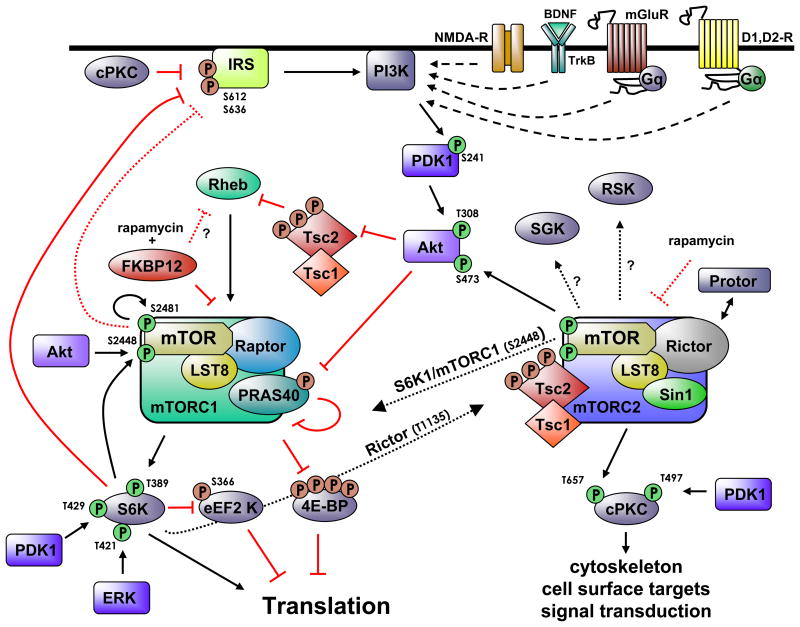
This diagram showing some of the key pathways related to mTOR appeared in the publication mTOR signaling: at the crossroads of plasticity, memory and disease:
As you may note, there are two related pathways involved commonly referred to as mTORC1 and mTORC2. mTORC1 is associated with Raptor. See The Mammalian Target of Rapamycin (mTOR) Partner, Raptor, Binds the mTOR Substrates p70 S6 Kinase and 4E-BP1 through Their TOR Signaling (TOS) Motif . Raptor (regulatory associated protein of mTOR) is a recently identified mTOR binding partner that also binds p70S6k and 4E-BP1 and is essential for TOR signaling in vivo” mTORC2 is in turn associated with Rictor, a different adaptor protein. Some inhibitors of mTOR affect only one of these pathways; others affect both. Likewise, disease processes may depend on interactions among the two pathways. For example, consider what is reported in the December 2010 publication Dual Inhibition of mTORC1/mTORC2 Induces Apoptosis of Mantle Cell Lymphoma by Preventing Rictor Mediated AKTS473 Phosphorylation by Potentiating AKT2-PHLPP1 Association. mTORC2 is largely resistant to rapamycin(ref).

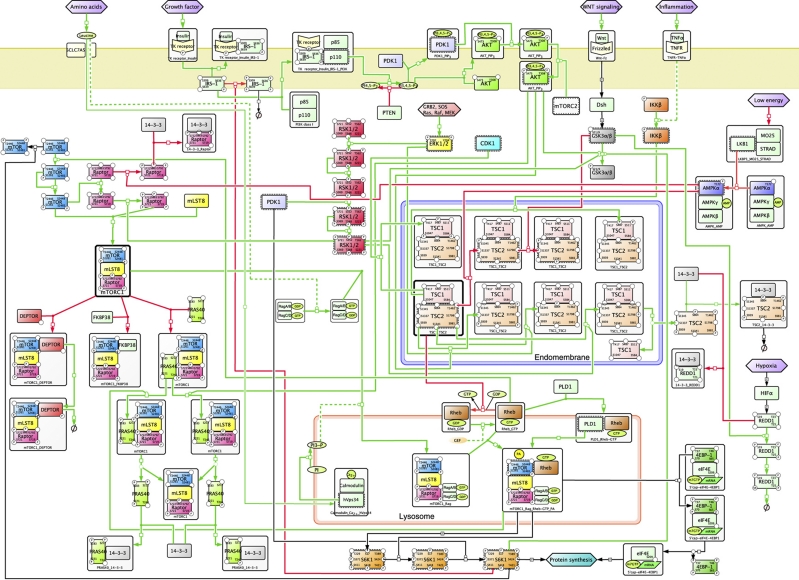
A more complete layout of the biological roles of mTOR can be found in this diagram. And here
Clearly, the mTOR-related pathways are very complex and relate centrally to many critical biological functions.
mTOR and skeletal muscle
There is a body of literature going back some time concerned with the role of mTOR and other signaling pathways in the health and aging of skeletal muscle. See, for example, Skeletal muscle hypertrophy is regulated via AKT/mTOR pathway. “Skeletal muscle atrophies with disuse while with increased use and increased load skeletal muscle exhibits hypertrophy, with an increase in the size of existing muscle fibers. One signaling pathway involved in regulating skeletal muscle atrophy and hypertrophy is the AKT/mTOR pathway (see mTOR pathway). The mTOR pathway activity increases in response to muscle activity during hypertrophy and decreases in activity during atrophy. Blocking this pathway genetically or with the mTOR inhibitor rapamycin blocks hypertrophy and genetic activation of the pathway induces hypertrophy.”
mTOR and exercise
Consistent with the above, it appears that physical activity downregulates mTOR/S6K1 signaling and downregulates IRS-1 serine phosphorylation, at least in rat skeletal muscle.  See the 2010 publication Effects of Physical Actyivity and Nutritional Intake on Skeletal Muscle Protein Turnover and Cellular Signaling. So, could downregulation of mTOR be a pathway through which exercise increases longevity? It is an interesting conjecture.
Potential medical uses of rapamycin
Rapamycin is also known as sirolimus. It is marketed under the trade name Rapamune by Wyeth.” Rapamycin (sirolimus) is already in use as an immunosuppressant to prevent rejection of kidney transplants and as a treatment for psoriasis(ref).”
Possible new medical applications related to modulating the mTOR pathway
For several disease processes including sarcopenia, spinal cord injuries and epilepsy, researchers have been expressing hope that effective therapeutic interventions might be based on modulation of mTOR signaling.
mTOR and sarcopenia
Sarcopenia (from the Greek meaning “poverty of flesh”) is the degenerative loss of skeletal muscle mass and strength associated with aging (0.5-1% loss per year after the age of 25). Sarcopenia is a component of the frailty syndrome(ref).”
The 2011 publication Aging impairs contraction-induced human skeletal muscle signaling and protein synthesis reports “Sarcopenia, the loss of skeletal muscle mass during aging, increases the risk for falls and dependency. Resistance exercise (RE) training is an effective treatment to improve muscle mass and strength in older adults, but aging is associated with a smaller amount of training-induced hypertrophy. — This may be due in part to an inability to stimulate muscle-protein synthesis (MPS) after an acute bout of RE. We hypothesized that older adults would have impaired mammalian target of rapamycin complex (mTORC)1 signaling and MPS response compared with young adults after acute RE. — Conclusions: We conclude that aging impairs contraction-induced human skeletal muscle mTORC1 signaling and protein synthesis. These age-related differences may contribute to the blunted hypertrophic response seen after resistance-exercise training in older adults, and highlight the mTORC1 pathway as a key therapeutic target to prevent sarcopenia.”
The 2010 publication mTOR signaling as a target of amino acid treatment of the age-related sarcopenia reflects a hope and expectation that interventions in the mTOR pathway might be used to avert sarcopenia in elderly people. “Sarcopenia is an age-related structural and functional impairment of skeletal muscle leading to loss of strength, contractile capacity and endurance. Among factors implicated in sarcopenia, deregulation of muscle protein synthesis (MPS) has frequently been reported. Thus, the attempts aiming at identifying possible countermeasures to sarcopenia require consideration of a complex coordinated interaction of factors contributing to the balance between protein synthesis and breakdown and the identification of several regulators on their function. We will focus here on the signaling pathways controlling protein synthesis in skeletal muscle, specifically on one of the downstream effectors of the kinase Akt/PKB, the mammalian target of rapamycin (mTOR) kinase which is now recognized as a key regulator of cell growth and a pivotal sensor of nutritional status over the lifespan. Dysfunction of mTOR signaling in the elderly and its potential role as a target of amino acids in the treatment of age-related sarcopenia will be discussed.”
mTOR and spinal cord injury
The 2010 publication ATP-mediated protein kinase B Akt/mammalian target of rapamycin mTOR/p70 ribosomal S6 protein p70S6 kinase signaling pathway activation promotes improvement of locomotor function after spinal cord injury in rats suggests that interventions in the Akt/mTOR/p70S6K signaling pathway may improve recovery prospects after spinal cord injuries. “The protein kinase B (Akt)/mammalian target of rapamycin (mTOR)/p70 ribosomal S6 protein kinase (p70S6K) signaling pathway, as a central controller of cell growth, proliferation, survival, and differentiation in response to extracellular signals, growth factors, nutrient availability, energy status of the cell, and stress, has recently gained attention in neuroscience. The effects of this signaling pathway on repair of spinal cord injury (SCI), however, have not been well elucidated. ATP is increasingly recognized as an important regulator of signal transduction pathways, and plays important roles in functional recovery after nervous system injury. In the present study, we examined the ATP-induced changes of the Akt/mTOR/p70S6K signaling pathway in injured spinal cord of adult rats and potential therapeutic effects of this pathway on SCI-induced locomotor dysfunction. SCI was produced by extradural weight-drop using modified Allen’s stall with damage energy of 50 g-cm force. The rats were divided into four groups: SCI plus ATP, SCI plus saline, SCI plus ATP and rapamycin, and sham-operated. Using immunostaining studies, Western blot analyses and real-time qualitative RT-PCR analyses, we demonstrated that the Akt/mTOR/p70S6K signaling pathway is present in the injured spinal cord and the expression of its components at the protein and mRNA levels is significantly elevated by exogenous administration of ATP following SCI. We observed the effectiveness of the activated Akt/mTOR/p70S6K signaling pathway in improving locomotor recovery, significantly increasing the expression of nestin, neuronal nuclei (NeuN), neuron specific enolase (NSE), and neurofilament 200 (NF200), and relatively inhibiting excessive reactive astrogliosis after SCI in a rapamycin-sensitive manner.  We concluded that ATP injection produced a significant activation of the Akt/mTOR/p70S6K signaling pathway in the injured spinal cord and that enhancement of rapamycin-sensitive signaling produces beneficial effects on SCI-induced motor function defects and repair potential. We suggest that modulation of this protein kinase signaling pathway activity should be considered as a potential therapeutic strategy for SCI.”
mTOR and epilepsy
The 2009 publication Developing Antiepileptogenic Drugs for Acquired Epilepsy: Targeting the Mammalian Target of Rapamycin (mTOR) Pathway reports “A rational antiepileptogenic strategy is to target primary cell signaling pathways that initially trigger the downstream mechanisms causing epileptogenesis. Recent work implicates the mammalian target of rapamycin (mTOR) pathway as mediating epileptogenesis in a genetic epilepsy, Tuberous Sclerosis Complex (TSC), and suggests that mTOR inhibitors, such as rapamycin, may have antiepileptogenic properties for epilepsy in TSC. As mTOR regulates multiple cellular functions that may contribute to epileptogenesis in general, including ion channel expression, synaptic plasticity, and programmed cell death, mTOR inhibitors might also represent an effective antiepileptogenic therapy for other, more common types of epilepsy, such as acquired epilepsies due to brain injuries.”  The 2010 publication Mammalian target of rapamycin (mTOR) inhibition as a potential antiepileptogenic therapy: From tuberous sclerosis to common acquired epilepsies relates “The mammalian target of rapamycin (mTOR) pathway represents a logical candidate, because mTOR regulates multiple cellular functions that may contribute to epileptogenesis, including protein synthesis, cell growth and proliferation, and synaptic plasticity. The importance of the mTOR pathway in epileptogenesis is best illustrated by tuberous sclerosis complex (TSC), one of the most common genetic causes of epilepsy. In mouse models of TSC, mTOR inhibitors prevent the development of epilepsy and underlying brain abnormalities associated with epileptogenesis. Accumulating evidence suggests that mTOR also participates in epileptogenesis due to a variety of other causes, including focal cortical dysplasia and acquired brain injuries, such as in animal models following status epilepticus or traumatic brain injury. Therefore, mTOR inhibition may represent a potential antiepileptogenic therapy for diverse types of epilepsy, including both genetic and acquired epilepsies.”
An October 2010 report Pharmacological inhibition of the mammalian target of rapamycin pathway suppresses acquired epilepsy sounds a largely optimistic note: “Inhibition of mTOR by rapamycin has been shown to suppress seizures in TSC/PTEN genetic models. Rapamycin, when applied immediately before or after a neurological insult, also prevents the development of spontaneous recurrent seizures (epileptogenesis) in an acquired model. In the present study, we examined the mTOR pathway in rats that had already developed chronic spontaneous seizures in a pilocarpine model. We found that mTOR is aberrantly activated in brain tissues from rats with chronic seizures. Furthermore, inhibition of mTOR by rapamycin treatment significantly reduces seizure activity. Finally, mTOR inhibition also significantly suppresses mossy fiber sprouting. Our findings suggest the possibility for a much broader window for intervention for some acquired epilepsies by targeting the mTOR pathway.”
These reports are mostly based on mouse-model experiments involving a genetic TSC-related epilepsy. Another 2010 study report Regulation of cell death and epileptogenesis by the mammalian target of rapamycin (mTOR): A double-edged sword? sounds a note of caution. “Identification of cell signaling mechanisms mediating seizure-related neuronal death and epileptogenesis is important for developing more effective therapies for epilepsy. The mammalian target of rapamycin (mTOR) pathway has recently been implicated in regulating neuronal death and epileptogenesis in rodent models of epilepsy. In particular, kainate-induced status epilepticus causes abnormal activation of the mTOR pathway, and the mTOR inhibitor, rapamycin, can decrease the development of neuronal death and chronic seizures in the kainate model. Here, we discuss the significance of these findings and extend them further by identifying upstream signaling pathways through which kainate status epilepticus activates the mTOR pathway and by demonstrating limited situations where rapamycin may paradoxically increase mTOR activation and worsen neuronal death in the kainate model. Thus, the regulation of seizure-induced neuronal death and epileptogenesis by mTOR is complex and may have dual, opposing effects depending on the physiological and pathological context. Overall, these findings have important implications for designing potential neuroprotective and antiepileptogenic therapies that modulate the mTOR pathway.”
Finally, a 2011 study Rapamycin suppresses mossy fiber sprouting but not seizure frequency in a mouse model of temporal lobe epilepsy reports interesting additional insights “Temporal lobe epilepsy is prevalent and can be difficult to treat effectively. Granule cell axon (mossy fiber) sprouting is a common neuropathological finding in patients with mesial temporal lobe epilepsy, but its role in epileptogenesis is unclear and controversial. Focally infused or systemic rapamycin inhibits the mammalian target of rapamycin (mTOR) signaling pathway and suppresses mossy fiber sprouting in rats. We tested whether long-term systemic treatment with rapamycin, beginning 1 d after pilocarpine-induced status epilepticus in mice, would suppress mossy fiber sprouting and affect the development of spontaneous seizures. Mice that had experienced status epilepticus and were treated for 2 months with rapamycin displayed significantly less mossy fiber sprouting (42% of vehicle-treated animals), and the effect was dose dependent. However, behavioral and video/EEG monitoring revealed that rapamycin- and vehicle-treated mice displayed spontaneous seizures at similar frequencies. These findings suggest mossy fiber sprouting is neither pro- nor anti-convulsant; however, there are caveats. Rapamycin treatment also reduced epilepsy-related hypertrophy of the dentate gyrus but did not significantly affect granule cell proliferation, hilar neuron loss, or generation of ectopic granule cells. These findings are consistent with the hypotheses that hilar neuron loss and ectopic granule cells might contribute to temporal lobe epileptogenesis.”
Rapamycin and clinical trials
Although the above applications seem still-removed from clinical practice, a very large number of new specialized uses for rapamycin are in clinical trials. A search of clinicaltrials.gov using the term rapamycin reveals 639 clinical trials in various phases. Many of these relate to the immunosuppressant properties of rapamycin such as for prevention of transplant rejections and graft-host disease. A number relate to use of the substance on stents. Many relate to rapamycin as part of chemotherapy regimens for a large number of cancers. And some are investigating rapamycin for a wide variety of other diseases including Multiple Sclerosis, Polycystic Kidney Diseases, Tuberous Sclerosis; Lymphangioleiomyomatosis, In-Stent Restenosis, Oral Lichen Planus, Systemic Sclerosis, Angiomyolipoma, Diabetic Retinopathy, Aplastic Anemia, Glomerulosclerosis, Autoimmune Active Anterior Uveiti, and Age-Related Macular Degeneration. I conjecture that some or many of these trials will yield positive results and that therefore rapamycin will come into wider clinical use for a number of specialized applications.
Chronic use of rapamycin has not been seriously considered as an anti-aging treatment for humans because of safety concerns. One set of concerns has to do with the drug’s immunosuppressive properties. Another set of concerns has to do with its effects on metabolism.
Chronic rapamycin treatment can result in metabolic derangement

The 2010 publication Chronic Rapamycin Treatment Causes Glucose Intolerance and Hyperlipidemia by Upregulating Hepatic Gluconeogenesis and Impairing Lipid Deposition in Adipose Tissue reports “OBJECTIVE The mammalian target of rapamycin (mTOR)/p70 S6 kinase 1 (S6K1) pathway is a critical signaling component in the development of obesity-linked insulin resistance and operates a nutrient-sensing negative feedback loop toward the phosphatidylinositol 3-kinase (PI 3-kinase)/Akt pathway. Whereas acute treatment of insulin target cells with the mTOR complex 1 (mTORC1) inhibitor rapamycin prevents nutrient-induced insulin resistance, the chronic effect of rapamycin on insulin sensitivity and glucose metabolism in vivo remains elusive. — RESEARCH DESIGN AND METHODS To assess the metabolic effects of chronic inhibition of the mTORC1/S6K1 pathway, rats were treated with rapamycin (2 mg/kg/day) or vehicle for 15 days before metabolic phenotyping. — RESULTS Chronic rapamycin treatment reduced adiposity and fat cell number, which was associated with a coordinated downregulation of genes involved in both lipid uptake and output. Rapamycin treatment also promoted insulin resistance, severe glucose intolerance, and increased gluconeogenesis. The latter was associated with elevated expression of hepatic gluconeogenic master genes, PEPCK and G6Pase, and increased expression of the transcriptional coactivator peroxisome proliferator–activated receptor-γ coactivator-1α (PGC-1α) as well as enhanced nuclear recruitment of FoxO1, CRTC2, and CREB. These changes were observed despite normal activation of the insulin receptor substrate/PI 3-kinase/Akt axis in liver of rapamycin-treated rats, as expected from the blockade of the mTORC1/S6K1 negative feedback loop. — CONCLUSIONS These findings unravel a novel mechanism by which mTORC1/S6K1 controls gluconeogenesis through modulation of several key transcriptional factors. The robust induction of the gluconeogenic program in liver of rapamycin-treated rats underlies the development of severe glucose intolerance even in the face of preserved hepatic insulin signaling to Akt and despite a modest reduction in adiposity.”
Alternative inhibitors of rmTOR signaling

Besides rapamycin itself, a number of other substances to varying degrees also inhibit mTOR signaling. Some of the newer substances are reported in publications such as (2008) A new pharmacologic action of CCI-779 involves FKBP12-independent inhibition of mTOR kinase activity and profound repression of global protein synthesis, (2008) Palomid 529, a novel small-molecule drug, is a TORC1/TORC2 inhibitor that reduces tumor growth, tumor angiogenesis, and vascular permeability, (2009) Ku-0063794 is a specific inhibitor of the mammalian target of rapamycin (mTO and (2009) Active-site inhibitors of mTOR target rapamycin-resistant outputs of mTORC1 and mTORC2. Some of these alternative substances are selective in whether they affect mTORC1 or mTORC2. And they may vary also in toxicity and secondary effects.

The research literature relating to mTOR signaling is vast and rapidly growing. The topics covered in this blog entry only sample what is going on.

Posted in Uncategorized | 2 Comments

Evolution and the prospect for much longer lifespans – video blog

A previous video blog entry has the message that we are already evolving to live longer.  But, does evolution set a limit on our lifespans, pre-ordain when we will die so to speak? Please see these videos for views of a few key longevity scientists.  And then I will weigh in with my own opinions. 

Most importantly, it appears that all these researchers and I agree on one central point – that there appears to be nothing about evolution that should prevent us from discovering means for extending our lifespans.  As Aubrey de Grey colorfully puts it “aging can be combated more and more if you throw in more and more elaborate anti-aging machinery.”

Although my views appear to be close to those of Dr. Kenyon, I find myself on disagreement with the other video presenters on the role of evolution in determining lifespans.   Instead of thinking that evolution has nothing to do with lifespans, I think it has everything to do with them.  Being in the minority here, I will elaborate briefly.

The classical view of evolution is indeed that evolution works generally to keep people healthy through childbearing and child-rearing age and is thereafter indifferent to their wellbeing or longevity.  This appears to be the expressed opinion of Dr’s de Grey, Kennedy – and of Austad in the prior video blog.  Further, in the classical view evolution occurs through the processes of “random variation and natural selection” associated with mutations of genes and for humans takes a very very long time – hundreds of thousands or millions of years.  Although over 200 years ago Lamarck had proposed that acquired characteristics could be inherited, this idea became rejected in part because of its seeming incompatibility with genetics.

A newer and increasingly popular view of evolution, the view I subscribe to, is that evolution takes place not just through genetic mutations but also via inheritable changes in the epigenome.  Lararckism is back in a new sophisticated context!  This kind of evolution can proceed vastly faster, in as little as a few generations, and still have major impacts.  Further, I submit that the changes in the epigenome are driven by the external environment, both physical and social.  As the physical environments of humans evolve – such as by providing cleaner disease-free water – so does our epigenome change and do we evolve biologically.   As the social environment evolves – such as by requiring much more time for kids to become educated and get up to speed so they can participate effectively in an ever-more complex society – so does our epigenome change and do we evolve biologically.     Dr Kenyon suggests this point in her presentation.

The classical theory of evolution cannot explain many observed phenomena which the newer view explains convincingly. One is why do human heights seem to vary so much by population circumstances and time frames? Canadians are now taller than Americans, who have suddenly plateaued — but all trail the towering Dutch. So what’s their secret?(ref)” No way these up-and-down trends in average heights could occur so fast through mutations in genes. Another example is given by the opossums talked about in the earlier blog.  They too doubled their lifespans in response to a changed environment far too fast to be explained by plain genetics.  But the important example for this discussion is that our average from-birth lifespans in Western and US countries are increasing by about two months for every year that goes by.  Why?

(a)  Our epigenomes are adopting to longer lifespans because of changed physical circumstances: freedom from predators, near-elimination of infectious diseases and better public health and diet.  We are living longer not just because of better circumstances of the moment but mainly because of our epigemomes’ adoption to those circumstances.  For example, relative freedom from predators means there is a lessened requirement for constant hyper vigilance implying much less chronic expression of cortisol, the “fight or flight”  hormone that enhances responses to emergencies but suppresses the immune system and bone formation.   So less chronic cortisol associated with freedom from predators can lead to evolution of stronger body defenses against disease, better bones, and consequently, longer lives.

b) Our epigenomes are adopting to longer lifespans because an increasingly complex society requires much more learning before people can effectively participate in it, and this demands longer lifespans.  I laid out this viewpoint in the blog entries Social evolution and biological evolution – another dialog with Marios Kyriazis and Social ethics of longevity.

In the following video on Infection and Mortality, Dr. Kirkwood’s speaks powerfully supporting point (a) above.


So, evolution has had everything to do with lifespans.  Evolution has always cared about how long we live.  The good news is that as we find mechanisms to expand lifespans as Aubrey suggests, those mechanisms will become part of social evolution that drives biological evolution.  We are not prisoners of an inexorable process of biological evolution.  We can affect our evolution via research and applying knowledge.  We have been doing that as long as we have been humans.  Discovering how to start fires was an example, and applying the discoveries of  Louis Pasteur was another of very very many.  And I believe we can shape evolution so we live much longer lives.  There will be more blog entries to come related to this point.

This video blog entry, like previous ones, is being brought to you in close collaboration with the filmmaker Robert Kane Papas.  I expect we will generate more of these blog entries structured around short video segments on aspects of longevity science.  Robert is the filmmaker who produced the recently-released film To Age or Not to Age. Robert captured hundreds of hours of interesting video in shooting the film over a 4-year period, including extensive interviews with a number of prominent aging-science researchers.  It was possible to incorporate only a small fraction of that interesting material in the film itself.  However, Robert will be identifying short but remarkable segments of materials both in the film and not in the film, and I will be remarking on them just as in this blog entry.  I expect the videos and the remarks will appear on both this site and on the film site To Age or Not to Age.

Posted in Uncategorized | 2 Comments

Age reversal – video blog

Age reversal appears to be a subject for science fiction, like the alchemist’s vision of turning lead into gold.  Yet, it can be induced on the cellular level.  If fact, for certain of our cells aging-avoidance or age-reversal is absolutely  necessary for the continuation of life.

Please see this short video segment.

How our germline cells can be passed on for hundreds of thousands or millions of years without aging is only now being unraveled.  Those cells don’t age.  Many questions can be raised about all this.  Here is my take on a few of them.

·        Is aging necessary for other than germline cells?  My answer is YES, for otherwise cells could not differentiate into specialized tissue cells to create whole animals like we are.  My skin cells, heart cells, muscle and all other cells are products of aging.  Cells of each type embody an epigenetic “memory” of who they are, thank goodness. So, when a skin cell divides it divides into more skin cells, not bladder or liver cells.   And in that respect all normal body cells are aged in comparison to pristine germline cells.  Germline cells manage not to age by not differentiating except on conception.  There is no clear point when development of an animal stops and aging starts.  Aging starts way back just after conception and is lifelong. 

·        Can aging be reversed in our ordinary body cells?  Breakthrough research developments over the last 10 years say the answer is YES.  Practically any cell in your body can be reverted to become an induced pluripotent stem cell (iPSC), virtually identical to your original embryonic stem cells.  These iPSC cells can in turn be induced to differentiate into any normal body cell type.  I have written about a dozen blog entries about these iPSCs so far.  Some of the most-recent posts are Additional 2010 research progress with induced pluripotent stem cells (December 2010),   A breakthrough in producing high-fidelity induced pluripotent stem cells (October 2010)Induced pluripotent stem cells – developments on the road to big-time utilization (July 2010),  and  A near-term application for iPSCs – making cell lines for drug testing (June 2010).       

·         Can aging be reversed in whole body organs?  I think the answer will turn out again to be YES.  This is the hope of the field of research called regenerative medicine, and there is much ongoing research in this area.  Many of the approaches are based on using stem cells.  See for example the blog entry      Interesting recent stem cell research on the prevention of muscle aging by adult stem cell transplantation.

·        Can aging be reversed in whole animals like we are?  This remains a completely open question.  It is my guess, only a guess for now, that within 15-20 years we will discover means for significant life extension.  I also think that in the same time frame we will very-possibly discover means for reversing many of the phenotypic signs of aging in older people.  The blog entry Mouse age reversal – very interesting but misrepresented research describes recent research in which prematurely-aged mice exhibiting various kinds of tissue degeneration associated with aging were made young and vital again through a telomerase-related treatment.  The tissue degeneration associated with aging simply went away.  The theme of age reversal is also in the background in many of my other writings, particularly those relating to epigenetics and in the concept of closing the loop in the stem cell supply chain.

This video blog entry, like the previous blog entry We are evolving to live longer – video blog, is being brought to you in close collaboration with the filmmaker Robert Kane Pappas.  And I expect we will generate several more of these blog entries which are structured around short video segments on aspects of longevity science.  Robert is the filmmaker who produced the recently-released film To Age or Not to Age. Robert captured hundreds of hours of interesting video in shooting the film over a 4-year period, including extensive interviews with a number of prominent aging-science researchers.  It was possible to incorporate only a small fraction of that interesting material in the film itself.  However, Robert is identifying short but remarkable segments of materials both in the film and not in the film, and I will be remarking on them just as in this blog entry.  The videos and the remarks will appear on both this site and on the film site To Age or Not to Age.

Readers/viewers – please share your reactions.  How do you react to the video? Can you point to other research that clearly demonstrates whole-animal age reversal?  Any other highly-relevant research?  And what do you think about this kind of blog entry?   Would you like to see more of them? 

Posted in Uncategorized | 9 Comments

We are evolving to live longer – video blog

Biological evolution has been traditionally viewed as due to mutations in genes.  However this kind of evolution can require hundreds of thousands or millions of years to take hold   Now we know that evolution can happen much faster, in as little as a few generations.   Further, I see the human species as evolving very fast in the direction of longer lifespans, with the average lifespan from birth in the US and advanced countries increasing about 4 hours each day that goes by. 

Please view this short video segment.  And then comment on us humans evolving to live longer.  And also comment on how interesting and useful you find this video kind of communication compared to the usual text-based blog entries found here. 


I have suggested that the rapid kind of evolution involved is epigenetic evolution which moves far faster than Darwinian genetic evolution It is the kind of evolution that has allowed us to grow taller in just a few generations and that is leading to our ever-longer average lifespans.  See the blog entries US falling behind in longevity increases – why?, Social evolution and biological evolution – another dialog with Marios Kyriazis, Social ethics of longevity and a more-technical presentation Stochastic epigenetic evolution – a new and different theory of evolution, aging and disease susceptibility. 

This blog entry and several subsequent ones including short video segments on longevity science are being brought to you in close collaboration with Robert Kane Pappas.  Pappas is the filmmaker who produced the recently-released film To Age or Not to Age. Pappas captured hundreds of hours of interesting video in shooting the film over a 4-year period, including extensive interviews with a number of prominent aging-science researchers.  It was possible to incorporate only a small fraction of that interesting material in the film itself.  However, Robert will be identifying short interesting segments of materials both in the film and not in the film, and I will be remarking on them just as in this blog entry.  The same videos and my same remarks will appear on both this site and on the film site To Age or Not to Age.

Readers/viewers – please share your reactions in comments.  What do you think are the implications of us living longer lives?  Are we like the opossums?  And what is your reaction to this kind of blog entry?   Would you like to see more of them?  

Vince

Posted in Uncategorized | 7 Comments

The many faces of folic acid

The actions of folic acid, vitamin B9 are multiple, complex, directly affect the epigenome, and the implications of folic acid supplementation are still not fully known.  Folic acid supplementation appears to be strongly recommended in some circumstances and dangerous in others.  This blog entry reviews some key things known about folate and key findings of both past and current research.

I was set off in this line of research by a comment by the reader Rossi to my blog post Cancer, epigenetics and dietary substances. 

Basic facts about folic acid. 

The Wikipedia entry for folic acid provides an excellent introduction to and initial discussion of the substance.  Folic acid (also known as vitamin B9,[1] vitamin Bc[2] or folacin) and folate (the naturally occurring form), as well as pteroyl-L-glutamic acid, pteroyl-L-glutamate, and pteroylmonoglutamic acid[3] are forms of the water-soluble vitamin B9. Folic acid is itself not biologically active, but its biological importance is due to tetrahydrofolate and other derivatives after its conversion to dihydrofolic acid in the liver.[4] — Vitamin B9 (folic acid and folate inclusive) is essential to numerous bodily functions. The human body needs folate to synthesize DNA, repair DNA, and methylate DNA as well as to act as a cofactor in biological reactions involving folate.[5] It is especially important in aiding rapid cell division and growth, such as in infancy and pregnancy, as well as in “feeding” some cancers. While a normal diet also high in natural folates may decrease the risk of cancer, there is diverse evidence that high folate intake from supplementation may actually promote some cancers as well as precancerous tumors and lesions. Children and adults both require folic acid to produce healthy red blood cells and prevent anemia.[6] — Folate and folic acid derive their names from the Latin word folium (which means “leaf”). Leafy vegetables are a principal source, although in Western diets fortified cereals and bread may be a larger dietary source. — A lack of dietary folic acid leads to folate deficiency which is uncommon in normal Western diets. Failures to replenish one’s folates might not manifest themselves as folate deficiency for 4 months because a healthy individual has about 500-20,000 mcg[7] of folate in body stores.[8] This deficiency can result in many health problems, the most notable one being neural tube defects in developing embryos. Common symptoms of folate deficiency include diarrhea, macrocytic anemia with weakness or shortness of breath, nerve damage with weakness and limb numbness (peripheral neuropathy), pregnancy complications, mental confusion, forgetfulness or other cognitive declines, mental depression, sore or swollen tongue, peptic or mouth ulcers, headaches, heart palpitations, irritability, and behavioral disorders. Low levels of folate can also lead to homocysteine accumulation.[5] DNA synthesis and repair are impaired and this could lead to cancer development.[5] Supplementation in patients with ischaemic heart disease may also lead to increased rates of cancer.[9  

Continuing, “A  2010 opinion article in the New York Times[10] named micronutrients, especially folic acid, the “world’s most luscious food,” since absence of folic acid and a handful of other micronutrients causes otherwise preventable deformities and diseases, especially in fetal development. Folic acid can be used to help treat Alzheimer’s disease, depression, anemia, and certain types of cancer. The article claims adding folic acid and micronutrients to the food supply of developing countries could be more cost effective than any other single action in improving world health.”

The term folate is slightly more generic than folic acid.  Folate is a water-soluble B vitamin that occurs naturally in food. Folic acid is the synthetic form of folate that is found in supplements and added to fortified foods [1](ref).”

Folic acid is included in my suggested anti-aging supplement firewall and I have personally been taking it for several years.  In the blog entry Epigenetics, Epigenomics and Aging I reported “In one experiment at Duke University, two genetically identical mother mice were fed different diets, one a normal diet, the other a diet enriched with choline, betaine, folic acid and vitamin B-12.  The offspring mice looked and were very different.  For one thing the offsprings of the normally fed mice had white hair while the offsprings of the supplemented mother had rich brown hair.  The differences were epigenomic.  Despite genetic identity, the physical characteristics of the offsprings depended on the environment and behavior of the mothers.”  


 Epigenetic impacts of folate –
One-carbon metabolism  

One of the key actions of folate is methylation of DNA(ref)(ref).  The biochemistry involved is complex and has to do with a pathway known as One-carbon metabolism.  


 This one-carbon metabolism pathway is centered around folate. Folate has two key carbon-carbon double bonds. Saturating one of them yields dihydrofolate (DHF) and adding an additional molecule of hydrogen across the second yields tetrahydrofolate (THF). Folates serve as donors of single carbons in any one of three oxidation states: 5-methyl-THF (CH3THF; reduced), 5,10 methylene-THF (CH2THF; intermediate) and 10-formyl-THF (CHOTHF; oxidized). The single carbon donor CH3THF is used to convert homocysteine into methionine which can then be used to methylate DNA, the donor CH2THF is used (along with a molecule of hydrogen at the site of one of the double bonds) to convert dUMP (deoxyuridylate) into dTMP (thymidylate) and the donor CHOTHF is used to set up ring closure reactions in de novo purine synthesis. CH3THF is the primary methyl-group donor for processes such as DNA methylation reactions. Purines are used both in RNA synthesis and in DNA synthesis and dTMP is synthesized srtictly for DNA synthesis, be it for DNA repair or DNA replication. The folate pathway is central to any study related to DNA methylation, dTMP synthesis or purine synthesis. — Differential methylation (e.g. hypermethylation of tumor suppressors) as well as disturbances in nucleotide synthesis and repair, are associated with several forms of cancer. There are also indications that hypermethylation is involved in the progression of adenomas to cancer. — The pathway is also illustrative of the role of a number of B vitamins, including vitamin B12 (cobalamine) which is important for the sythesis of folate (vitamin B9) and of methionine(ref).”  

For those of you interested in the molecular biology, on heartfixer.com I located a diagram of methylation pathway cycles which shows how the folate cycle fits in.  It is the third loop from the left.  The biochemical and epigenomic processes of one-carbon metabolism are extremely complicated in ways beyond those illustrated in this diagram.  This link leads to a very large collection of diagrams and images related to one-carbon metabolism, illustrating that complexity.

methyl-cycle-genomics.jpg 

Many disease processes involve folate and 1-carbon metabolism     

  The 2009 publication One-carbon metabolism-genome interactions in folate-associated pathologies reports “Impairments in folate-mediated 1-carbon metabolism are associated with several common diseases and developmental anomalies including intestinal cancers, vascular disease, cognitive decline, and neural tube defects. The etiology of folate-associated pathologies involves interactions among multiple genetic risk alleles and environmental factors, although the causal mechanisms that define the role of folate and other B-vitamins in these complex disorders remain to be established. Folate and other B-vitamins fundamentally differ from other nutrients that interact with the genome in determining health and disease outcomes in that their interaction is reciprocal. Common gene variants influence the activity of folate-dependent enzymes and anabolic pathways; folate-mediated 1-carbon metabolism is essential for the high-fidelity synthesis of DNA and activated methyl groups that are required for DNA methylation and regulation of chromatin structure. This review focuses on the regulation of folate-mediated 1-carbon metabolism and its role in maintaining genome integrity and on strategies for establishing the metabolic pathways and mechanisms that underlie folate-associated pathologies.”

Many factors may interact in complex ways in folate-related disease processes

“Impairments in the folate-dependent 1-carbon network can arise from a primary folate deficiency, secondary B-vitamin nutrient deficiencies, and genetic variations that influence cellular folate accumulation and/or utilization. Many studies have shown that folate cofactors are limiting in the cell and that the concentration of folate-dependent enzymes and folate-binding proteins exceeds the concentration of folate cofactors, which is estimated to be in the range of 25–35 μmol/L (21,22). Given that folate-dependent enzymes and folate-binding proteins exhibit binding constants (Kd values) in the nanomolar range, all cellular folate cofactors are expected to be protein bound, and folate-dependent anabolic pathways must compete for a limiting pool of folate cofactors (23). Therefore, all folate anabolic pathways are anticipated to be sensitive to primary folate deficiency. Furthermore, genetic variation that alters the partitioning of folate cofactors through any folate-dependent pathway influences the entire 1-carbon network. For example, the common 677 C→T human variant of MTHFR results in decreased MTHFR specific activity, elevated homocysteine, and depressed levels of nuclear methylcytosine but potentially enhances rates of de novo thymidylate biosynthesis (19). Last, secondary nutrient deficiencies can also impair folate-dependent pathways. Vitamin B-12 deficiency diminishes MTR activity and methionine synthesis but also impairs nucleotide biosynthesis through the accumulation of cellular folate cofactors such as 5-methyl-THF. This accumulation of 5-methyl-THF, referred to as a “methyl trap,” results because the MTHFR reaction is essentially irreversible in vivo, and MTR is the only enzyme that can regenerate THF from 5-methyl-THF. Therefore, it is often not possible to establish which biomarkers are “causal” in folate-associated pathologies and which biomarkers are bystanders(ref).” 

The epigenetics of one-carbon (folate) metabolism is likely implicated in Alzheimer’s disease

The 2010 publication One-carbon metabolism and Alzheimer’s disease: focus on epigenetics relates:  Alzheimer’s disease (AD) represents the most common form of dementia in the elderly, characterized by progressive loss of memory and cognitive capacity severe enough to interfere with daily functioning and the quality of life. Rare, fully penetrant mutations in three genes (APP, PSEN1 and PSEN2) are responsible for familial forms of the disease. However, more than 90% of AD is sporadic, likely resulting from complex interactions between genetic and environmental factors. Increasing evidence supports a role for epigenetic modifications in AD pathogenesis. Folate metabolism, also known as one-carbon metabolism, is required for the production of S-adenosylmethionine (SAM), which is the major DNA methylating agent. AD individuals are characterized by decreased plasma folate values, as well as increased plasma homocysteine (Hcy) levels, and there is indication of impaired SAM levels in AD brains. Polymorphisms of genes participating in one-carbon metabolism have been associated with AD risk and/or with increased Hcy levels in AD individuals. Studies in rodents suggest that early life exposure to neurotoxicants or dietary restriction of folate and other B vitamins result in epigenetic modifications of AD related genes in the animal brains. Similarly, studies performed on human neuronal cell cultures revealed that folate and other B vitamins deprivation from the media resulted in epigenetic modification of the PSEN1 gene. There is also evidence of epigenetic modifications in the DNA extracted from blood and brains of AD subjects. Here I review one-carbon metabolism in AD, with emphasis on possible epigenetic consequences.” 

Shift in cancer research – from the genome to the epigenome

Before discussing the epigenomic effects of folic acid in relationship to cancer, I would like to highlight the existence of a major shift in cancer research itself, from concentrating on genes and the genome to sharing concentration also on the epigenome and epigenetic effects.  Multiple genome-wide association studies relating genetic abnormalities to cancers have generally yielded only weak associations.  The July 2010 publication Time to Think Outside the (Genetic) Box relates “Many patients develop cancers that have clinical features of inherited syndromes (e.g., young age of onset and unique pathology) but lack mutations in the genes characteristic of the disease. In this issue of the journal, Wong et al. report that somatic epigenetic inactivation could explain some such cases in the setting of BRCA1-associated breast cancer. Here, we discuss the implications of this work in terms of the etiology, risk, and potential prevention of cancer.” 

The December 2010 publication Linking Epidemiology to Epigenomics—Where Are We Today? relates: “Cancer is the consequence of genetic and epigenetic alterations.  Genetic mutations likely result in part from exposure to environmental carcinogens, giving rise to a large field of cancer-prevention study of these carcinogens and ways to develop strategies to avoid them. Our understanding of regulatory epigenetic mechanisms associated with DNA methylation, histone modifications, and microRNA production is increasing rapidly. The involvement of these processes in carcinogenesis raises the possibility that environmental exposures may promote or prevent cancer through affecting the epigenome. Modifying the epigenome to prevent cancer is particularly intriguing because epigenetic alterations are potentially reversible, unlike gene mutations, and because certain dietary factors, such as the B-vitamin folate, may affect genes’ DNA methylation status (as reported by Wallace et al., beginning on page 1552 in this issue of the journal). Rapidly improving techniques for assessing epigenetic alterations promise to yield important insights for cancer prevention.”

Folic acid and cancer risk – when considering supplementation, pay attention to the details and judge for yourself

It appears that on the one hand folic acid supplementation can reduce cancer risk but, on the other hand, supplementation can speed the progress of a once-established cancer.  And taking too much can also enhance cancer risk.   I start out with a report that lays out the varying behaviors of folate. The 2004 publication Folate, colorectal carcinogenesis, and DNA methylation: lessons from animal studies reports: ‘Folate, a water-soluble B vitamin and cofactor in one-carbon transfer, is an important nutritional factor that may modulate the development of colorectal cancer (CRC). Epidemiologic and clinical studies indicate that dietary folate intake and blood folate levels are inversely associated with CRC risk. Collectively, these studies suggest an approximately 40% reduction in the risk of CRC in individuals with the highest dietary folate intake compared with those with the lowest intake. Animal studies using chemical and genetically predisposed rodent models have provided considerable support for a causal relationship between folate depletion and colorectal carcinogenesis as well as a dose-dependent protective effect of folate supplementation. However, animal studies also have shown that the dose and timing of folate intervention are critical in providing safe and effective chemoprevention; exceptionally high supplemental folate levels and folate intervention after microscopic neoplastic foci are established in the colorectal mucosa promote, rather than suppress, colorectal carcinogenesis. These animal studies, in conjunction with clinical observations, suggest that folate possesses dual modulatory effects on carcinogenesis depending on the timing and dose of folate intervention. Folate deficiency has an inhibitory effect, whereas folate supplementation has a promoting effect on the progression of established neoplasms. In contrast, folate deficiency in normal epithelial tissues appears to predispose them to neoplastic transformation, and modest levels of folate supplementation suppress the development of tumors in normal tissues. Notwithstanding the limitations associated with animal models, these studies suggest that the optimal timing and dose of folate intervention must be established for safe and effective chemoprevention in humans. Folate is an important factor in DNA synthesis, stability, and integrity, the repair aberrations of which have been implicated in colorectal carcinogenesis. Folate may also modulate DNA methylation, which is an important epigenetic determinant in gene expression (an inverse relationship), in the maintenance of DNA integrity and stability, in chromosomal modifications, and in the development of mutations. A mechanistic understanding of how folate status modulates colorectal carcinogenesis further strengthens the case for a causal relationship and provides insight into a possible chemopreventive role of folate.’ 

Essentially the same message is conveyed in the 2007 publication Folate and colorectal cancer: an evidence-based critical review by the same author.  Currently available evidence from epidemiologic, animal, and intervention studies does not unequivocally support the role of folate, a water-soluble B vitamin and important cofactor in one-carbon transfer, in the development and progression of colorectal cancer (CRC). However, when the portfolio of evidence from these studies is analyzed critically, the overall conclusion supports the inverse association between folate status and CRC risk. It is becoming increasingly evident that folate possesses dual modulatory effects on colorectal carcinogenesis depending on the timing and dose of folate intervention. Folate deficiency has an inhibitory effect whereas folate supplementation has a promoting effect on the progression of established colorectal neoplasms. In contrast, folate deficiency in normal colorectal mucosa appears to predispose it to neoplastic transformation, and modest levels of folic acid supplementation suppress, whereas supraphysiologic supplemental doses enhance, the development of cancer in normal colorectal mucosa. Several potential mechanisms relating to the disruption of one-carbon transfer reactions exist to support the dual modulatory role of folate in colorectal carcinogenesis. Based on the lack of compelling supportive evidence and on the potential tumor-promoting effect, routine folic acid supplementation should not be recommended as a chemopreventive measure against CRC at present.” The 2010 report Plasma folate, related genetic variants, and colorectal cancer risk in EPIC backs off from the notion that folic acid supplementation has anything to do with risk for colorectal cancer.  BACKGROUND: A potential dual role of folate in colorectal cancer (CRC) is currently subject to debate. We investigate the associations between plasma folate, several relevant folate-related polymorphisms, and CRC risk within the large European Prospective Investigation into Cancer and Nutrition cohort.  METHODS: In this nested case-control study, 1,367 incident CRC cases were matched to 2,325 controls for study center, age, and sex. Risk ratios (RR) were estimated with conditional logistic regression and adjusted for smoking, education, physical activity, and intake of alcohol and fiber. —  RESULTS: Overall analyses did not reveal associations of plasma folate with CRC. — CONCLUSIONS: This large European prospective multicenter study did not show an association of CRC risk with plasma folate status nor with MTHFR polymorphisms. — IMPACT: Findings of the present study tend to weaken the evidence that folate plays an important role in CRC carcinogenesis. However, larger sample sizes are needed to adequately address potential gene-environment interactions.” 

Folic acid and cancer risk is associated with GPC island methylation

The theory behind seeing folic acid as inducing cancer risk is that an epigenetic effects of folate is inducing GPC island methylation and that GPC island methylation is associated with many cancers.  The research has largely been associated with prostate and colorectal cancer and goes back 25 years or so..  The 1998 publication Methylation of the 5′ CpG Island of the Endothelin B Receptor Gene Is Common in Human Prostate Cancer1 n.  The 2006 review publication The emerging roles of DNA methylation in the clinical management of prostate cancer.Aberrant DNA methylation is one of the hallmarks of carcinogenesis and has been recognized in cancer cells for more than 20 years. The role of DNA methylation in malignant transformation of the prostate has been intensely studied, from its contribution to the early stages of tumour development to the advanced stages of androgen independence. — Herein we discuss the major developments in the fields of prostate cancer and DNA methylation, and how this epigenetic modification can be harnessed to address some of the key issues impeding the successful clinical management of prostate cancer.”

An additional relevant publication is the 2008 report The emergence of DNA methylation as a key modulator of aberrant cell death in prostate cancer. “A number of studies have implicated aberrant DNA methylation as a key survival mechanism in cancer, whereby promoter hypermethylation silences genes essential for many processes including apoptosis. To date, studies on the methylation profile of apoptotic genes have largely focused on cancers of the breast, colon and stomach, with only limited data available on prostate cancer. Here we discuss the major developments in the field of DNA methylation and its role in the regulation of aberrant apoptosis in prostate cancer. The most significant advances have involved the discovery of apoptotic gene targets of methylation, including XAF1, (fragile histidine triad (FHIT ), cellular retinol binding protein 1 (CRBP1), decoy receptor 1(DCR1), decoy receptor 2 (DCR2 ), target of methylation-induced silenceing 1 (TMS1), TNF receptor superfamily, member 6 (FAS), Reprimo (RPRM) and GLI pathogenesis-related 1 (GLIPR1). These genes are reported to be hypermethylated in prostate cancer and some offer potential as diagnostic and prognostic markers.”  Further relevant discussion is provided in the  2009 report Promoter Methylation in APC, RUNX3, and GSTP1 and Mortality in Prostate Cancer Patients.

 More on GPC island methylation and folic-acid induced cancer risk

The relationship between GPC island methylation by folates and susceptibility to cancers is being actively investigated.  Current research suggests that folic acid supplementation by older adults may incur increased risk of colorectal cancer.  The December 2010 publication Association between Folate Levels and CpG Island Hypermethylation in Normal Colorectal Mucosa reported “Gene-specific promoter methylation of several genes occurs in aging normal tissues and may predispose to tumorigenesis. In the present study, we investigate the association of blood folate levels and dietary and lifestyle factors with CpG island (CGI) methylation in normal colorectal mucosa. — Subjects were enrolled in a multicenter chemoprevention trial of aspirin or folic acid for the prevention of large bowel adenomas. We collected 1,000 biopsy specimens from 389 patients, 501 samples from the right colon and 499 from the rectum at the follow-up colonoscopy. We measured DNA methylation of estrogen receptor alpha (ERα) and secreted frizzled related protein-1 (SFRP1), using bisulfite pyrosequencing. We used generalized estimating equations regression analysis to examine the association between methylation and selected variables. For both ERα and SFRP1, percentage methylation was significantly higher in the rectum than in the right colon (P = 0.001). For each 10 years of age, we observed a 1.7% increase in methylation level for ERα and a 2.9% increase for SFRP1 (P < 0.0001). African Americans had a significantly lower level of ERα and SFRP1 methylation than Caucasians and Hispanics. Higher RBC folate levels were associated with higher levels of both ERα (P = 0.03) and SFRP1 methylation (P = 0.01). Our results suggest that CGI methylation in normal colorectal mucosa is related to advancing age, race, rectal location, and RBC folate levels. These data have important implications regarding the safety of supplementary folate administration in healthy adults, given the hypothesis that methylation in normal mucosa may predispose to colorectal neoplasia.” 

So, does folic acid supplementation decrease risk of subsequent cancer or increase it?  The answer appears to depend on the research studies you find most credible.

A commentary on the aforementioned publication Viewing the Epigenetics of Colorectal Cancer through the Window of Folic Acid Effects states “Wallace and colleagues shed new light on the epigenetics of colorectal cancer by exploring the role of changes in DNA methylation in normal-appearing colon biopsies collected during a chemoprevention trial of folic acid. This study and the parent clinical trial will potentially further elucidate the long-studied role of folate in colon cancer development. In particular, the focus on the intermediate biomarker DNA methylation could provide a mechanistic link between folate exposure and colon cancer. Dietary or supplemental folate has complex interactions with important processes that may alter colon cancer development or progression, but this influence is likely altered by supplementation’s timing and duration and whether in the setting of depleted or more typical, higher levels of folate. Despite decades of epidemiologic, molecular, and animal studies, answers to what effects these interactions have are complex, often contradictory. This perspective will place this study in context, looking at what it tells us and what it does not.”   

The gist of this citation appears to be that, while there appears to be some agreement in the literature about whether dietary intake of folate affects methylation levels, the implications with respect to cancer progression in the colon appear to be shrouded in complexity and uncertainty.  The 2010 publication Folate and one-carbon metabolism and its impact on aberrant DNA methylation in cancer is similarly cautious about drawing conclusions, this time as to whether insufficient folate may create a predisposition to colon cancer:  “Folate deficiency may be implicated in the development of genomic DNA hypomethylation, which is an early epigenetic event found in many cancers, particularly colorectal cancer (CRC). Numerous studies employing in vitro systems, animal models, and human interventional studies have tested this hypothesis. Here, we describe the role of folate as a methyl donor in the one-carbon metabolism cycle, and the consequences of cellular folate deficiency. The existing evidence on folate and its relationship to DNA methylation is discussed using CRC as an example. While there remain numerous technical challenges in this important field of research, changes to folate intake appear to be capable of modulating DNA methylation levels in the human colonic mucosa and this may potentially alter CRC risk.” 

High folate intake may increase predisposition to breast cancer for some women

It you are confused by these findings, it is probably because they are confusing.  Here is a 2009 study report that suggests that high folate intake may contribute to risk of breast cancer for some women: Dietary intake of folate, vitamin B6, and vitamin B12, genetic polymorphism of related enzymes, and risk of breast cancer: a case-control study in Brazilian women.  BACKGROUND: Several studies have determined that dietary intake of B vitamins may be associated with breast cancer risk as a result of interactions between 5,10-methylenetetrahydrofolate reductase (MTHFR) and methionine synthase (MTR) in the one-carbon metabolism pathway. However, the association between B vitamin intake and breast cancer risk in Brazilian women in particular has not yet been investigated. — METHODS: A case-control study was conducted in São Paulo, Brazil, with 458 age-matched pairs of Brazilian women. Energy-adjusted intakes of folate, vitamin B6, and vitamin B12 were derived from a validated Food Frequency Questionnaire (FFQ). — CONCLUSION: MTHFR polymorphisms and dietary intake of folate, vitamin B6, and vitamin B12 had no overall association with breast cancer risk. However, increased risk was observed in total women with the MTR 2756GG genotype and in premenopausal women with high folate intake.”

Folic acid inhibition is an established strategy for cancer chemotherapy

The idea of targeting folate metabolism as an anti cancer strategy goes back some time.  The 1991 review article Compartmentation of folate-mediated one-carbon metabolism in eukaryotes reports “Folate coenzymes supply the activated one-carbon units required in nucleic acid biosynthesis, mitochondrial and chloroplast protein biosynthesis, amino acid metabolism, methyl group biogenesis, and vitamin metabolism. Because of its central role in purine and thymidylate biosynthesis, folate-mediated one-carbon metabolism has been the target of many anticancer drug therapies.”

Antifolate drugs are now routinely used for treating certain cancers  Folate is important for cells and tissues that rapidly divide.[25] Cancer cells divide rapidly, and drugs that interfere with folate metabolism are used to treat cancer. The antifolate methotrexate is a drug often used to treat cancer because it inhibits the production of the active form of THF from the inactive dihydrofolate (DHF). However, methotrexate can be toxic,[84][85][86] producing side effects, such as inflammation in the digestive tract that make it difficult to eat normally. Also, bone marrow depression (inducing leukopenia and thrombocytopenia), and acute renal and hepatic failure have been reported(ref).”

The 2010 publication Cancer chemotherapy: targeting folic acid synthesis gives a current overview on antifolate drugs.  Antifolates are structural analogs of folates, essential one-carbon donors in the synthesis of DNA in mammalian cells. Antifolates are inhibitors of key enzymes in folate metabolism, namely dihydrofolate reductase, β-glycinamide ribonucleotide transformylase, 5′-amino-4′-imidazolecarboxamide ribonucleotide transformylase, and thymidylate synthetase. Methotrexate is one of the earliest anticancer drugs and is extensively used in lymphoma, acute lymphoblastic leukemia, and osteosarcoma, among others. Pemetrexed has been approved in combination with cisplatin as first-line treatment for advanced non-squamous-cell lung cancer, as a single agent for relapsed non-small-cell lung cancer after platinum-containing chemotherapy, and in combination with cisplatin for the treatment of pleural mesothelioma. Raltitrexed is approved in many countries (except in the United States) for advanced colorectal cancer, but its utilization is mainly limited to patients intolerant to 5-fluorouracil. Pralatrexate has recently been approved in the United States for relapsed or refractory peripheral T-cell lymphoma. This article gives an overview of the cellular mechanism, pharmacology, and clinical use of classical and newer antifolates and discusses some of the main resistance mechanisms to antifolate drugs.”

The 2008 publication New data integrating multitargeted antifolates into treatment of first-line and relapsed non-small-cell lung cancer is concerned with the therapeutic actions of the antifolate Pemetrexed  “The cytotoxic action of antifolates is mainly related to their ability to inhibit several different folate-dependent enzymes involved in DNA synthesis. Pemetrexed is a novel multitargeted antifolate that inhibits at least 3 of the enzymes involved in purine and pyrimidine synthesis: thymidylate synthase (TS), dihydrofolate reductase (DHFR), and glycinamide ribonucleotide formyltransferase (GARFT). Pemetrexed was approved for the treatment of relapsed NSCLC as it produced equivalent response and survival rates and less toxicity compared with docetaxel.”

Dietary folate is unlikely to promote tumorgenesis via methylation of the P53 tumor suppressor gene.

The 2003 publication The effect of dietary folate on genomic and p53-specific DNA methylation in rat colon  suggests that folate-induced P53 activation is not a major factor in folate-related carcinogenesis.  Folate is an important mediator in the transfer of methyl groups for DNA methylation, abnormalities of which are considered to play an important mechanistic role in colorectal carcinogenesis. This study investigated the time-dependent effects of dietary folate on genomic and p53 (in the promoter region and exons 6-7) DNA methylation in rat colon, and how these changes are related to steady-state levels of p53 transcript. Despite a marked reduction in plasma and colonic folate concentrations, a large increase in plasma homocysteine (an accurate inverse indicator of folate status), and a progressive decrease in colonic S-adenosylmethionine (SAM; the primary methyl donor for methylations) to S-adenosylhomocysteine (SAH; a potent inhibitor of methylations) ratio, isolated folate deficiency did not induce significant genomic DNA hypomethylation in the colon. Paradoxically, isolated folate deficiency increased the extent of genomic DNA methylation in the colon at an intermediate time point (P = 0.022). Folate supplementation did not modulate colonic SAM, SAH and SAM to SAH ratios, and genomic DNA methylation at any time point. The extent of p53 methylation in the promoter and exons 6-7 was variable over time at each of the CpG sites examined, and no associations with time or dietary folate were observed at any CpG site except for site 1 in exons 6-7 at week 5. Dietary folate deprivation progressively decreased, whereas supplementation increased, steady-state levels of p53 transcript over 5 weeks (P < 0.05). Steady-state levels of p53 mRNA correlated directly with plasma and colonic folate concentrations (P = 0.41-0.49, P < 0.002) and inversely with plasma homocysteine and colonic SAH levels (r = -0.37-0.49, P < 0.006), but did not significantly correlates with either genomic or p53 methylation within the promoter region and exons 6-7. The data indicate that isolated folate deficiency, which significantly reduces steady-state levels of colonic p53 mRNA, is not associated with a significant degree of genomic or p53 DNA hypomethylation in rat colon. This implies that neither genomic or p53 hypomethylation within exons 6-7 nor aberrant p53 methylation within the promoter region is likely a mechanism by which folate deficiency enhances colorectal carcinogenesis in the rat.” 

Excessive alcohol consumption can lead to folate malabsorption and deficiency

The 2009 publication New perspectives on folate transport in relation to alcoholism-induced folate malabsorption–association with epigenome stability and cancer development reports “Folates are members of the B-class of vitamins, which are required for the synthesis of purines and pyrimidines, and for the methylation of essential biological substances, including phospholipids, DNA, and neurotransmitters. Folates cannot be synthesized de novo by mammals; hence, an efficient intestinal absorption process is required. Intestinal folate transport is carrier-mediated, pH-dependent and electroneutral, with similar affinity for oxidized and reduced folic acid derivatives. The various transporters, i.e. reduced folate carrier, proton-coupled folate transporter, folate-binding protein, and organic anion transporters, are involved in the folate transport process in various tissues. Any impairment in uptake of folate can lead to a state of folate deficiency, the most prevalent vitamin deficiency in world, affecting 10% of the population in the USA. Such impairments in folate transport occur in a variety of conditions, including chronic use of ethanol, some inborn hereditary disorders, and certain diseases. Among these, ethanol ingestion has been the major contributor to folate deficiency. Ethanol-associated folate deficiency can develop because of dietary inadequacy, intestinal malabsorption, altered hepatobiliary metabolism, enhanced colonic metabolism, and increased renal excretion. Ethanol reduces the intestinal and renal uptake of folate by altering the binding and transport kinetics of folate transport systems. Also, ethanol reduces the expression of folate transporters in both intestine and kidney, and this might be a contributing factor for folate malabsorption, leading to folate deficiency. The maintenance of intracellular folate homeostasis is essential for the one-carbon transfer reactions necessary for DNA synthesis and biological methylation reactions. DNA methylation is an important epigenetic determinant in gene expression, in the maintenance of DNA integrity and stability, in chromosomal modifications, and in the development of mutations. Ethanol, a toxin that is consumed regularly, has been found to affect the methylation of DNA. In addition to its effect on DNA methylation due to folate deficiency, ethanol could directly exert its effect through its interaction with one-carbon metabolism, impairment of methyl group synthesis, and affecting the enzymes regulating the synthesis of S-adenosylmethionine, the primary methyl group donor for most biological methylation reactions. Thus, ethanol plays an important role in the pathogenesis of several diseases through its potential ability to modulate the methylation of biological molecules. This review discusses the underlying mechanism of folate malabsorption in alcoholism, the mechanism of methylation-associated silencing of genes, and how the interaction between ethanol and folate deficiency affects the methylation of genes, thereby modulating epigenome stability and the risk of cancer.”

Folic acid supplementation is widely recommended during pregnancy

Folic acid is often prescribed or recommended as a supplement for pregnant women to prevent neural tube defects.  Health practioneers and Internet sites for pregnant women recommend it.  For examples BabyCenter’s article Folic acid in your pregnancy diet counsels “Why you need folic acid during pregnancy Women who are pregnant or might become pregnant need folic acid (vitamin B9 or folate, as it’s known in its naturally occurring state) for a number of compelling reasons:

·        Folic acid helps prevent neural tube defects (NTDs) – serious birth defects of the spinal cord (such as spina bifida) and the brain (anencephaly). Neural tube defects occur at a very early stage of development, before many women even know they’re pregnant. They affect about 3,000 pregnancies a year in the United States.

·        The Centers for Disease Control and Prevention (CDC) reports that women who take the recommended daily dose of folic acid starting at least one month before they conceive and during the first trimester of pregnancy reduce their baby’s risk of neural tube defects by 50 to 70 percent.

·        Some research suggests that folic acid may help lower your baby’s risk of other defects as well, such as cleft lip, cleft palate, and certain types of heart defects.

·        Your body needs folate to make normal red blood cells and prevent anemia.

Folate is essential for the production, repair, and functioning of DNA, our genetic map and a basic building block of cells. So getting enough folic acid is particularly important for the rapid cell growth of the placenta and your developing baby. Some research suggests that taking a multivitamin with folic acid may reduce your risk of preeclampsia, a complex disorder that can affect your health and your baby’s.”

More-technically put, “Neural tube closure defects (NTD), which include the birth defects anencephaly and spina bifida, arise from the failure of neurulation during early human embryonic development. NTD are among the most common human birth defects and have a heterogeneous and multifactorial etiology with interacting genetic and environmental risk factors. Clinical trials and folic acid fortification initiatives indicate that up to 70% of NTD can be prevented by maternal folic acid supplementation, and human gene variants in the folate-mediated 1-carbon network have been identified as risk factors (10,12). However, the metabolic pathways and associated mechanisms underlying the association between folate-mediated 1-carbon metabolism and NTD pathogenesis are still unknown(ref).” 

In fact provision of folic acid to pregnant woman is often seen as a public health measure.  A news report appearing today Feb 15, 2011 is headlined Low-income women received thousands of free multivitamins with folic acid.  “Charlotte – Nearly 40,000 low-income women have received free multivitamins with folic acid in an effort to reduce birth defects thanks to a bill passed by the N.C. General Assembly. The Bill provided funding in 2010 for the statewide distribution of multivitamins with folic acid to low income, non-pregnant women of childbearing age through health departments and other safety net providers. — Research shows that if all women consume the recommended amount of folic acid before and during early pregnancy, up to 70 percent of all neural tube defects, serious birth defects of the brain and spinal cord, could be prevented. This one-time appropriation led to the state’s largest multivitamin distribution program on record. — The North Carolina Folic Acid Campaign at the March of Dimes and the Department of Public Health’s Women’s Health Branch administered the program and worked together to ensure that vitamins were shipped to participating agencies. Two hundred thirty-four agencies signed up for the program. The agencies consisted of all 88 county health departments, and numerous community health centers and safety-net clinics.” 

A significant number of pregnant women may take too much folic acid 

The January 211 publication Folic acid supplementation before and during pregnancy in the Newborn Epigenetics Study (NEST) indicates BACKGROUND: Folic acid (FA) added to foods during fortification is 70-85% bioavailable compared to 50% of folate occurring naturally in foods. Thus, if FA supplements also are taken during pregnancy, both mother and fetus can be exposed to FA exceeding the Institute of Medicine’s recommended tolerable upper limit (TUL) of 1,000 micrograms per day (ug/d) for adult pregnant women. The primary objective is to estimate the proportion of women taking folic acid (FA) doses exceeding the TUL before and during pregnancy, and to identify correlates of high FA use. — METHODS: During 2005-2008, pre-pregnancy and pregnancy-related data on dietary supplementation were obtained by interviewing 539 pregnant women enrolled at two obstetrics-care facilities in Durham County, North Carolina. — CONCLUSIONS: Fifty-one percent of women reported some FA intake before and 66% during pregnancy, respectively, and more than one in ten women took FA supplements in doses that exceeded the TUL. Caucasian women were more likely to report high FA intake. A study is ongoing to identify possible genetic and non-genotoxic effects of these high doses.”

Folic acid supplementation does not prevent premature births

A series of news reports appeared a few days ago based on a study of 73,000 Norwegian women indicating that folate supplementation does not protect against premature births.  Of course, I am not sure that anyone has ever said it should.   

Some personal observations

·        The pathways of operation of folate and related epigenetic effects are extremely complex, for me mind-bewildering in how they might interact under in-vivo conditions. 

·        While the individual studies cited above seem to yield definite results, as a collection these studies leave me feeling dissatisfied since so many of them come to mixed or contradictory conclusions.  There seem to be few if any simple unifying hypotheses.

·        In particular, the studies relating dietary folate to cancer risk or cancer progression seem confusing or contradictory.  For now, I prefer the simple interpretation that maintaining an adequate folate level and avoiding hypomethylation may be a good cancer-preventative strategy for someone free of cancer and decreasing folate levels and avoiding folate-induced hypermethylation is probably a good strategy if someone has an incipient or active cancer. 

·        A number of advanced issues relevant to aging are raised in these publications that I may want to explore in future blog entries.  An example is folate-related regulation of chromatin structure.  Another, suggested by my reader Rossi, is whether dietary choline might avert excess hypermethylation brought about by folate.

·        On a personal level, I will continue to eat green leafy vegetables when I can and will continue with my supplementation at the level of 900 mcg a day.

·        Should I become aware of any signs of incipient or developing cancers, I will stop the folic acid supplementation.

Posted in Uncategorized | 10 Comments

The evolution of my perspective as a longevity scientist

This blog entry is personal, about my history relevant to longevity science.   It tells a bit about my earlier history with health and longevity science.   And it describes how my views regarding longevity science have evolved during my years of most-intensive engagement in the field.  I also discuss the continuing evolution of this blog.  This blog post updates my July 2010 post Three years exploring longevity science and my January 21 2010 blog entry The evolution of this blog.

A little personal back history

Trained basically as a physicist and mathematician, I paid little or no attention to the biological sciences until the summer of 1970 when a single event propelled me into the world of dietary supplements.  The event was a knockout case of Hepatitis A from consumption of contaminated shellfish in an offbeat country restaurant.  At the time I was working as a consultant in the Oak Ridge National Laboratory in Tennessee on a temporary summer project.  The sickness hit me suddenly on a Sunday when I was visiting Cumberland Caverns with my family and girlfriend.  I became dizzy and weak and literally had to crawl on my hands and knees up and out of the caverns and across a field to the car to catch up with my family which had gone ahead.  My urine was dark purple.  The doctor told me I had hepatitis. The off-the-scale bilirubin score, the swollen liver and my symptoms were definitive indicators.  Further, the doctor said I would have to rest in bed for a couple of months.  There was no cure or medicine that would work.  This was completely unacceptable to me since I was depending on the daily consulting income.  Somehow, I had to get back to work fast to make ends meet.

Shortly after I got home from the doctor’s office, my girlfriend visited a health food store and brought home a copy of a book by Adelle Davis.  She purchased the book because in browsing she had found a short section on hepatitis in it.  Later that day I started on 4 grams of vitamin C a day.  A week later I was fine and back to work, completely flummoxing the doctor.  So fast a cure was impossible according to him.  During the week I read the rest of the book, and that was my powerful kick-start learning about nutrition and nutritional supplements. Adelle was “a pioneer in the fledgling field of nutrition during the mid-20th century. She advocated whole unprocessed foods, criticized food additives, and claimed that dietary supplements and other nutrients play a dominant role in maintaining health, preventing disease, and restoring health after the onset of disease(ref).”  At the time her views were viewed by the medical establishment as fringe and even dangerous.  The scientific bases for many of her views were only established much later, and only now do we understand the rock-hard science behind many of them.  See for example my last blog entry on Cancer, epigenetics and dietary substances.

Over the years I learned more about nutritional supplements and by the 90s had used them to vanish some bad attacks of rheumatoid arthritis and was taking 8 or so daily supplements.  In 1994 at the age of 65 I decided that, far from retiring, I wanted to keep contributing.  I formulated an intention to live a very long productive life. 

In 1997 I came across Michael Fossel’s book Reversing Human Aging, an eloquent early presentation of the Telomere Shortening and Damage theory of aging  The book strongly suggested the possibility of life extension.  This started me occasionally reading in the longevity research literature, particularly research related to telomeres and telomerase and the supplements I was taking.  By 2003 I was reading the research literature more frequently and had added a number of additional supplements to my dietary regimen. I thought they might keep me healthy and living longer.   My Internet consulting practice was winding down then so I was finding more time for studying the research.  I became amazed at how many different theories of aging there were and how researchers in one area seemed to ignore relevant progress in another area.  I started writing articles related to health and aging topics at that time though I did not publish them.

A new career and the treatise

In 2007 I formulated an intention to pursue a full-time new career as a longevity scientist, not one who does lab research but one who integrates research findings across multiple disciplines and areas of research.  In part, I was driven to see what there is out there that could possibly lead to the holy grail of life extension.  By then it was clear that research in telomeres and telomerase was revealing an area of great significance and complexity, but that there was much more out there related to molecular and cell biology and stem cells that had to be considered. There were many theories of aging and, curiously enough, each seemed to be correct within its own framework of reference.   I started researching and writing my treatise ANTI-AGING FIREWALLS – THE SCIENCE AND TECHNOLOGY OF LONGEVITY and the first version went online early in 2008.  I have since continued to update the treatise frequently, the last update being two days ago.

The blog

By the end of 2008 I was getting more and more in touch with the vast amount of knowledge relevant to longevity and how incredibly complex some of the areas are.  It became clear that there is far too much going on in the longevity science field for me to shoehorn it all into my treatise.  I decided to initiate this blog in early 2009.  Although the blog’s original purpose was to report currently on longevity-related research news, a second more-important purpose soon emerged. That is, to position the new research developments into larger contexts relevant to aging and longevity. The daily press and sources like Science Daily do good jobs at reporting important new research developments and publications. Unfortunately, however, the press too-often reports new research findings as “breakthroughs” when they are actually just pieces in a complex puzzle. (Note the blog entry When reading press releases and newspaper articles about research discoveries, beware!).  What was needed to understand those news items was context.  So, more and more of my blog entries have become in-depth discussions of whole areas of science relevant to longevity, citing and quoting from multiple research publications. The blog now contains 345 posts and 799 comments, with many of the posts being mini-treatises dealing with important health and longevity issues.

I have picked the “lowest hanging fruit” of topics to write about, the easiest ones for me to grasp and present, and have gradually been shifted to creating ever-longer and more comprehensive blog posts on ever-more complex topics.   I am now spending a lot more time on a typical blog entry and the frequency of posts has therefore been going down. When I started the blog I was putting out shorter posts almost every day.  Now I typically produce 1-2 posts a week.   

Based on information collected by my ISP and user registrations:

·        Number of substantive postings: 336

·        Number of daily user accesses (unique users who view 2 or more articles): average 2,000

·        Estimated total number of regular blog readers: 15,000

·        Number of comments: 799

·        New user registrations: average about 20 a day, more than half from outside the US

·        Reader demographics:  heavier in US, Europe and Eastern Europe, sparser in other parts of world. 

I believe a main usage of the blog is as a reference resource.  This is because most comments relate to past, not current blog entries, some current comments relate to blog posts well-more than a year old.  This is not surprising to me since many of the blog posts pull materials from up to a dozen or more research publications together in a fairly understandable way, saving readers having to locate and read multiple publications to cover the same ground.  I am very happy with the ever-growing popularity of this blog. 

Besides researching and generating the blog, in 2010 I attended six longevity-science conferences, offered a presentation Towards a Systems View of Aging at the American Aging Society and appeared in the longevity science film To Age or Not to Age which has been shown multiple times on national TV. 

Changes in my perspective over the last 4 years 

Monitoring the torrent of literature potentially relevant to aging,  going to research conferences, interacting with key longevity scientists, and researching and writing specific blog entries continues to be an intense learning process for me.  The more I go on, the more I am humbled by what I don’t know. Here, I review some of my original views that remain the same and other views that have evolved.

1.     Several of my original views were correct:

·        There are multiple theories of aging, viewpoints that are correct in their own domains. 

·         Newer theories like Programmed Epigenomic Changes  provide deeper explanations of the phenomena of and interrelationships among multiple older theories like Oxidative damage and Chronic inflammation.

·        Proper attention to lifestyle and diet and consuming certain dietary supplements can significantly contribute to the probability of health and longevity.  With the exception of a few additions, I have made relatively few modifications to my suggested lifestyle  and dietary supplement anti-aging regimens over the last 3 years.  As I mentioned, the scientific research basis for those appear clear and I have devoted a number of specific blog entries to such dietary subjects as extra-virgin olive oil,  avocados and curcumin  

2.     I was naïve about seeing the Telomere Shortening and Damage theory of aging as primary and probably providing the best approach for extending longevity.  Despite of the importance of telomeres and telomerase in cell biology, I no longer see exogenous extension of telomeres as a promising approach to life extensions.  Telomeres are made longer or shorter by other factors and are responders to aging rather than drivers of aging(ref)(ref)(ref).

3.     It became progressively clear that there are a lot of theories about what drives aging.  In my treatise I cover 14 main ones and an additional 6 additional candidate ones.  And this blog describes additional ones, such as Stochastic epigenetic evolution.  Most of these theories are somewhat compatible, others less so.  Further, some are pessimistic with respect to the options for life extension, others optimistic.  For example The Nuclear DNA Damage/Mutation Theory of Aging described in a guest posting says you can do little about aging created by trillions of gene mutation events except live with it.  However, the Programmed Epigenomic Changes suggests that the really important aging changes are epigenomic and reversible.

4.     Three newer areas of science cut across these theories and provide integrative frameworks of underlying knowledge mostly unifying them.  These are molecular biology, epigenetics/epigenomics and stem cell science.  These are the hot areas of contemporary research, each with multiple specialized branches, areas where much progress is being reported.  I see induced pluripotent stem cells as having incredible potential for regenerative medicine and, in the longer term, expanding lifespans.

5.     I now see the topic of life extension as a more nuanced topic than before. 

First of all, when talking about lifespan extension, only averages are meaningful.  Even if I take a pill absolutely guaranteed to extend my life 10 years, I can still get run over by a bus or struck by lightning tomorrow. It is essential to specify the population the average applies to.  “Life extension of an average of 15 years” means one thing when I am talking about “from birth” and something quite different when I am talking about people 80 to start with.  And it is important to specify the demographic being talked about: men, women, Caucasians, “average” Americans, Swedes in Sweden, Swedes in the US, Latin Americans, Ashkenazi Jewish centenarians living in the US, people who have recovered from cancer, etc. 

Second, I see life extension as roughly divisible into four categories:

a.     General expected lifespan extension of more than 2 months for every year that passes in the US and advanced countries for lifespan from birth(ref).  The number is a little less in the US than in  other advanced countries.  See the blog entriy US falling behind in longevity increases – why?  This pattern of increasing lifespans has been going on for hundreds of years now and is accelerating.  It is probably explainable by epigenomic changes associated with social evolution(ref)(ref)(ref).

b.     Expected lifespan extension due to observing good dietary and lifestyle patterns and taking certain supplements. Here, I am thinking of following suggestions such as those contained in my lifestyle  and dietary supplement supplement anti-aging regimens.  I do not know how to estimate this effect but a wild guess is that an average US 40 year-old non-smoker in good health can gain 10-12 more years life expectancy this way.

c.      Average lifespan extension due to pharmacological interventions, perhaps of up to 15 years, again for an average US 40 year-old non-smoker in good health.  I am thinking here of drugs likely to come onto the market soon designed to affect well-studied longevity pathways such as SIRT1, mTOR and IGF1.  I conjecture such pharmacological interventions may be available within 5 years from now. Whether such life extension will overlaps that of b) above or add to it is unknown.  My guess is overlaps, meaning that taking such a drug may only add a few average years of lifespan beyond those achievable via the lifestyle and dietary interventions of b) above.  However, such a drug may add significant number of years to those not willing to follow all of the lifestyle and dietary interventions.

d.     Drastic future life-extension interventions associated with techniques of regenerative medicine.   I am thinking of interventions that deeply reverse eipigenomic markers of aging or that utilize stem cell technology.  A good example is described in my blog entries having to do with Closing the loop in the stem cell supply chain.  I conjecture that such techniques could be available within 10 to 20 years and, as perfected, could possibly lead to lifespans of up to several hundred years. 

If these conjectures sound wild, consider the following:  In 1952 I was working with a then “giant brain” computer the size of a large truck trailer.  Some futurists then spoke of possible future computers with 100 or even 1,000 times the power.  These people were dismissed as crazy ungrounded visionaries, even by me.  Few paid any attention to such nonsense.  However, the $859 notebook computer being used to write this blog post is easily 100,000 times more powerful than that 1952 computer.  And even the wildest visionaries back then could not imagine their grandsons and granddaughters running around with tiny computers 20,000 times as powerful in their little smartphones.

I am afraid that history will judge these conjectures on life extension as far too conservative rather than too radical.    

6.     Historically, public health measures have been more important than medical breakthroughs in assuring longevity.  So I will be generating more blog entries like Public health longevity developments – focus on foods and US falling behind in longevity increases – why?

7.     As time progresses I am seeing a much larger unfolding social picture in which see longevity research is only one component.  Now, as we are in the beginning of the 21st century, profound changes are already happening connected with lengthening lifespans.  Marriage and the start of careers has been postponed by a dozen or more years since when I was young .   Instead of having babies when they are 17-23, middle class women are having babies in their 30s and 40s.  And other changes are needed.  For example, we are on the average living 15 years longer from birth now than we were in 1935 when Social Security and a standard retirement age of 65 was established.  Back then, 65 was more than average expected lifespan from birth.  That is, the average person was not expected to live long enough to retire.  Now it is 14 years less.  We have a big job to do to prepare our society for the life extension going on now and the more-radical  life extension likely to happen in the near future.  I anticipate the ramifications will be even more profound than those wrought by electronics, computers and Internet in the 20th century.  So occasionally I will be writing blog entries on the social facets of longevity, blog entries like Social evolution and biological evolution – another dialog with Marios Kyriazis.

8.     I am not sure how much longer I can keep up with the central research developments relevant to longevity.  The pace of research is increasing and many of the key discoveries are increasingly technical.  I find myself having to be more selective in picking topics for blog entries.  And I am struggling harder and harder to understand what is going on in the areas of some of my blog entries.  Popular writers like Ray Kurtzweil are predicting a future “singularity” likely to occur when there is more highly relevant knowledge than humans can grasp.  I may well at some point run into a personal “singularity” with regard to the longevity research literature.  I think this point is likely to be several years in the future, however, and I am determined for now to keep going with my intent to stay on top of it.  I love it that “Kurtzweil is now 60 but intends to be no more than 40 when the singularity arrives(ref).”  I am now 81 but intend more or less the same.

I invite comments and suggestions, particularly for this blog.   I do have one specific question for readers.  As a policy for the blog, in addition to linking to large numbers of research publications I have been providing backwards hyperlinks to previous relevant postings and to my treatise. I believe this has contributed significantly to the usefulness of both the blog and treatise.  Also in selected cases I have linked from the treatise to blog entries.   As of now, however, I have not gone back to past blog entries to provide forward linking.  For example, I have not gone back to put links in my earlier articles on telomeres and telomerase to multiple subsequent articles on the same topic.  It would take a substantial effort for me to do this kind of linking across the board.  Do you think that would be worthwhile if I were to do it?

Posted in Uncategorized | 12 Comments

Cancer, epigenetics and dietary substances

Green tea, olive oil, blueberries, garlic and broccoli are among foods that work to reverse epigenetic changes that create susceptibility to cancers. A number of recent research publications relate to complex epigenetic conditions that lead to cancers – conditions that typically involve DNA methylation and histone acetylation.  A number of other recent publications point out how many of these conditions are reversible via dietary inputs of substances that are old friends to many of my readers – substances like olive oil, blueberries, garlic, green tea, curcumin and resveratrol.  Indeed, this new research is providing deep insight into why certain dietary polyphenols are effective in preventing cancers via their epigenetic actions.  After a little background, I quote relevant passages from a number of these publications. 

Background: Plant polyphenols and cancer

We have long known from large population studies that regular consumption of certain dietary substances and supplements like green tea, olive oil, blueberries, oregano, ginger and hot chili peppers can negatively impact on incidences of cancer.  We also know from multiple studies that certain plant-based polyphenol substances like rosmarinic acid, curcumin, lycopene, caffeic acid, resveratrol and gingerol inhibit the development of certain cancers.  Indeed this research has been the basis for my suggested lifestyle  and dietary supplement anti-aging regimens.  The October 2009 blog entry Nrf2 and cancer chemoprevention by phytochemicals  provides a specialized but interesting introduction to the topic of cancer chemoprevention by certain dietary substances.  It also lists a number of literature citations on this subject.  The present blog entry goes into the basic epigenetic mechanisms involved. 

Background: Epigenetics of cancer

The December 2010 blog entry Epigenetics of cancer and aging provides a well-focused introduction to and explanation of this topic for readers.  It also contains numerous links to relevant previous blog entries and research publications.  This current blog entry picks up where that one leaves off. 

Epigenetic mechanisms of dietary substances  that avert cancers 

Getting to the main meat of this blog post, a good place to start is with the December 2010 publication Epigenetic targets of bioactive dietary components for cancer prevention and therapy.  “The emergent interest in cancer epigenetics stems from the fact that epigenetic modifications are implicated in virtually every step of tumorigenesis. More interestingly, epigenetic changes are reversible –.  Dietary agents consist of many bioactive ingredients which actively regulate various molecular targets involved in tumorigenesis. We present evidence that numerous bioactive dietary components can interfere with various epigenetic targets in cancer prevention and therapy. These agents include curcumin (turmeric), genistein (soybean), tea polyphenols (green tea), resveratrol (grapes), and sulforaphane (cruciferous vegetables). These bioactive components alter the DNA methylation and histone modifications required for gene activation or silencing in cancer prevention and therapy. Bioactive components mediate epigenetic modifications associated with the induction of tumor suppressor genes such as p21WAF1/CIP1 and inhibition of tumor promoting genes such as the human telomerase reverse transcriptase during tumorigenesis processes. —  Here, we present considerable evidence that bioactive components and their epigenetic targets are associated with cancer prevention and therapy which should facilitate novel drug discovery and development. — The bioactive components of dietary phytochemicals most often shown to be effective against cancer are tea polyphenols, genistein, curcumin, resveratrol, sulforaphane, isothiocyanates, silymarin, diallyl sulfide, lycopene, rosmarinic acid, apigenin, and gingerol.”  

The basic concepts here are simple:

1.                 Cancers and cancer growth are facilitated by or caused by environmentally-conditioned and possibly inheritable epigenetic modifications, and

2.                 Many such epigenetic modifications are reversible by selected dietary inputs.  The genome is programmed by the epigenome and the epigenome in turn is largely programmed by the social and physical environment(ref)(ref).

“Cancer is a multi-step process derived from combinational crosstalk between genetic alterations and epigenetic influences through various environmental factors (Ducasse and Brown 2006; Esteller 2008; Ellis et al. 2009). Moreover, it has been well documented that environmental exposure to nutritional, dietary, physical, and chemical factors could alter gene expression and modify individual genetic susceptibility through changes in the epigenome (Issa 2008; Suter and Aagaard-Tillery 2009; Herceg 2007). Several distinct but intertwined mechanisms are known to be part of the epigenome which includes DNA methylation, histone acetylation, poly-ADP-ribosylation and ATP-dependent chromatin remodeling(ref).”  Further, “The link of lifestyles, such as dietary patterns and physical activity, to the risk of developing cancer and other diseases has received support from a plethora of epidemiological and biochemical studies. In line with this, a report from the World Health Organization (WHO) states that cancer causes 7.1 million deaths annually (12.5% of the global total) and dietary factors account for about 30% of all cancers in western countries and approximately up to 20% in developing countries(ref).” 

Among numerous other factors affecting the epigenetic-related risks of cancers are insufficient exercise, smoking and exposure to environmental toxins.  And reversible epigenetic changes can lead to other disease and degenerative processes.  For example, some pesticides in the environment work to cause neuron loss via histone acetylation, as pointed out in the 2010 publication Environmental neurotoxic pesticide increases histone acetylation to promote apoptosis in dopaminergic neuronal cells: relevance to epigenetic mechanisms of neurodegeneration. 

“Growing evidence suggests that bioactive dietary components impact epigenetic processes often involved with reactivation of tumor suppressor genes, activation of cell survival proteins, and induction of cellular apoptosis in many types of cancer (Landis-Piwowar et al. 2008; Li et al. 2010; Paluszczak et al. 2010; Majid et al. 2008). In addition to transcriptional silencing of tumor suppressor genes and protein expression, noncoding microRNAs (miRNAs) can regulate expression of a myriad of cellular proteins by affecting mRNA stability and translation by epigenetic processes in cancer progression (Esteller 2007; Ducasse and Brown 2006).” [You can also see my blog entries MicroRNAs in cancers and aging and MicroRNAs, diseases and yet-another view of aging.]  “Interestingly, these miRNAs can control the expression of various epigenetic modifying enzymes such as DNA methyltransferases (DNMTs), histone methyltransferases (HMTs), and histone deacetylases (HDACs) involved in carcinogenesis processes (Guil and Esteller 2009; Saito and Jones 2006). Recent evidence suggests that bioactive dietary components can also target various oncogenic or tumor suppressive miRNAs to alter the gene expression profile in cancer prevention (Parker et al. 2009; Sun et al. 2009; Li et al. 2009b). In fact, miRNA profiles are now being used to classify human cancers (Calin et al. 2004). Further, miRNAs can directly or indirectly regulate cancer progression either by acting as tumor suppressors or by altering epigenetic modifying enzymes, respectively. In particular, miRNA-221 and miRNA-222 target KIT, an oncogene, and therefore function as tumor suppressors in erythroblastic cells and other human solid tumors (Croce 2009). Furthermore, the miRNA-29 family can directly regulate the expression of DNMTs and increase expression of DNMT3a and DNMT3b thereby causing a global genomic hypermethylation and silencing of methylation-sensitive tumor suppressor genes such as FHIT and WWOX (Fabbri et al. 2007)(ref).”

DNA methylation

The 2010 publication Impact on DNA methylation in cancer prevention and therapy by bioactive dietary components relates “It is well established that aberrant gene regulation by epigenetic mechanisms can develop as a result of pathological processes such as cancer. Methylation of CpG islands is an important component of the epigenetic code and a number of genes become abnormally methylated during tumorigenesis.”  These include tumor suppressor genes like p16/INK4a, turning them off(ref).  Continuing, “Some bioactive food components have been shown to have cancer inhibition activities by reducing DNA hypermethylation of key cancer-causing genes through their DNA methyltransferase (DNMT) inhibition properties. The dietary polyphenols, (-)-epigallocatechin- 3-gallate (EGCG) from green tea, genistein from soybean and possibly isothiocyanates from plant foods, are some examples of these bioactive food components modulated by epigenetic factors. The activity of cancer inhibition generated from dietary polyphenols is associated with gene reactivation through demethylation in the promoters of methylation-silenced genes such as p16INK4a and retinoic acid receptor beta. The effects of dietary polyphenols such as EGCG on DNMTs appear to have their direct inhibition by interaction with the catalytic site of the DNMT1 molecule, and may also influence methylation status indirectly through metabolic effects associated with energy metabolism. Therefore, reversal of hypermethylation-induced inactivation of key tumor suppression genes by dietary DNMT inhibitors could be an effective approach to cancer prevention and therapy(ref).”

In more detail “DNA methylation, occurring primarily at cytosine-guanine (CpG) dinucleotides, is a heritable, tissue- and species-specific modification of mammalian DNA [5, 6]. CpG dinucleotides are frequently clustered into CpG islands, regions that are rich in CpG sites. These islands extend about 0.5–3 Kb, occur on average every 100 Kb in the genome and are found in approximately half of all genes in humans [7]. DNA methylation often occurs at the regulatory sites of gene promoter regions and involves an enzymatic process by addition of a methyl group to the 5-position of the cytosine ring of CpG dinucleotides (Fig. 1). It is an important epigenetic determinant in gene expression, maintenance of DNA integrity and stability in many biological processes such as genomic imprinting, normal development and proliferation [810]. DNA hypermethylation of CpG islands is usually associated with silencing of the expression of genes in contrast to loss of methylation which often leads to gene reactivation. Abnormal patterns of DNA methylation may ultimately lead to genetic instability and cancer development through epigenetic inactivation of certain critical cancer-related genes by promoter hypermethylation [11] (Fig. 1). These altered genes include tumor suppressor genes, such as the cell cycle checkpoint genes, p21WAF1/CIP1 and p16 INK4a, and growth regulatory genes, such as RAS association domain family 1A (RASSF1A) and retinoic acid receptor β (RARβ). Furthermore, promoter hypomethylation-induced oncogene activation contributes to the processes of tumorigenesis [12]. Aberrant DNA methylation occurs at specific genes in almost all neoplasms, suggesting that this alteration may be a molecular marker in cancer prevention and therapeutic approaches(ref).”

Continuing, – “Numerous studies have demonstrated that certain dietary components inhibit cancer proliferation by affecting epigenetic signaling pathways both in vitro and in vivo [37, 38]. The green tea polyphenol, EGCG, is believed to be a key active ingredient for cancer inhibition through epigenetic control. It has been found that EGCG can reverse CpG island hypermethylation of various methylation-silenced genes and reactivate these gene expressions through inhibition of DNMT1 enzymatic activity [39]. Moreover, EGCG has been proposed to regulate gene expression through the mechanism of chromatin remodeling suggesting that EGCG could exert its anticancer ability through both epigenetic mechanisms. Another well-known bioactive dietary compound is the soybean isoflavone, genistein, which has also been found to inhibit tumorigenesis through epigenetic control in several cancer cell lines [40, 41](ref).”

Lysine(K) acetylation

Another related set of mechanisms by which dietary substances affect epigenomics so as to prevent cancers involves lysine (K) acetylation.  The October 2010 e-publication Dietary, metabolic, and potentially environmental modulation of the lysine acetylation machinery reports: “Epigenetic changes play a key role in defining gene expression patterns under both normal and pathological conditions. As a major posttranslational modification, lysine (K) acetylation has received much attention, owing largely to its significant effects on chromatin dynamics and other cellular processes across species. Lysine acetyltransferases and deacetylases, two opposing families of enzymes governing K-acetylation, have been intimately linked to cancer and other diseases. These enzymes have been pursued by vigorous efforts for therapeutic development in the past 15 years or so. Interestingly, certain dietary components have been found to modulate acetylation levels in vivo. Here we review dietary, metabolic, and environmental modulators of the K-acetylation machinery and discuss how they may be of potential value in the context of disease prevention.” 

“As a key component of the epigenetic makeup, lysine acetylation is now recognized as one fundamental posttranslational modification exerting profound effects on chromatin dynamics and other cellular processes in different species [24]. This modification transfers the acetyl moiety from acetyl-CoA to the ε-group of a lysine residue (Figure 1), which is reversible and dynamically governed by two groups of counteracting enzymes known as lysine acetyltransferases (KATs) and deacetylases (KDACs) [57]. Due to historical reasons, KDACs have almost exclusively been referred to HDACs (histone deacetylases), –.   Acetylation of specific lysine residues on histones is generally associated with transcriptional activation, whereas histone deacetylation results in transcriptional repression [8, 9](ref).”

At least one acetyltransferase is a longevity factor required for calorie restriction-mediated life span extension(ref).

In earlier blog entries I have related how inhibition of expression of NF-kappaB is a mechanism through which a number of phytochemicals like curcumin and resveratrol work to inhibit cancers(ref)(ref).  The 2010 publication Acetylation of p65 at lysine 314 is important for late NF-k(kappa)B-dependent gene expression links (K) acetylation to inhibition of NF-kappaB.  “BACKGROUND: NF-k(kappa)B regulates the expression of a large number of target genes involved in the immune and inflammatory response, apoptosis, cell proliferation, differentiation and survival. We have earlier reported that p65, a subunit of NF-k(kappa)B, is acetylated in vitro and in vivo at three different lysines (K310, K314 and K315) by the histone acetyltransferase p300. RESULTS: In this study, we describe that site-specific mutation of p65 at lysines 314 and 315 enhances gene expression of a subset of NF-k(kappa)B target genes including Mmp10 and Mmp13. Increased gene expression was mainly observed three hours after TNFa(alpha) stimulation. Chromatin immunoprecipitation (ChIP) experiments with an antibody raised against acetylated lysine 314 revealed that chromatin-bound p65 is indeed acetylated at lysine 314. CONCLUSIONS: Together, our results establish acetylation of K314 as an important regulatory modification of p65 and subsequently of NF-k(kappa)B-dependent gene expression.” 

Relevant to this last factor and the subject of this post, I remind my readers that 39 of the supplements in my Anti-Aging Firewalls regimen are inhibitors of NF-kappaB expression or binding.  It is likely that (K) acetylation plays a key role in the actions of many if not all of these.

Delicate control is required for maintaining an appropriate acetylation profile for normal cellular functions. An imbalance has been associated with various diseases. As a result, many KAT and HDAC inhibitors, as well as activators, have emerged as promising agents for modulating this modification and treating diseases whose roots originate from altered K-acetylation. Several HDAC inhibitors have received approval from the US Food and Drug Administration (FDA) for treating cutaneous T-cell lymphoma [20]. In addition, scientists have discovered that some dietary components modulate KAT and HDAC activities (Figure 2), and have analyzed lifestyles to determine factors that may influence the functioning of these enzymes](ref).”  For example, resveratrol is a HDAC inhibitor(ref).

Interestingly, HDAC inhibitors can provide a number of other health effects.  For example, they can serve as anti-depressants(ref) and can be used to enhance learning and memory following traumatic brain injury(ref).

Epigenetic activities of specific cancer-inhibiting foods

This table relates dietary components that inhibit cancer to their epigenetic activities, lists target genes and research references.  The table is from the publicationmentioned earlier Impact on DNA methylation in cancer prevention and therapy by bioactive dietary components .  This paper explains the key epigenetic roles of the DNMT methyltransferases, and details how several classes of food chemicals operate on an epigenetic level to inhibit cancers.  It has sections describing  the epigenetic anti-cancer activities of Tea polyphenols, Soy isoflavone genistein, Other polyphenols, Selenium, and Isothiocynates.  I comment here only selectively on the actions of some of these and other selected dietary compounds.

Isothiocyanates and allyl compounds

“Isothiocyanates, metabolites of glucosinolates, are found naturally in cruciferous vegetables, such as broccoli, cabbages, and watercress and have been reported to reduce the incidence of prostate cancer (Table 2) [99]. Phenethyl isothiocyanate (PEITC), a hydrolytic product of glucosinolate gluconasturtin, has been proposed to reduce cell growth of prostate cancer both in vivo and in vitro [100, 101].”

The 2009 publication Modulation of histone deacetylase activity by dietary isothiocyanates and allyl sulfides: studies with sulforaphane and garlic organosulfur compounds reports. “– Recent evidence suggests that dietary constituents can act as HDAC inhibitors, such as the isothiocyanates found in cruciferous vegetables and the allyl compounds present in garlic.  Broccoli sprouts are a rich source of sulforaphane (SFN), an isothiocyanate that is metabolized via the mercapturic acid pathway and inhibits HDAC activity in human colon, prostate, and breast cancer cells. In mouse preclinical models, SFN inhibited HDAC activity and induced histone hyperacetylation coincident with tumor suppression. Inhibition of HDAC activity also was observed in circulating peripheral blood mononuclear cells obtained from people who consumed a single serving of broccoli sprouts. Garlic organosulfur compounds can be metabolized to allyl mercaptan (AM), a competitive HDAC inhibitor that induced rapid and sustained histone hyperacetylation in human colon cancer cells. Inhibition of HDAC activity by AM was associated with increased histone acetylation and Sp3 transcription factor binding to the promoter region of the P21WAF1 gene, resulting in elevated p21 protein expression and cell cycle arrest. Collectively, the results from these studies, and others reviewed herein, provide new insights into the relationships between reversible histone modifications, diet, and cancer chemoprevention.”

Resveratrol

The 2010 publication Resveratrol enhances p53 acetylation and apoptosis in prostate cancer by inhibiting MTA1/NuRD complex describes a mechanism by which resveratrol acetylates and therefore turns on the apoptosis gene P53 gene in cancer cells to kill them.

More relevant publications

Among of the other recent publications relevant to this blog entry are

·        Ribosome-inactivating proteins isolated from dietary bitter melon induce apoptosis and inhibit histone deacetylase-1 selectively in premalignant and malignant prostate cancer cells.

·        The dietary histone deacetylase inhibitor sulforaphane induces human β-defensin-2 in intestinal epithelial cells·        Sulforaphane induces cell type-specific apoptosis in human breast cancer cell lines

·        Dietary sulforaphane, a histone deacetylase inhibitor for cancer prevention

·        Modulation of histone deacetylase activity by dietary isothiocyanates and allyl sulfides: studies with sulforaphane and garlic organosulfur compounds.

·        A novel mechanism of chemoprotection by sulforaphane: inhibition of histone deacetylase

·         Dietary agents as histone deacetylase inhibitors

·        Sulforaphane destabilizes the androgen receptor in prostate cancer cells by inactivating histone deacetylase 

·        Synergistic effects of a combination of dietary factors sulforaphane and (-) epigallocatechin-3-gallate in HT-29 AP-1 human colon carcinoma cells

·         Histone deacetylases as targets for dietary cancer preventive agents: lessons learned with butyrate, diallyl disulfide, and sulforaphane

·        Allyl mercaptan, a garlic-derived organosulfur compound, inhibits histone deacetylase and enhances Sp3 binding on the P21WAF1 promoter

·        Dietary HDAC inhibitors: time to rethink weak ligands in cancer chemoprevention? 

·        Cancer-preventive peptide lunasin from Solanum nigrum L. inhibits acetylation of core histones H3 and H4 and phosphorylation of retinoblastoma protein (Rb)

·        The cancer preventive peptide lunasin from wheat inhibits core histone acetylation

·        Inhibition of core histone acetylation by the cancer preventive peptide lunasin

·        Curcumin, a novel p300/CREB-binding protein-specific inhibitor of acetyltransferase, represses the acetylation of histone/nonhistone proteins and histone acetyltransferase-dependent chromatin transcription

·        Cytotoxic benzophenone derivatives from Garcinia species display a strong apoptosis-inducing effect against human leukemia cell lines

·        Curcumin-induced histone hypoacetylation enhances caspase-3-dependent glioma cell death and neurogenesis of neural progenitor cells

·        Curcumin-induced histone hypoacetylation: the role of reactive oxygen species

·        Polyisoprenylated benzophenone, garcinol, a natural histone acetyltransferase inhibitor, represses chromatin transcription and alters global gene expression 

·        Inhibition of lysine acetyltransferase KAT3B/p300 activity by a naturally occurring hydroxynaphthoquinone, plumbagin 

I could go on with this list, and there are many other relevant publications.  You can hyperlink out from these links to a number of others.  The subject of epigenetic dietary interventions to prevent cancers is very hot. 

As usual I am afraid that I have just scratched the surface in this blog entry.  Systematic epigenomic changes appear to be associated with far-flung health issues such as chronic alcohol consumption(ref)(ref) and cocaine addiction(ref).   In fact, epigenomics is emerging as a powerful new lens for looking at all our disease processes and aging.   So, I expect to be writing ever-more blog entries relating to epigenomics.  And, if you are a regular reader of this blog, you already know that one of my most-favorite theories of aging is Programmed Epigenomic Changes.

Posted in Uncategorized | 12 Comments